

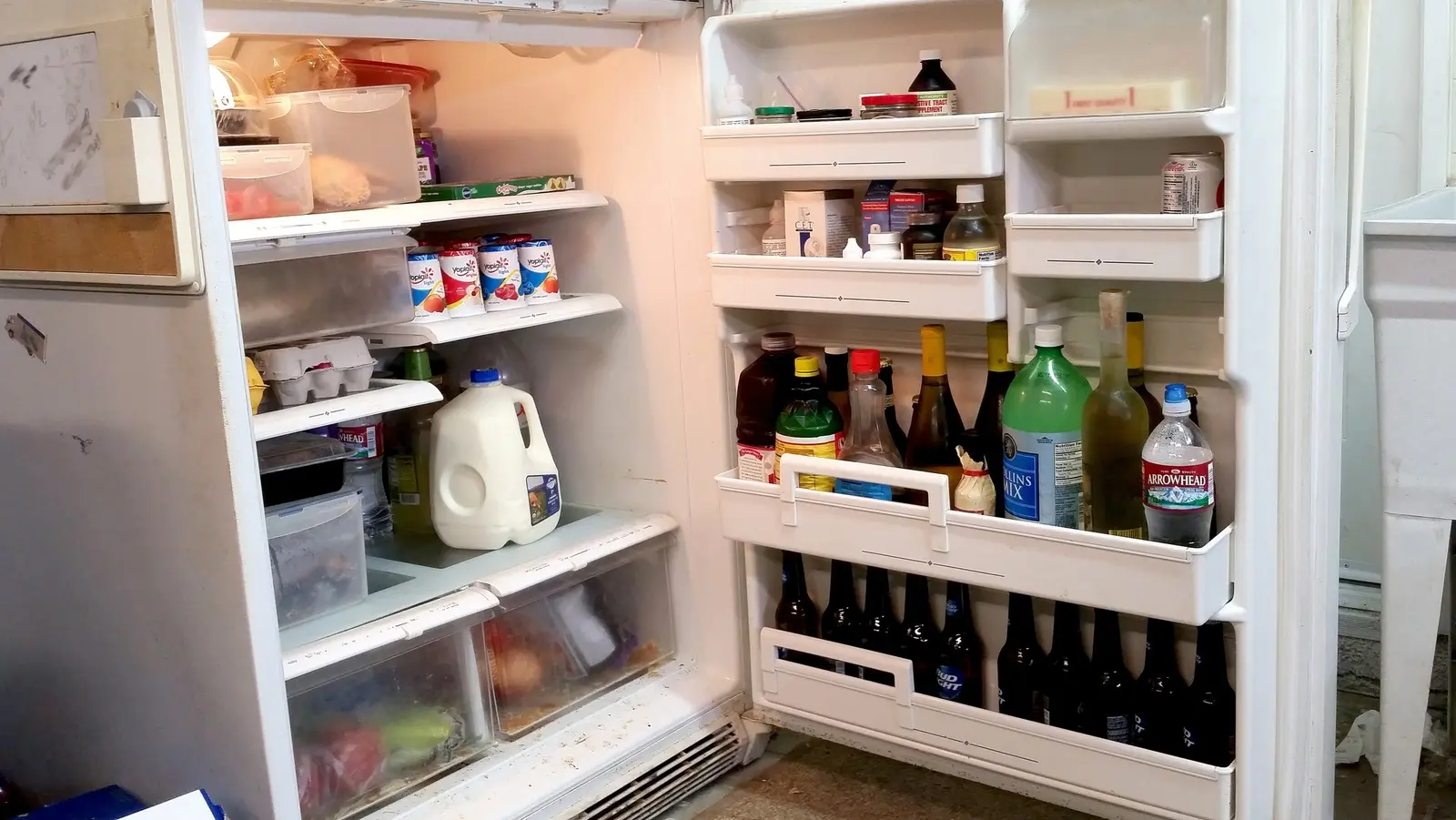
Maybe it's sitting in your parents' garage — an old, noisy, bisque-colored monstrosity that's still humming along, holding popsicles, canned sodas and those T-bones they're planning to grill over the weekend. Or perhaps you inherited one when you bought your home. Moving that old, dusty refrigerator would be a pain and, let's be honest, it's kind of useful.
Having a fridge in your garage is almost a rite of passage for many American homeowners. It can hold water bottles, canned beverages, ice and the extra goodies you've made or prepped for a summer picnic. But if that refrigerator has blown past the average lifespan – and by that, we mean Gen Z would label it an "unc" — it may be using more energy than you realize. Refrigerators built before 1990 typically have an annual running cost that is more than double a brand-new, similarly-sized fridge sold today. While you only use some appliances, such as your dishwasher or stove, part of the day, your refrigerator runs 24 hours a day, seven days a week, 365 days a year! It's the workhorse of your kitchen (or garage), and an older model can account for up to 10% of your monthly electric bill.
Let's break down the numbers. If your electric bill is approximately $200 per month, that old fridge may be accounting for up to $20 of that bill. That may not sound like much, but over the course of a year, that's $240 you're investing in storing ice and the burgers you've forgotten. Over five years, that's $1,200 — enough to buy a brand-new garage-ready refrigerator and still have money left over for a nice barbecue.
The energy efficiency of refrigerators has improved dramatically since the early 1990s, thanks to stricter federal standards and advances in compressor technology, insulation, and sealing. A typical refrigerator built in 1985 uses about 1,500 kilowatt-hours per year, while a new Energy Star-rated model of similar size uses less than 400 kWh annually. That's a reduction of over 70%. Even a fridge from the late 1990s uses about 800 kWh per year, still double the consumption of a contemporary unit. The U.S. Department of Energy estimates that replacing a refrigerator from the 1980s with a new Energy Star model can save the average household more than $200 over five years in electricity costs alone.
To determine exactly how much your old garage fridge is costing you, head to the Energy Star Flip Your Fridge Calculator. You'll need to know your price per kilowatt-hour, which is printed on your electric bill, along with the approximate model year and capacity of the refrigerator. For example, in Pennsylvania, an approximately 20-cubic-foot fridge built between 1990 and 1992 costs about $200 a year to operate. In states with higher electricity rates, such as California or Hawaii, the annual cost can exceed $300. The calculator also considers regional climate — fridges in hotter areas work harder and consume more energy.
By comparison, you can purchase a brand new, garage-ready refrigerator from big box stores like Home Depot for under $500, though there are some budget choices you should avoid. Even with delivery fees and the cost to haul away your old one, the new refrigerator will pay for itself in energy savings in only a few years. The term "garage ready" means the fridge was specifically designed to handle wider temperature ranges than it would experience inside a typical kitchen. That old refrigerator you inherited with your house may not even be rated for garage use, meaning it's working harder in extreme temperatures and driving up your electric bill even more. Garage-ready models often feature thicker insulation, more robust compressors, and electronic controls that adjust to ambient conditions, ensuring consistent cooling without excessive energy draw.
Beyond energy costs, older refrigerators represent more of a fire risk. Older components, water build-up, accumulations of dust and debris, and the aging compressor could cause overheating or short circuits that may lead to a fire. This can be especially dangerous in a space that may not have a smoke detector, like your garage. According to the National Fire Protection Association, refrigerators and freezers cause an average of 530 home fires annually in the United States, resulting in property damage, injuries, and even fatalities. Many of these incidents involve older units with worn wiring, defective defrost timers, or dust-clogged coils that trap heat. The risk is compounded if the fridge is located in a garage that also stores flammable materials like gasoline, paint thinner, or propane tanks.
If you're considering a replacement, look for a model that is explicitly labeled "garage ready" or has a wide climate tolerance rating, typically from 38°F to 120°F. Brands like Whirlpool, Frigidaire, and LG offer such models. Also check for Energy Star certification, which guarantees at least 10% better efficiency than the federal minimum. Some retailers offer rebates or recycling programs for old fridges, further reducing the upfront cost. The Environmental Protection Agency's Responsible Appliance Disposal program helps ensure that old refrigerators are recycled safely, recovering harmful refrigerants and insulating foam that contribute to ozone depletion and greenhouse gas emissions.
Another factor to consider is the hidden cost of maintenance. Older fridges require more frequent cleaning of condenser coils, replacement of door gaskets, and occasional repairs. A leaking water line or a faulty thermostat can lead to spoiled food and unexpected expenses. In contrast, modern fridges come with warranties that cover parts and labor for at least one to two years, offering peace of mind. Some even include smart features like temperature alerts, door alarms, and energy usage tracking that help you monitor performance.
If you're not ready to replace the fridge entirely, you can take steps to reduce its energy consumption. Clean the condenser coils at least twice a year using a vacuum or coil brush. Ensure the door seals are tight by closing the door on a piece of paper; if the paper slides out easily, the gasket needs replacement. Also, keep the fridge well-ventilated — leave at least two inches of space behind and on the sides, and never store it in direct sunlight or near a heat source like a water heater. Setting the temperature to the optimal range of 37°F to 40°F for the fresh food compartment and 0°F for the freezer can also help. However, these measures only reduce consumption by 10-20%, which is far less than the savings from upgrading to a new unit.
The bottom line is clear: that old garage fridge is costing you significantly more than you think. Between higher electric bills, fire risk, and maintenance headaches, it's a relic that has long outlived its usefulness. By replacing it with a modern, energy-efficient model, you can save money, reduce your carbon footprint, and enjoy better food preservation. The initial investment is quickly recouped, and you'll have a safer, more reliable appliance that can handle the extreme conditions of your garage. So before you fire up the grill for one last summer cookout, consider making a change that will benefit your wallet and your home for years to come.
Source: SlashGear News