

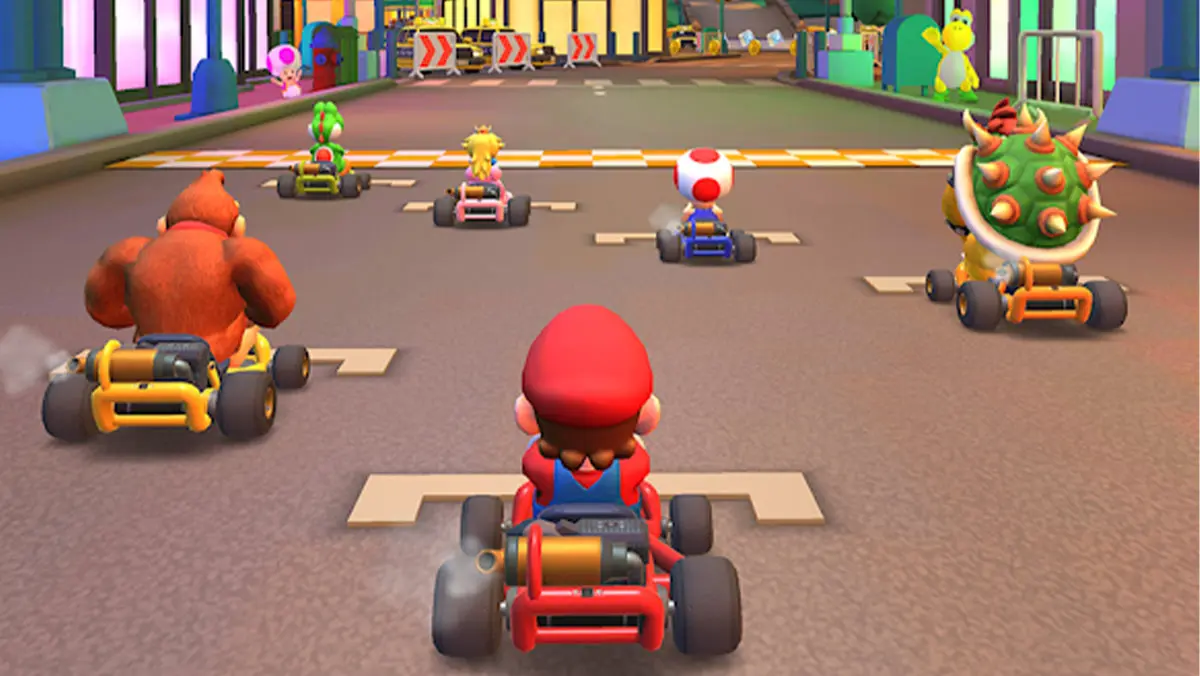
In a delightful fusion of nostalgia and digital innovation, YouTube has become the latest platform to host a playable version of Mario Kart—no Nintendo Switch, emulator, or special hardware required. Two creators, Atlas Arcade and Animated Subtitles, have collaborated to produce an interactive video that lets users control Mario, Luigi, Princess Peach, and other beloved characters as they race down the iconic Rainbow Road. The experience, while brief and simplified, represents a clever exploitation of YouTube's 360-degree spherical video technology and subtitle system.
How It Works: Technical Ingenuity
The core of the project relies on YouTube's 360-degree video feature, which normally allows viewers to change their perspective by dragging the screen or using a VR headset. By embedding interactive controls into the video, the creators have repurposed this capability into a left-and-right steering mechanism. On a desktop browser, users press the left and right arrow keys to swerve Mario's kart, dodging obstacles and staying on the track. The video is rendered in a first-person perspective, mimicking the feel of a racing game rather than a passive viewing experience.
Another clever trick involves the subtitle menu. YouTube's closed captions are typically used for accessibility or translations, but here each subtitle track corresponds to a different character. Selecting, for example, the "Toad" subtitle swaps the on-screen character, complete with a model swap and color change. This effectively turns the subtitle selector into a character select screen, adding a layer of personalization that deepens the illusion of playing a real game.
A Brief History of Mario Kart
Since its debut in 1992 on the Super Nintendo Entertainment System, the Mario Kart franchise has become a cornerstone of Nintendo's library and a cultural phenomenon. The series combines the beloved characters of the Mario universe with accessible, chaotic racing mechanics, featuring power-ups like Mario's Super Mushroom and the notorious Blue Shell. Over the decades, the franchise has appeared on nearly every Nintendo console, from the Nintendo 64 to the Switch and the upcoming Switch 2. The most recent main entry, Mario Kart 8 Deluxe, has sold over 60 million copies, making it one of the best-selling video games of all time.
The fan-made YouTube adaptation taps into this deep well of nostalgia, offering a taste of the classic Rainbow Road track, known for its glittering, obstacle-filled course and perilous edges. However, this version is stripped down: there are no items, no opponents, no laps, and no finish line. It is a single-minute experience designed more as a proof of concept than a full game.
Expanding the Possibilities of Online Video
The creation is not an isolated incident. YouTube has long been a playground for experimental interactive content. From choose-your-own-adventure style videos to embedded mini-games, creators have pushed the boundaries of what a video streaming platform can do. The 360-degree video feature, introduced in 2015, was initially intended for immersive travel and documentary experiences. But as with many tools, creative minds have found unexpected uses. This Mario Kart project is a standout example of "gamification" of video, blurring the line between watching and playing.
Several other independent projects have attempted similar feats. For instance, the YouTube channel "Interactive Show" has produced numerous simple games like Snake and Pong inside videos, using similar techniques. However, the Mario Kart recreation is notable for its polish—the characters are modeled and animated, the course is recognizable, and the controls are responsive enough to provide a fun, if fleeting, experience.
The Role of User-Generated Content and Fan Culture
This project also highlights the enduring appeal of user-generated content (UGC) and fan creations. Nintendo has a famously protective stance on its intellectual property, often issuing takedown notices for unofficial games or mods. Yet, this YouTube video exists in a gray area: it does not distribute any Nintendo code or assets; it merely imitates the aesthetic and feel. The creators used original 3D models and textures inspired by Nintendo's characters, rather than ripping them directly from the games. This approach may help it avoid legal action while still resonating with fans.
The video has already garnered attention across gaming forums and social media, with users expressing both amusement and a desire for a more expanded version. Some commenters have noted that the experience is reminiscent of early Flash games or browser-based demos, which often served as low-cost gateways to gaming for many. It is a reminder that innovation can emerge from unexpected corners of the internet.
Limitations and the Future of Browser-Based Gaming
As stated, the interactive video is not a full-fledged game. The track is linear, lasting only about a minute, with no branching paths or speed boosts. The controls are limited to left and right movement; acceleration and braking are automatic. There are no opponents to race against, no power-ups to collect, and no score to chase. The experience is more akin to a tech demo than a game. Still, it serves as an entertaining time-waster and a proof of concept for future interactive videos.
The success of this project may inspire other creators to experiment with YouTube's features. Could we see a platform version of a rhythm game using audio cues? A simple puzzle game using annotation links? The possibilities are vast, though constrained by YouTube's architecture. The platform is designed primarily for passive consumption, so interactive elements are often clunky or require specific browser capabilities. Nonetheless, the creativity on display here is a testament to human ingenuity.
Additionally, the rise of cloud gaming and game streaming services like NVIDIA GeForce Now and Xbox Cloud Gaming has shifted expectations about where games can be played. While YouTube cannot replace dedicated gaming hardware, it can serve as a lightweight entry point for casual experiences. This Mario Kart clone might be the first step toward a future where streaming platforms double as mini game consoles.
Another notable aspect is the use of subtitles for character selection. This could inspire accessibility features in future interactive videos, where multiple subtitle tracks offer different languages, audio descriptions, or even difficulty levels. The creators have essentially hacked a mundane accessibility tool into a gameplay mechanic, showcasing the untapped potential of existing platform features.
The project also raises questions about monetization and copyright. Atlas Arcade and Animated Subtitles have not enabled ads on the video, likely to avoid further scrutiny. However, other creators might attempt to monetize similar projects, leading to potential conflicts with rights holders. Nintendo, in particular, has a history of issuing takedowns for content it deems infringing, even for fan projects that are non-commercial. The YouTube video may remain online due to its originality and lack of direct asset theft, but it exists in a precarious legal space.
Ultimately, the ability to play a Mario Kart-like game on YouTube is a novelty, but one that speaks to broader trends in digital culture. As platforms evolve, the line between content consumption and creation continues to blur. This project is a playful reminder that sometimes the most unlikely places become arenas for interactive fun.
Source: Android Authority News