

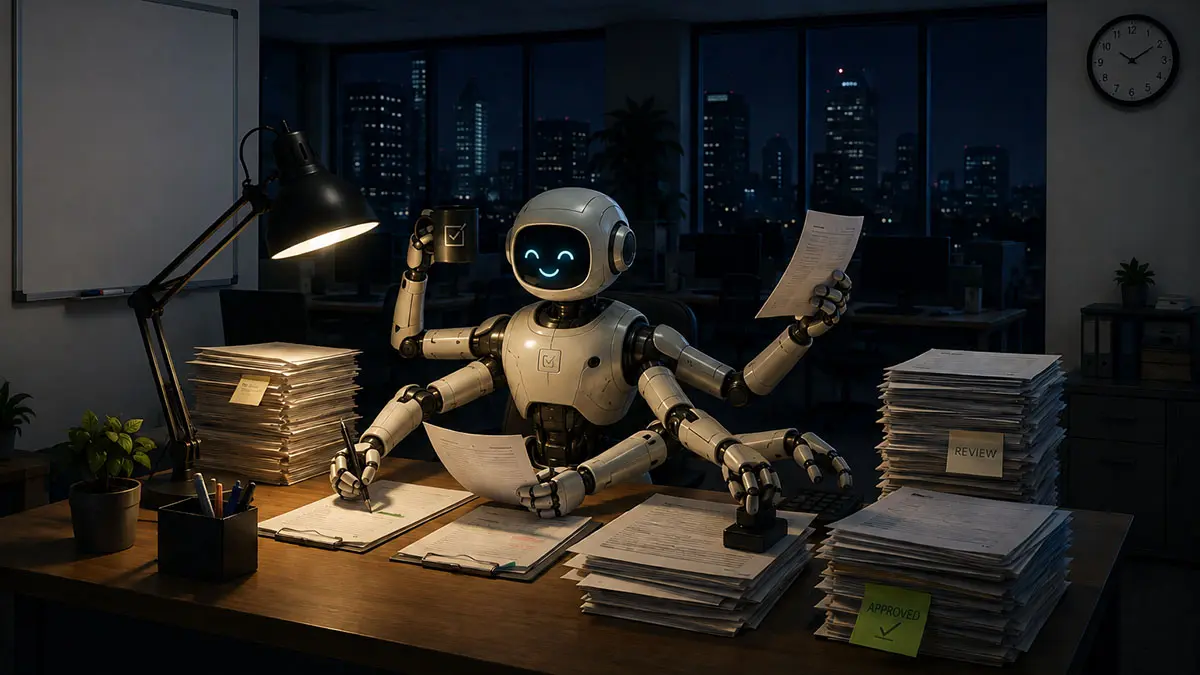
SpaceXAI Launches Grok Bot to Turn AI Agents Into Always-On Workers
Elon Musk's SpaceXAI has introduced Grok Bot, a new platform designed to transform artificial intelligence agents from on-demand tools into persistent, always-on workers. The announcement marks a significant escalation in the race to build autonomous AI systems that can operate continuously in the background, handling tasks across customer service, software development, research, and personal productivity.
According to the company, Grok Bot is built on the Grok family of large language models and is engineered to maintain context, memory, and task continuity over extended periods. Unlike conventional chatbots that reset after each session, Grok Bot is intended to stay active, monitor events, and execute multi-step workflows without requiring constant human prompts.
The move positions SpaceXAI directly against competitors such as OpenAI, Google, Microsoft, and Anthropic, all of which have been racing to launch AI agents capable of autonomous operation. The difference, SpaceXAI argues, is that Grok Bot is designed from the ground up for always-on deployment, rather than being retrofitted from a conversational assistant.
Key Facts
- SpaceXAI has launched Grok Bot, an always-on AI agent platform.
- The bot is based on Grok models and designed for continuous operation.
- It aims to turn AI agents into persistent digital workers.
- Target applications include enterprise automation, customer support, software engineering, and personal assistance.
- The launch intensifies competition with OpenAI, Google, Microsoft, and Anthropic.
- Details on pricing, availability, and technical specifications remain limited.
What Is Grok Bot?
Grok Bot is described as a persistent AI agent framework that can be deployed across cloud, edge, and on-premises environments. It combines a large language model with a planning engine, long-term memory, and a tool-use layer that allows it to interact with external software, databases, APIs, and devices. The system is designed to run continuously, waking up on schedules or in response to triggers, and then carrying out tasks until they are complete.
The term always-on worker is deliberate. SpaceXAI is not pitching Grok Bot as a smarter chatbot. It is pitching it as a digital employee that can be assigned objectives, given access to systems, and left to operate with minimal supervision. This shift from conversation to execution is the core of the current AI agent wave, and Grok Bot is Musk's most direct entry into that market.
Always-On AI Agents Explained
Traditional AI assistants are reactive. They wait for a user to type a prompt, generate a response, and then go dormant. Always-on agents are proactive. They can monitor inboxes, watch for system alerts, track market data, schedule meetings, update records, or even write and deploy code. They maintain state over time, so they remember previous interactions and can pick up where they left off.
This capability requires several technical breakthroughs: long-context memory, reliable tool calling, error recovery, and safety guardrails that prevent runaway behavior. SpaceXAI claims Grok Bot addresses these challenges with a new orchestration layer that can break high-level goals into smaller tasks, execute them in sequence or parallel, and escalate to a human when it encounters ambiguity or risk.
How Grok Bot Works
At a high level, Grok Bot operates through a loop of perception, reasoning, and action. It receives input from connected systems, uses the Grok model to interpret that input, decides on a course of action, and then uses tools to carry it out. The loop repeats continuously, allowing the agent to adapt to changing conditions.
- Memory: Grok Bot maintains a persistent memory store that can recall past conversations, documents, and decisions. This allows it to build context over days, weeks, or months.
- Planning: The agent decomposes goals into subtasks. For example, a goal to onboard a new customer might involve creating accounts, sending welcome emails, scheduling training, and updating a CRM.
- Tool Use: Grok Bot can call APIs, query databases, send messages, browse the web, and operate software. It can also use code execution for data analysis or automation.
- Monitoring: The agent can watch for events such as new emails, system outages, price changes, or social media mentions. When a trigger fires, it can initiate a workflow.
- Escalation: When the agent is uncertain or encounters a policy violation, it can notify a human operator and request guidance.
Musk's Broader AI Ambitions
Elon Musk has long positioned AI as both an existential risk and a strategic imperative. Through Tesla, he has pushed autonomous driving and humanoid robotics. Through Neuralink, he is exploring brain-computer interfaces. Through xAI, he built the Grok model as a competitor to ChatGPT. SpaceXAI appears to be a new umbrella that combines aerospace-grade engineering with AI software, though the exact corporate structure remains unclear.
The launch of Grok Bot fits Musk's pattern of entering markets with bold claims and aggressive timelines. He has argued that AI agents will eventually become more capable than humans at most cognitive tasks, and that the companies that control the infrastructure for those agents will wield enormous economic power. Grok Bot is a step toward that vision: a platform that could run millions of agents simultaneously, each working on behalf of a user or organization.
Competitive Landscape
The AI agent market is already crowded. OpenAI has been rolling out agents that can browse the web, write code, and operate software. Google has integrated AI agents into its search and productivity suites. Microsoft has been embedding agents into Windows, Office, and Azure. Anthropic has focused on safe, steerable agents for enterprise use. Amazon has pushed agents for customer service and logistics.
What sets Grok Bot apart, according to SpaceXAI, is its always-on architecture and its integration with Musk's broader ecosystem. If Grok Bot can connect to Tesla vehicles, Starlink terminals, and X social media data, it could offer capabilities that other agents cannot match. However, that same integration raises privacy and antitrust questions that regulators are likely to examine.
Potential Applications
The company has highlighted several use cases for Grok Bot:
- Customer Support: Always-on agents can handle inquiries, process refunds, and escalate complex issues without waiting for human agents to come online.
- Software Development: Agents can monitor code repositories, fix bugs, write tests, and deploy updates continuously.
- Sales and Marketing: Agents can research leads, personalize outreach, and follow up with prospects over long periods.
- Operations: Agents can monitor supply chains, detect anomalies, and coordinate responses to disruptions.
- Personal Productivity: Agents can manage schedules, filter messages, book travel, and handle repetitive tasks for individuals.
- Research: Agents can read papers, summarize findings, and run experiments in simulation environments.
Challenges and Risks
Always-on AI agents introduce new risks. If an agent has access to email, calendars, and financial systems, a mistake or malicious prompt could cause real harm. SpaceXAI says Grok Bot includes permission controls, audit logs, and the ability to pause or terminate agents at any time. But security researchers warn that persistent agents expand the attack surface for hackers and create new opportunities for prompt injection and data exfiltration.
Cost is another concern. Running an AI agent continuously can be expensive, especially if it uses large models for every decision. SpaceXAI has not disclosed how Grok Bot manages compute costs, but it is likely to use a mix of smaller models for routine tasks and larger models for complex reasoning. The company may also offer tiered pricing based on the number of active agents and the volume of tool calls.
Regulatory scrutiny is also likely. The European Union's AI Act, the United States' evolving AI executive orders, and China's AI regulations all impose requirements on autonomous systems. Always-on agents that can take actions in the real world may face stricter rules than chatbots. SpaceXAI will need to demonstrate compliance if it wants to sell Grok Bot to governments and regulated industries.
Market Impact
The launch of Grok Bot could accelerate the shift from AI as a feature to AI as a workforce. If always-on agents prove reliable, they could reshape hiring, outsourcing, and productivity metrics. Some analysts predict that within a few years, most knowledge workers will manage a team
Source: Techopedia News