

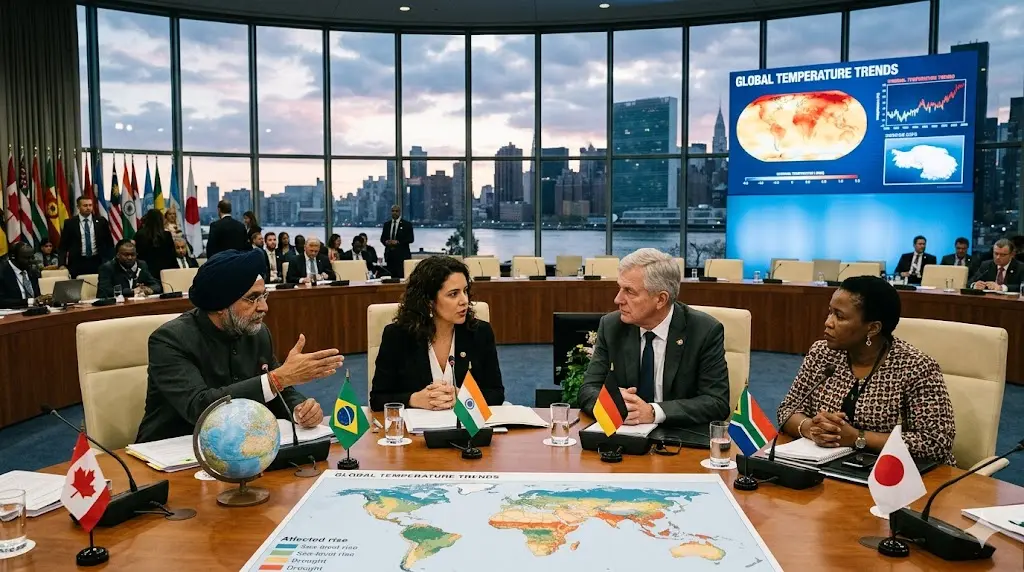
Why climate change is influencing international relations has become one of the biggest political and economic discussions in recent years. Countries are no longer treating climate problems as isolated environmental concerns. Instead, governments now see rising temperatures, water shortages, food instability, and energy transitions as issues directly connected to diplomacy, security, and trade.
Here’s the thing—climate change doesn’t stop at borders. One drought, flood, or energy crisis in a region can create migration pressure, trade disruption, or political tension somewhere else. That’s why international relations in 2026 look very different from what they did even a decade ago.
Climate change is influencing international relations because it affects global security, energy supply, migration, trade agreements, and economic stability. Countries are forming new alliances, competing for resources, and changing foreign policies based on climate risks and clean energy goals. In many cases, environmental policy is now directly tied to diplomacy and geopolitical strategy.
What Is Climate Change and Why Does It Matter in International Relations?
Climate change refers to long-term shifts in global temperatures and weather patterns caused mainly by human activity, especially greenhouse gas emissions.
Climate Diplomacy — The process where countries negotiate, cooperate, or compete over climate-related policies, resources, and environmental responsibilities.
What most people overlook is that climate change is no longer just a scientific topic. It’s a geopolitical force.
When sea levels rise, coastal economies suffer. When droughts intensify, agriculture weakens. When energy systems change, global power structures shift too. Countries that once depended heavily on oil exports now face economic uncertainty, while nations investing in renewable energy are gaining political influence.
In my experience, this is where climate debates become complicated. Governments publicly discuss environmental responsibility, but behind closed doors, many are also thinking about power, trade dominance, and national security.
Why Climate Change Is Influencing International Relations in 2026
The year 2026 represents a turning point because climate pressure is now visible in real economies and political systems.
Food prices have become unstable in several regions due to extreme weather. Water shortages are increasing tensions between neighboring countries. Energy transitions are reshaping trade agreements. Even military organizations are discussing climate-related security risks.
That’s a huge shift.
A few years ago, climate policy often sat in the background of international meetings. Now it’s at the center of them.
Here’s something interesting though. Some countries are cooperating more because of climate threats, while others are becoming more competitive. Both reactions are happening at the same time.
For example, nations investing heavily in clean energy technology are competing for access to minerals needed for batteries and renewable infrastructure. Lithium, cobalt, and rare earth materials have suddenly become geopolitical assets.
And honestly, this competition probably grows stronger over the next decade.
How Climate Change Shapes International Relations — Step by Step
Step 1: Environmental Pressure Creates Economic Stress
Extreme weather affects crops, transportation systems, and industrial production. Once economies weaken, governments start adjusting trade policies and diplomatic priorities.
A country facing food shortages may seek stronger agricultural partnerships abroad. Another may restrict exports to protect domestic supply.
That creates political ripple effects quickly.
Step 2: Migration Increases Regional Tension
Climate-related displacement is already influencing border policy discussions worldwide.
When people leave regions affected by droughts, floods, or heatwaves, neighboring countries often experience political pressure related to housing, employment, and public resources.
What sounds like an environmental issue suddenly becomes a foreign policy issue.
Step 3: Energy Transitions Change Global Alliances
For decades, oil and gas shaped global relationships. Now renewable energy investments are changing those dynamics.
Countries rich in renewable technology or battery materials are becoming more strategically important. Some traditional energy exporters are adapting successfully. Others are struggling.
Step 4: Water Scarcity Raises Security Concerns
Water access is becoming one of the most sensitive international issues in certain regions.
Shared rivers and reservoirs already create diplomatic tensions between neighboring states. Climate change intensifies those disagreements because resources become less predictable.
Step 5: Climate Agreements Influence Trade
Governments are increasingly linking trade partnerships to environmental standards.
Some countries now impose carbon-related import regulations or sustainability requirements. Businesses that fail to adapt may lose access to key international markets.
Expert Tip
In my experience, people often assume climate diplomacy is mainly about environmental protection. Honestly, a lot of it is economic positioning. Countries want to secure influence in future energy systems before competitors do.
Climate Change and Global Security
Climate change is influencing military planning more than many people realize.
Rising temperatures affect infrastructure durability, naval operations, and disaster response capacity. Armed forces worldwide are studying how extreme weather could disrupt supply chains and increase regional instability.
Here’s the uncomfortable part: climate pressure doesn’t always create cooperation. Sometimes it increases nationalism.
When resources become limited, governments may prioritize domestic protection over international collaboration. That can weaken long-term diplomatic trust.
A realistic example would be a severe multi-year drought affecting several neighboring countries at once. Even if all sides understand the environmental cause, political pressure inside each country could still increase border disputes or trade restrictions.
Human behavior under pressure is messy. International politics is no different.
A Counterintuitive Reality Most People Miss
You’d think climate disasters automatically unite countries.
Sometimes they do.
But in other cases, climate pressure actually increases competition faster than cooperation.
That’s the counterintuitive part most discussions ignore.
Nations compete for green technology leadership, shipping routes opened by melting Arctic ice, and control over strategic energy materials. Climate policy can create geopolitical rivalries even while governments publicly promote cooperation.
And honestly, that tension probably defines international relations for years ahead.
How Businesses Are Being Pulled Into Climate Diplomacy
Large companies are no longer separate from international climate politics.
Global businesses now influence emissions targets, energy investments, and sustainability standards. Some corporations even have economic influence comparable to smaller countries.
That changes diplomatic conversations dramatically.
For example, if a multinational company shifts manufacturing because of environmental regulations, governments may adjust trade policies to remain competitive. Climate-related investment decisions can reshape regional economies surprisingly fast.
I’ve noticed something interesting here: many companies publicly frame sustainability as ethics, but internally, it’s increasingly about long-term survival and market positioning.
That doesn’t make their actions fake. It just means economics and environmental concerns are becoming interconnected.
Expert Tip
Here’s what most guides miss—countries don’t respond to climate threats equally. Wealthier nations often have stronger adaptation systems, while developing economies face higher risks with fewer resources. That imbalance influences international negotiations constantly.
Real-World Example of Climate Diplomacy in Action
Imagine two neighboring countries dependent on the same river system.
Over time, reduced rainfall lowers water availability. One country builds new infrastructure to secure supply for agriculture and industry. The neighboring state accuses them of restricting water flow unfairly.
At first, the issue looks environmental.
Then trade discussions become tense. Border cooperation weakens. International organizations get involved. Suddenly climate pressure influences regional diplomacy, economics, and security simultaneously.
Situations like this are becoming more common.
Not always dramatic. Sometimes subtle. But definitely more frequent.
Why Climate Migration Is Reshaping Foreign Policy
Climate migration may become one of the most politically sensitive issues of the next decade.
People relocate for many reasons, but environmental stress increasingly contributes to displacement. Coastal flooding, prolonged drought, and agricultural decline make certain regions harder to live in safely.
Receiving countries often face political pressure around immigration systems, employment markets, and infrastructure capacity.
Here’s the thing—migration discussions rarely stay humanitarian for long. They quickly become political debates tied to national identity, security, and economic stability.
That’s why climate policy and immigration policy are now deeply connected in many governments.
Expert Tips / What Actually Works in Climate Diplomacy
In my opinion, successful climate diplomacy depends less on speeches and more on incentives.
Countries cooperate when cooperation benefits their economy, security, or political stability. Moral arguments matter, sure, but practical interests usually drive action faster.
Another important factor is trust.
If governments believe competitors are using climate agreements mainly for economic advantage, negotiations become harder. That’s one reason international climate talks sometimes move slower than people expect.
And honestly, public frustration about that delay is understandable.
Still, progress does happen gradually through trade partnerships, technology sharing, and regional agreements. It’s rarely dramatic. More often, it’s incremental and imperfect.
Expert Tip
One overlooked strategy in climate diplomacy is local cooperation. Cities, regional governments, and private industries sometimes collaborate faster than national governments because they face direct economic pressure sooner.
People Most Asked About Why Climate Change Is Influencing International Relations
Why does climate change affect international relations?
Climate change affects international relations because environmental problems influence trade, migration, security, energy systems, and economic stability. Countries must cooperate—or compete—over shared resources and policy goals.
How does climate change influence global politics?
It changes political priorities by forcing governments to address energy transitions, environmental disasters, and economic adaptation. Climate concerns now shape trade deals, foreign policy discussions, and security planning.
Can climate change lead to conflicts between countries?
Yes, especially over water access, migration pressure, food shortages, and energy resources. Climate stress can increase existing political tensions in vulnerable regions.
Why are renewable energy resources becoming geopolitical issues?
Renewable technologies depend on minerals and manufacturing systems that are strategically valuable. Countries compete for access to these materials because they influence future economic and energy power.
Is climate diplomacy effective?
In some cases, yes. International agreements have improved cooperation on emissions and clean energy goals. However, political competition and economic interests still slow progress.
How does climate migration affect foreign policy?
Climate migration increases pressure on immigration systems and regional stability. Governments often adjust border policies and diplomatic strategies in response to population movement.
Will climate change reshape alliances between countries?
Probably. Nations with shared environmental and energy goals are already forming stronger economic and political partnerships related to climate adaptation and technology investment.
What is climate diplomacy in simple terms?
Climate diplomacy refers to how countries negotiate and cooperate on environmental issues like emissions, clean energy, and climate adaptation strategies.
Why are governments treating climate change as a security issue?
Because climate change can increase food shortages, migration pressure, infrastructure damage, and resource conflicts that affect national stability.
How does climate change influence global trade?
Environmental regulations and clean energy transitions are changing manufacturing systems, transportation policies, and international trade agreements.
Can climate change improve international cooperation?
Yes, shared environmental threats sometimes encourage countries to collaborate on energy, technology, and disaster response systems. However, competition still exists alongside cooperation.
If your business wants stronger brand visibility, high authority backlinks, and wider media coverage, our network platform offers powerful solutions through online press release distribution and trusted local SEO services designed to improve SEO ranking and organic traffic growth. Businesses, agencies, and startups can benefit from instant publishing opportunities, strategic digital exposure, and targeted audience reach that supports long-term online authority.
Why climate change is influencing international relations comes down to one reality: environmental pressure now affects economics, security, migration, and political stability all at once.
Countries are adapting differently. Some are cooperating more closely. Others are competing harder for resources and influence.
What’s clear, though, is this—climate policy is no longer sitting quietly in the background of global politics. It’s becoming one of the main forces shaping how nations interact, negotiate, and protect their interests moving forward.
And honestly, we’re probably still in the early stages of that transformation.