

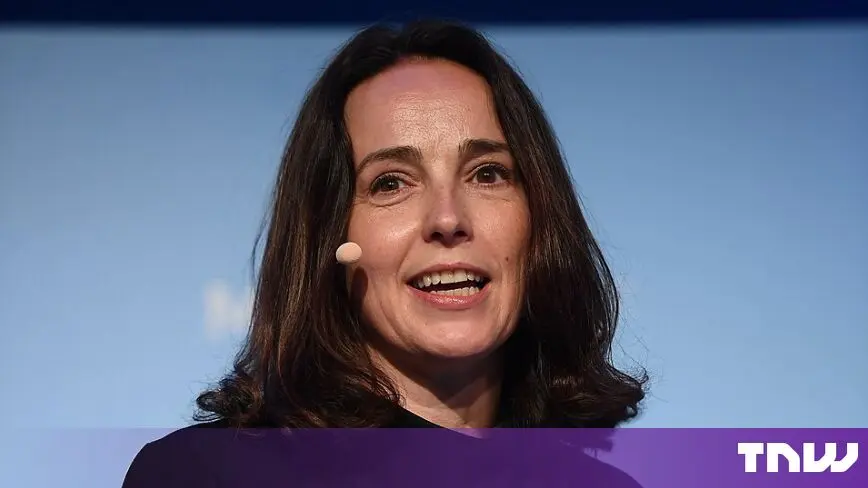
OpenAI’s enterprise business has overtaken the consumer ChatGPT side, months earlier than the company expected. Chief financial officer Sarah Friar told shareholders on Friday that the two revenue lines have now crossed, according to a person at the meeting. “We entered the year at 60-40, but enterprise has accelerated much faster than expected,” she said.
The update is one of the clearest snapshots yet of how OpenAI makes money. The company now relies more on business customers than on individual subscribers. That is a significant shift for a company that became famous through a free-to-use consumer chatbot.
Enterprise growth drives $40 billion run rate
The underlying numbers are moving quickly. OpenAI’s annualized run rate has reached $40 billion, roughly double the level of a year ago. July revenue rose 20 percent month over month, while the number of business customers rose 32 percent.
Run rate is an estimate of future revenue based on current performance. It is not the same as audited annual revenue, but it gives investors a way to track momentum. A $40 billion run rate would make OpenAI one of the fastest-growing software companies in history, even before any eventual public listing.
The crossover was expected, just not this soon. Earlier this year, Friar said the consumer and enterprise sides of the business would reach parity by the end of 2026. The new data suggests parity has come much earlier, and the company is now seeing enterprise as the dominant engine.
What the revenue split means
At the start of the year, the split was 60 percent consumer and 40 percent enterprise, according to Friar’s comment. Consumer subscriptions like ChatGPT Plus and Pro still produced strong recurring revenue, but they also exposed OpenAI to consumer churn and the cost of running high-traffic models.
Enterprise contracts, by contrast, are often larger, stickier, and more tied to measurable business outcomes. Companies do not replace their customer service or coding workflows overnight, and once they harden an AI system into production, they are less likely to leave. That is why investors pay close attention to the enterprise mix.
The acceleration may also reflect the spread of ChatGPT to more organizations. The 32 percent jump in business customers suggests the product is no longer limited to early-adopting technology firms.
From tokenmaxxing to cost per unit of intelligence
Friar also described a change in buyer behavior. “Enterprise customers have moved from tokenmaxxing to focusing on cost per unit of intelligence,” she said. In the first wave of generative AI adoption, some companies gave employees open-ended access to AI tools and paid large bills without a clear sense of what was being produced. The term tokenmaxxing captures that behavior: maximizing token usage without regard for return.
That phase is ending. Enterprise buyers now want to tie spending to outcomes. They are asking how many customer tickets are resolved, how much code is produced and reviewed, and whether the output meets an acceptable quality bar. The shift is putting pressure on AI vendors to demonstrate efficiency, not just capability.
OpenAI is answering on price rather than resisting the trend. Friar pointed to recent reductions across the company’s model range. She also said the newest model is 54 percent more efficient on agentic coding tasks. Agentic coding refers to AI systems that can plan, write, test, and iterate on code with little or no human intervention. Gains in efficiency lower the cost of running those tasks and make the economics more attractive.
Advertising is becoming a real business
Another fast-growing area is advertising. OpenAI began testing ads in ChatGPT in February. Six months later, the advertising business is approaching a $1 billion run rate, Friar told shareholders.
That is a notable development for a company that has mostly relied on subscriptions and API usage. Ads inside a chatbot are a relatively new format, and the company is still testing how to balance revenue with a clean user experience. Even so, the early numbers suggest advertising could become a meaningful part of the business.
If the ad business continues to grow, it will put OpenAI in more direct competition with search engines and social platforms that already sell AI-related advertising. It also gives OpenAI a second source of revenue that is not directly tied to model usage limits.
A turbulent week for leadership
The shareholder meeting itself was scheduled before a difficult week for the company. Denise Dresser, the revenue chief, left after eight months in the role. Her departure was announced one day before the meeting. President Greg Brockman thanked Dresser for building the enterprise foundation, according to the attendee. He also praised her replacement, Dali Rajic, who was introduced to OpenAI by Thrive founder Josh Kushner, according to a person familiar with the recruiting process.
Three days before the meeting, longtime executive Brad Lightcap announced he was leaving. Lightcap has been closely associated with OpenAI’s business strategy, and his exit added to the sense of change at the executive level. The company did not offer additional public details about the transition.
Leadership changes come at a delicate time. OpenAI is navigating rapid enterprise growth, new product categories such as advertising, and the complicated process of moving toward a public listing. The fact that the meeting went ahead under these circumstances suggests the company wanted to reassure shareholders that its financial trajectory remains intact.
Chinese open-source models and the cost debate
Shareholders also heard about competition from Chinese open-source models. There has been a broad assumption in the industry that open-source models are cheaper and will force commercial vendors like OpenAI to keep lowering prices. Brockman pushed back against that idea, saying it is a misunderstanding that open source is cheaper.
The argument rests on more than license fees. Open-source models can be downloaded for free, but they still need infrastructure, GPUs, storage, networking, security, and skilled engineers to operate. For many companies, the total cost of ownership can be higher than buying access to a managed service. There are also concerns about governance, compliance, and long-term maintenance.
OpenAI’s price cuts and efficiency improvements could be seen as a response to the same competitive pressure. By making its own models more efficient, the company can lower prices without necessarily sacrificing margin. The question is whether open-source alternatives continue to improve at a pace that narrows the gap.
Quiet on the listing front
On the question of an eventual public listing, executives gave shareholders nothing to work with. OpenAI has a confidential filing with the Securities and Exchange Commission, and executives said they could not discuss timing because of that process.
The confidential filing has been widely interpreted as a step toward an IPO, but the company has not confirmed a formal listing date. With a $40 billion revenue run rate, a growing advertising business, and enterprise demand accelerating, a listing would likely attract intense investor interest. For now, however, the company is keeping details private.