

There is no shortage of advice when it comes to cleaning and maintaining household appliances, and not all of it is worth following. Vinegar is often promoted as a magic fix for everything from cloudy glassware to clogged shower heads, so it should come as no surprise that it has been mentioned as a way to keep an air conditioner fresh. However, air conditioners are far more delicate than most other household items. They rely on a careful balance of airflow, refrigerant pressure, condensation management, and sealed connections. Introducing an acid into that system, even a relatively mild one like distilled white vinegar, can help remove certain types of buildup but can also have unintended effects. To determine whether vinegar belongs in your air conditioner maintenance routine, it is helpful to first understand what type of dirt and grime actually accumulates inside the machine and how vinegar interacts with each component.
Air conditioners do more than push cool air through a home. They pull warm air from indoor spaces, pass it over coils filled with refrigerant, and then blow the cooled air back into the room. Along the way, moisture condenses on the evaporator coil and drops into a drain pan. This condensation is normally carried away through a small drain line to the outside or into a plumbing fixture. But that moisture also creates a perfect environment for mold, mildew, algae, and bacteria. If these organisms are allowed to grow, they can restrict airflow, block the drain line, and produce unpleasant odors. They can also reduce the efficiency of the unit and affect indoor air quality. Cleaning the surfaces where moisture tends to gather is therefore a major part of routine air conditioner maintenance.
Why Your Air Conditioner May Smell Like Vinegar
Before you reach for a bottle of vinegar, it is worth noting that a vinegar-like smell coming from your air conditioning system may not be a call for vinegar at all. It can be an indicator that something is wrong inside the machine. A sour, acidic odor can develop when dust, pollen, pet dander, and other debris collect on a damp coil or filter. Over time, this organic material begins to decompose and turn moldy. Moisture from condensation also can pool in areas that are not draining properly, making the problem worse. In some cases, a leaking refrigerant line can produce an odor that is sharp and unpleasant, though refrigerant leaks are usually accompanied by a loss of cooling performance. If the unit smells like vinegar even before any vinegar has been used, it is a sign that cleaning or servicing is needed rather than a reason to introduce this cleaner into the system.
A specialist in air conditioning and heat pumps has pointed out that components such as filters and coils are prone to becoming clogged or contaminated by small amounts of debris. When the dirt remains in the system while the unit is running, mold can take hold quickly. The same specialist also noted that condensation problems and refrigerant leaks can make the situation worse. This explains why routine maintenance is such an important part of owning an air conditioner. It also explains why many manufacturers and technicians suggest inspecting the area around the evaporator coil and the condensate drain line on a regular basis.
How Vinegar Helps Break Down Mold and Algae
Vinegar, especially distilled white vinegar, is a diluted form of acetic acid. Acetic acid is mild enough for household use but still acidic enough to break down mineral deposits and organic substances. When applied to an air conditioner component that has accumulated mold or algae, vinegar can help loosen that growth and make it easier to remove. This is particularly useful in the condensate drain line, where algae and slime can form a biofilm that eventually clogs the pipe. A clogged condensate drain line can cause water to back up and overflow from the drain pan, potentially damaging the air conditioner and the surrounding area. Pouring a small amount of vinegar into the drain line once a month is a common maintenance practice that can prevent this biofilm from forming in the first place.
Vinegar also has degreasing and deodorizing properties. It can help neutralize some of the odors caused by mold and bacteria without leaving behind the harsh chemical residue that some commercial cleaners can leave on indoor coils. This is one reason why some homeowners prefer it for light maintenance tasks. However, vinegar should not be considered a substitute for a thorough cleaning of the indoor coil or the air filter. Those parts need to be physically cleaned or replaced on a schedule that matches the manufacturer's recommendations and the household environment. If you live in an area with high humidity, have pets, or use your air conditioner almost constantly, you may need to clean or change filters more frequently than the standard one-to-three month interval.
The Hidden Danger: Rubber Seals and Vulnerable Parts
One of the most important warnings about using vinegar in an air conditioner involves the rubber seals and flexible components that keep the system airtight. An air conditioner has seals around the compressor, the refrigerant lines, the valves, and various access ports. These seals are often made from rubber or similar soft materials. Vinegar is not strong enough to dissolve rubber instantly, but repeated exposure can cause rubber to dry out, swell, crack, or lose its elasticity. If the seals become brittle or warped, air and refrigerant can escape. This reduces the system's efficiency and, over time, may cause the compressor to work harder than it should. Eventually, escaping refrigerant can lead to more serious mechanical failures and an expensive repair bill.
The risk depends not only on the quantity of vinegar used, but also on how long it remains in contact with these components. If you spray vinegar onto a coil and let it sit for an extended period, the acid can migrate toward nearby seals or metal joints. If you pour vinegar into the drain pan and allow it to pool against a rubber gasket, it can cause damage. For this reason, technicians sometimes advise against using vinegar at all and recommend a cleaning product that is specifically formulated for air conditioning systems. Products sold as coil cleaners or condensate pan treatments are designed to be safe on the materials commonly found in AC units, and they are manufactured at a pH and concentration that will not harm seals or plastic components when used according to the instructions.
Another major concern is mixing vinegar with other cleaning agents. For example, vinegar should never be mixed with bleach. The combination produces chlorine gas, which is hazardous to breathe. Even if you do not mix them at the same time, applying one after the other can leave residues that create harmful fumes or damage surfaces. Always rinse the component thoroughly with water after using vinegar, or allow the system to clear the solution completely through the drain line before using any other product.
How to Safely Use Vinegar in Your Air Conditioner
There is no single official guide that everyone agrees on, but a major appliance manufacturer has suggested a simple home remedy for those who want to use vinegar as a mild cleaner. According to that guidance, you can mix one cup of vinegar with half a cup of baking soda and one gallon of water. The resulting solution can be used to clean the air filters, the coils, and the drain pan. This mixture is more diluted than pure vinegar, making it safer around the seals and metal surfaces. Baking soda also helps to neutralize some of the acid and introduce a mild bubbling action that can lift away grime.
If you want to perform this type of cleaning at home, there are a few basic steps you should follow. Before you begin, turn off the air conditioner and disconnect the power supply to avoid any risk of electric shock. Open the access panel to reach the evaporator coil and the drain pan. If the unit has an air filter, remove it and rinse it with water. A mild vinegar solution can be used on the filter, but it should be rinsed thoroughly afterward and allowed to dry completely before reinstalling it. Some filters are disposable and should simply be replaced. Never place a wet filter back into the unit.
Next, use a soft brush or cloth to remove any loose dirt from the evaporator coil and the surrounding fins. Apply the vinegar and baking soda solution gently to the coil and drain pan. Do not use a high-pressure sprayer, which can bend the fins or force water into electrical components. Let the solution sit for a few minutes, but do not allow it to dry on the metal. Rinse the area with a small amount of clean water, being careful not to saturate the components. The solution that collects in the drain pan should flow out through the condensate drain line, flushing some of the residue away as it goes.
To keep the condensate drain line clear on an ongoing basis, many owners prefer to pour a small amount of undiluted distilled white vinegar directly into the line. This can be done through an access port near the indoor unit. One quarter to one half cup of vinegar per month is a commonly recommended amount, although you should consult the owner's manual for your specific system. The vinegar will travel through the line, helping to dissolve any algae and slime that have started to form. After letting the vinegar sit for about 30 minutes, you can flush the line with warm water. This simple routine can reduce the risk of clogs and the overflow problems that often accompany them.
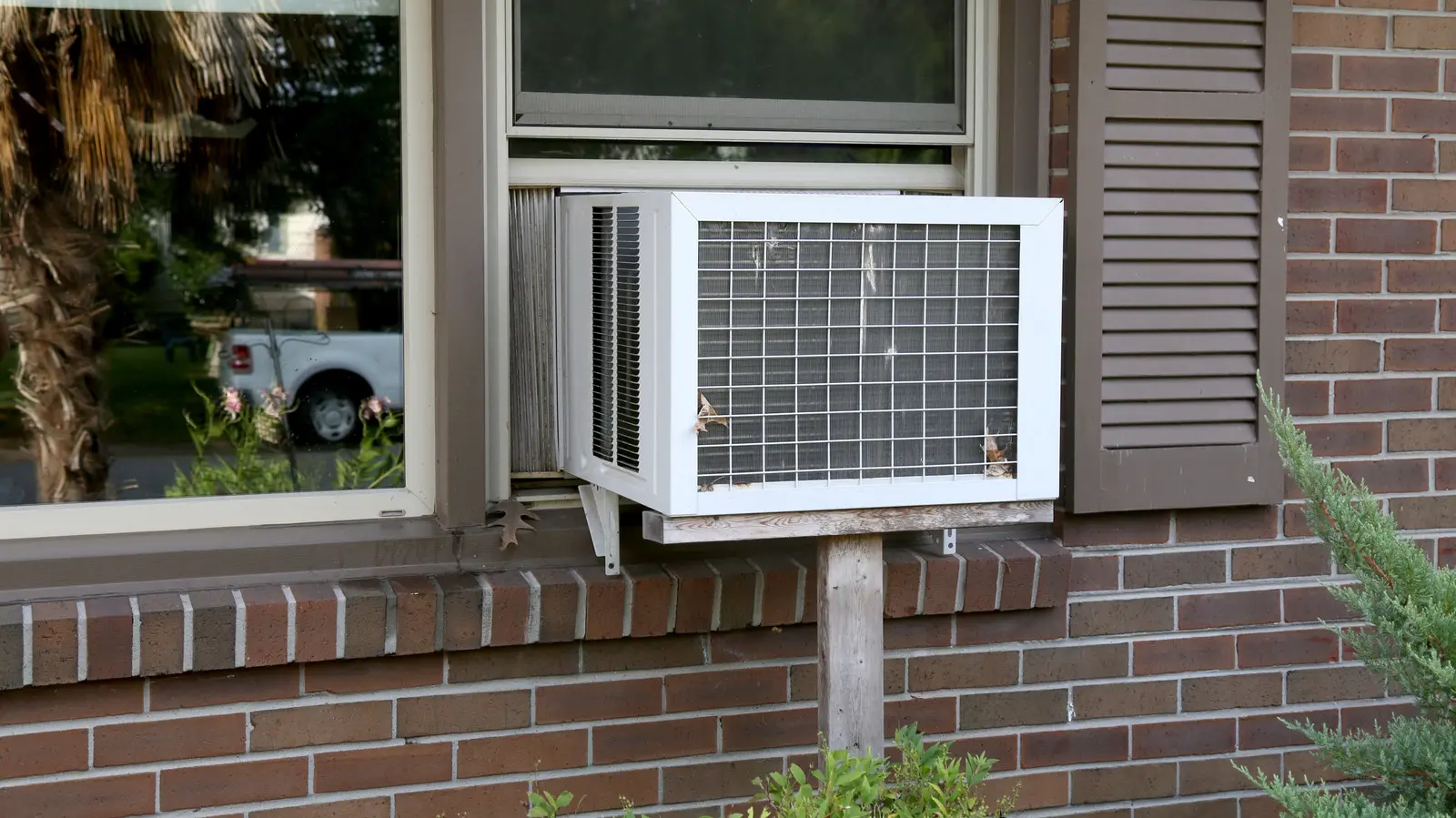
The same type of routine is often recommended for portable air conditioners and window units. These systems have smaller drain pans and are easier to inspect. For window units, you can remove the entire unit and place it on a flat, protected surface before cleaning. As always, keep the unit unplugged while it is being cleaned. If you notice that the drain line is already completely blocked, pouring vinegar into the line may not solve the problem. A blocked line needs to be cleared with a wet-dry vacuum, a flexible cleaning brush, or compressed air. Continuing to pour liquid into a blocked line will cause water to overflow inside the unit, which could damage the fan motor or the electrical controls.
When Vinegar Is Not Enough
Vinegar can be an effective preventive measure and a mild cleaner, but it is not a cure-all. If your air conditioner has a heavy buildup of grime, visible mold on the insulation, or signs of refrigerant leakage, you need a more thorough approach. Some contaminants, including grease, dust, and pollen, can become baked onto the coil and require a commercial coil cleaner. Evaporator coils are especially sensitive, and harsh brushing or excessive spraying can damage the thin fins that help transfer heat. A professional technician has the tools and experience to clean the coil safely, check the refrigerant pressures, test the drain line for leaks, and inspect the electrical connections.
Air conditioner filters should also be checked every month during heavy use and cleaned or replaced as needed. A dirty filter restricts airflow, forces the unit to run longer, and increases the chance that moisture will remain on a damp coil. This moisture, combined with organic dust, creates the environment where mold and algae thrive. Keeping the filter clean is therefore just as important as treating the drain line with vinegar. In the same way, you should make sure the area around the outdoor condenser unit is free of leaves, grass clippings, and other debris that can block airflow and reduce the system's efficiency.
Some air conditioners are equipped with UV lights or other specialized components that help prevent biological growth. The presence of these components does not eliminate the need for periodic cleaning. Likewise, antimicrobial coatings can be helpful, but they can wear off over time and are not a substitute for washing the filter and clearing the drain line. Regular maintenance is what allows the system to run efficiently and keep humidity in check. While vinegar may have a place in that routine, it should be used with care and only in situations where it will not weaken the seals or damage the delicate surfaces that your air conditioner relies on.
Ultimately, the decision to use vinegar should be based on the condition of your unit, the type of system you have, and the manufacturer's instructions. If you are unsure about the best way to clean a particular component, consult the manual or call a qualified heating, ventilation, and air conditioning technician to inspect the unit. A proper inspection can identify the root cause of odors or leaks and provide a safe cleaning plan. When used in the right concentration and in the right places, vinegar can help prevent mold and algae from taking hold, but it is not an excuse to skip the more thorough maintenance that every air conditioner needs to operate at its best.
Source: SlashGear News