

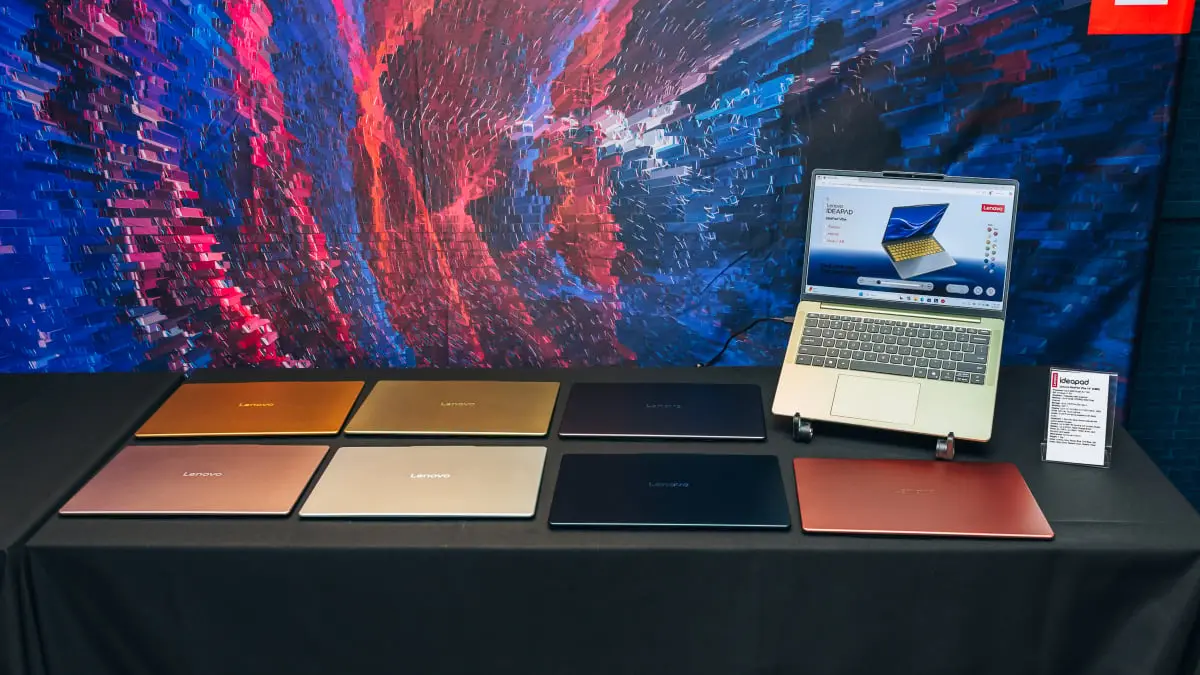
Lenovo has officially unveiled the IdeaPad Vibe, a new Windows laptop designed to challenge the MacBook Neo on both price and polish. The machine was introduced at IFA, the annual technology trade show in Berlin, and is set to arrive this fall with an eye-catching array of colors and a price tag that starts at $699.99.
The IdeaPad Vibe is the latest in a growing lineup of budget laptops that have responded to the MacBook Neo's market-shaking debut. Before Apple released the all-aluminum, colorful MacBook Neo in March, the budget laptop segment was often defined by heavy plastic bodies and drab designs. Lenovo's new machine flips that script with a slim metal chassis, a high-refresh-rate display, and customization options that are rare at this price.
Lenovo IdeaPad Vibe specs and availability
Lenovo says the IdeaPad Vibe will be offered in both 14- and 15-inch screen sizes. The 14-inch model starts at 2.87 pounds, while the larger version weighs 3.31 pounds. That means the new laptop is a little heavier than the 13-inch MacBook Neo, which tips the scales at 2.7 pounds, but the Vibe makes up for it by offering a bigger display for no additional cost. The chassis measures just 0.59 inches thin, putting it within striking distance of the MacBook Neo's profile.
The IdeaPad Vibe will launch in October with AMD Ryzen AI 400 series processors, followed by Qualcomm Snapdragon X models in November. All configurations will start at $699.99, according to Lenovo's press materials. The company also says Intel versions are already in development. This three-pronged approach gives shoppers a broad set of choices when it comes to performance, battery life, and connectivity.
A rainbow of colors and customizable design
In a move that feels directly inspired by the MacBook Neo, Lenovo has worked with the Pantone Color Institute to develop seven hues for the IdeaPad Vibe: Chill Blue, Moody Blue, Dreamy Violet, Lowkey Grey, Radiant Coral, Spicy Gold, and Zen Green. The colors are designed to appeal to different personalities and tastes, a nod to the growing demand for laptops that express individual style. For those who want even more personalization, Lenovo will sell swappable keycaps separately.
Most Vibe configurations will feature a fully metal chassis, similar to the premium feel of the MacBook Neo. Some AMD models, however, will use a metal upper housing and a ridged plastic bottom cover. When asked about possible differences in price or features between these builds, a Lenovo spokesperson said that "a lot of that is hard to determine right now." More specifics are expected closer to launch.
Display, memory, and storage details
The IdeaPad Vibe comes standard with a 120Hz IPS display, which makes scrolling and general navigation feel fast and fluid. Buyers who choose the Lowkey Grey or Moody Blue color options in either size will have the opportunity to upgrade to an OLED panel. The 15-inch version with those colors can be configured with a touchscreen OLED display, a first for this class of budget ultraportable.
The laptop starts with 8GB of RAM and a 256GB solid-state drive. That mirrors the baseline MacBook Neo, but the IdeaPad Vibe goes much further: shoppers can spec it up to 32GB of RAM and 1TB of storage. Lenovo has also made upgrades easier after purchase. Qualcomm-powered Vibe models will have user-replaceable SSDs, while AMD versions will allow users to expand both storage and RAM themselves. If you configure the machine with at least 16GB of memory, you'll also get access to Windows' Copilot+ PC AI features.
Ports, speakers, and everyday features
On the outside, the IdeaPad Vibe is packed with connectivity options. It includes two USB-C ports, two USB-A ports, an HDMI port, a microSD card reader, and a headphone jack. Wireless connectivity is equally future-proof, with support for Wi-Fi 7 and Bluetooth 5.4. The internal hardware includes integrated graphics, a 5MP webcam with a privacy shutter, a pair of 2W speakers with Dolby Audio tuning, and an island-style keyboard with an optional backlight. The touchpad is made from Mylar, a choice that keeps costs down while maintaining adequate tracking accuracy.
The budget laptop battlefield heats up
The IdeaPad Vibe is more than just a standalone product; it is part of a broader shift in the PC industry. For years, budget laptops were seen as utilitarian tools, often made from cheap gray plastic and loaded with unnecessary software. The success of the MacBook Neo changed consumer expectations by showing that an affordable laptop could look and feel as good as a premium ultrabook. Tech giants have taken notice, and the IdeaPad Vibe represents Lenovo's attempt to reclaim the spotlight.
Lenovo now joins Dell and Acer in the race to beat Apple on value. The Dell XPS 13 and Acer Swift Air 14 both launched with the same $699 starting price as the MacBook Neo and the IdeaPad Vibe, while also offering double the base storage. That means Lenovo is entering a competitive segment where specs alone won't be enough to win customers. The unique color options, OLED upgrades, and repairability features could help the Vibe stand out in a crowded field.
The timing of the launch is also notable. Computer prices have been climbing due to a global memory shortage and rising component costs, making it harder for manufacturers to hit attractive entry points. Lenovo's decision to launch the Vibe at $699.99 suggests the company has found ways to keep manufacturing costs down while still delivering a premium-looking product. The inclusion of AI-ready features and new-generation chips from AMD and Qualcomm indicates that Lenovo is also preparing for the next wave of Windows laptops, where on-device AI processing is expected to become standard.
One of the biggest differentiators from the MacBook Neo is upgradeability. Apple's product is famously sealed shut, leaving owners almost no room to modify their machines down the line. The IdeaPad Vibe's user-accessible storage and RAM will be a welcome option for people who want to buy a more modest configuration today and improve it later without needing a technician. Although the repairability is limited to storage and RAM, it represents a philosophy that many PC buyers have long asked for.
Lenovo also used IFA as a stage for several other new devices, including its first two laptops powered by Nvidia's new RTX Spark chips. Those machines are aimed at a different audience than the IdeaPad Vibe, but their coexistence at the event shows how Lenovo is trying to cover a wide range of price points and use cases. The company will likely rely on the Vibe to draw attention to its more mainstream lineup, especially with consumers looking for holiday deals.
As the IdeaPad Vibe prepares to ship in October and November, shoppers will be eager to see how its real-world performance compares to the MacBook Neo and other rivals. With two screen sizes, seven colors, customizable keycaps, and a starting price that matches Apple's entry-level notebook, Lenovo is making a confident bet that stylish design and practical storage choices can win over a new generation of budget-laptop buyers. Windows fans will have a compelling new option this fall, and the pressure is now on Apple to outmatch the Vibe's expandable storage and port variety in its next MacBook Neo revision.
Source: Mashable News