

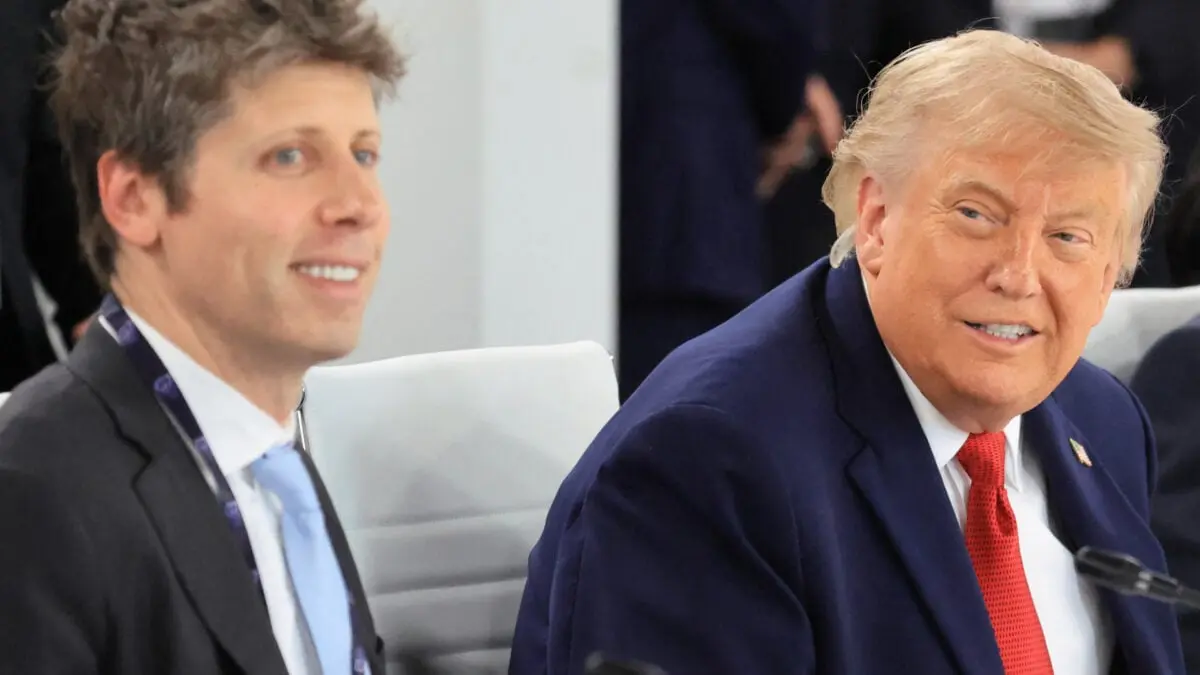
Economic policymakers from many of the world's largest economies are meeting this week in North Carolina to set the tone for the U.S.-hosted G20 summit in December. Though the agenda includes trade, finance, and digital infrastructure, artificial intelligence has become the most closely watched issue in the room. The Trump administration is using the gathering to argue that governments should hold off on new AI-specific regulations and allow the industry to continue growing with limited interference.
Trade and commerce ministers are meeting in Raleigh-Durham for the two-day Innovation Ministerial, co-hosted by Commerce Secretary Howard Lutnick and White House technology adviser Michael Kratsios. Finance ministers and central bank governors are holding separate talks in Asheville. The U.S. delegation plans to press those in attendance to sign a voluntary framework called the Carolina Principles, which administration officials say will encourage research, strengthen commercial AI opportunities, and reserve new regulation for cases that genuinely require it.
Key Facts
- The Trump administration is urging G20 trade and commerce ministers to adopt a hands-off approach to AI regulation.
- The proposed Carolina Principles are being introduced at the Innovation Ministerial in Raleigh-Durham, North Carolina.
- The administration argues that avoiding broad AI-specific rules is necessary to outpace China in critical technology.
- Canadian officials say they are pushing for a balance between innovation and public trust and safety.
- U.N. Secretary-General Antonio Guterres has warned that AI is being deployed faster than rules can keep up.
- OpenAI CEO Sam Altman, Nvidia CEO Jensen Huang, Elon Musk, and Meta CEO Mark Zuckerberg are expected to take part in the ministerial.
What the Carolina Principles Would Do
The principles are led by Michael Kratsios, who has been the administration's point person on technology policy. According to an official description, signatories would commit to investing in foundational research, expanding commercial use of AI, and avoiding regulation that is designed for hypothetical or unfamiliar risks. In practical terms, the framework asks governments to refrain from creating new AI laws unless there is a clear and novel reason to act.
Kratsios is expected to make that case directly to trade and commerce ministers in prepared remarks. He will tell attendees, 'Policymakers do not need to approach each innovation in isolation and should not treat every emerging technology as a first-of-a-kind policy problem.' His comments reflect a broader view inside the administration that existing laws are enough for many AI applications and that new rules would slow innovation.
The U.S. approach removes barriers that stand in the way of companies investing heavily in AI infrastructure, data centers, and product development. It is a conscious break from the more precautionary strategies favored by many European and international regulators. Rather than classifying AI as a high-risk technology category, the administration wants to treat it as the latest chapter in industrial progress, deserving of the same flexible treatment that allowed earlier internet platforms to expand.
Why the Administration Says Hands-Off Is Necessary
The administration has long argued that the pace of AI development is a national security issue. Officials inside the White House believe that heavy regulation would put the United States at a disadvantage against China, which is investing enormous public resources into its own AI ecosystem. By pushing the Carolina Principles through the G20, the administration hopes to create an international consensus that supports America's technology sector instead of isolating it from global markets.
In the domestic context, the administration has resisted broad AI legislation and has instead favored voluntary commitments from private companies. That stance has been echoed by many U.S. tech executives, who say that overly detailed rules created outside the industry tend to become outdated quickly. They have also warned that regulatory differences between countries make it harder to deploy AI safely, because developers cannot build one system that satisfies dozens of conflicting legal frameworks.
Critics reject that logic. They say the underregulated approach enriches a small group of AI companies while treating the technology's wider consequences as collateral damage. The concerns are not limited to job losses. Researchers have repeatedly pointed to AI's environmental footprint, the spread of disinformation, risks to mental health, and the possibility that automated systems will perpetuate existing bias. Those issues, critics argue, are not hypotheticals; they are already visible in consumer products, hiring tools, and law enforcement software.
A Clash With Global Calls for Oversight
Not every country in North Carolina is on the same page as Washington. Canadian officials attending the ministerial said their delegation would advocate for a balance between innovation and public trust and safety. That position reflects a growing split among G20 members. Some governments want to create binding international rules for high-risk AI, while others, led by the United States, want to preserve as much flexibility as possible for companies.
International institutions have also challenged the American position. U.N. Secretary-General Antonio Guterres recently warned that AI development is outpacing the rules designed to govern it. He said at an AI dialogue in July that a technology capable of reshaping economies, transforming work, swaying elections, and shifting the balance of security is being deployed faster than anyone involved in building it can keep up. He added that innovation needs guardrails, a remark aimed directly at countries that view regulation as an obstacle.
The financial sector is paying attention as well. Ahead of the finance ministerial, Bank of England Governor Andrew Bailey, who chairs the G20's Financial Stability Board, sent a letter to attendees warning that frontier AI systems pose unique financial and cyber risks. Those risks, he argued, can spread across borders far more easily than risks associated with older technologies.
Tech Industry Presence at the Ministerial
Commerce Secretary Howard Lutnick is expected to host fireside chats with OpenAI CEO Sam Altman and Nvidia CEO Jensen Huang. Altman's appearance carries particular weight because OpenAI's ChatGPT product is facing tougher regulatory scrutiny in the European Union. He is expected to discuss new advances in AI and their economic implications, giving ministers a direct look at how quickly commercial AI is evolving.
Several other prominent figures are scheduled to address the attendees. Michael Kratsios said in a social media post that Elon Musk, Google DeepMind co-founder Demis Hassabis, and former White House AI adviser David Sacks would speak on the first day of the ministerial. Reports also placed Meta CEO Mark Zuckerberg in the lineup, a sign that the event is serving as a showcase for the American technology industry as much as a diplomatic meeting.
The composition of the speaker list underscores the central tension in the G20 talks. The companies and entrepreneurs pushing for less regulation are some of the biggest beneficiaries of the AI boom, and their presence at the ministerial gives them a direct role in shaping the international regulatory environment. Meanwhile, governments that want stronger oversight are struggling to gain traction in a forum where economic competitiveness is often treated as the highest priority.
For the administration, selling the Carolina Principles is only the first step. The real test will come in December, when leaders meet for the G20 summit and try to turn their competing visions into a shared statement on AI. Until then, the conversations unfolding in North Carolina will help determine whether the world moves closer to coordinated oversight or stays on a path of experimentation and voluntary restraint.
Source: Gizmodo News