

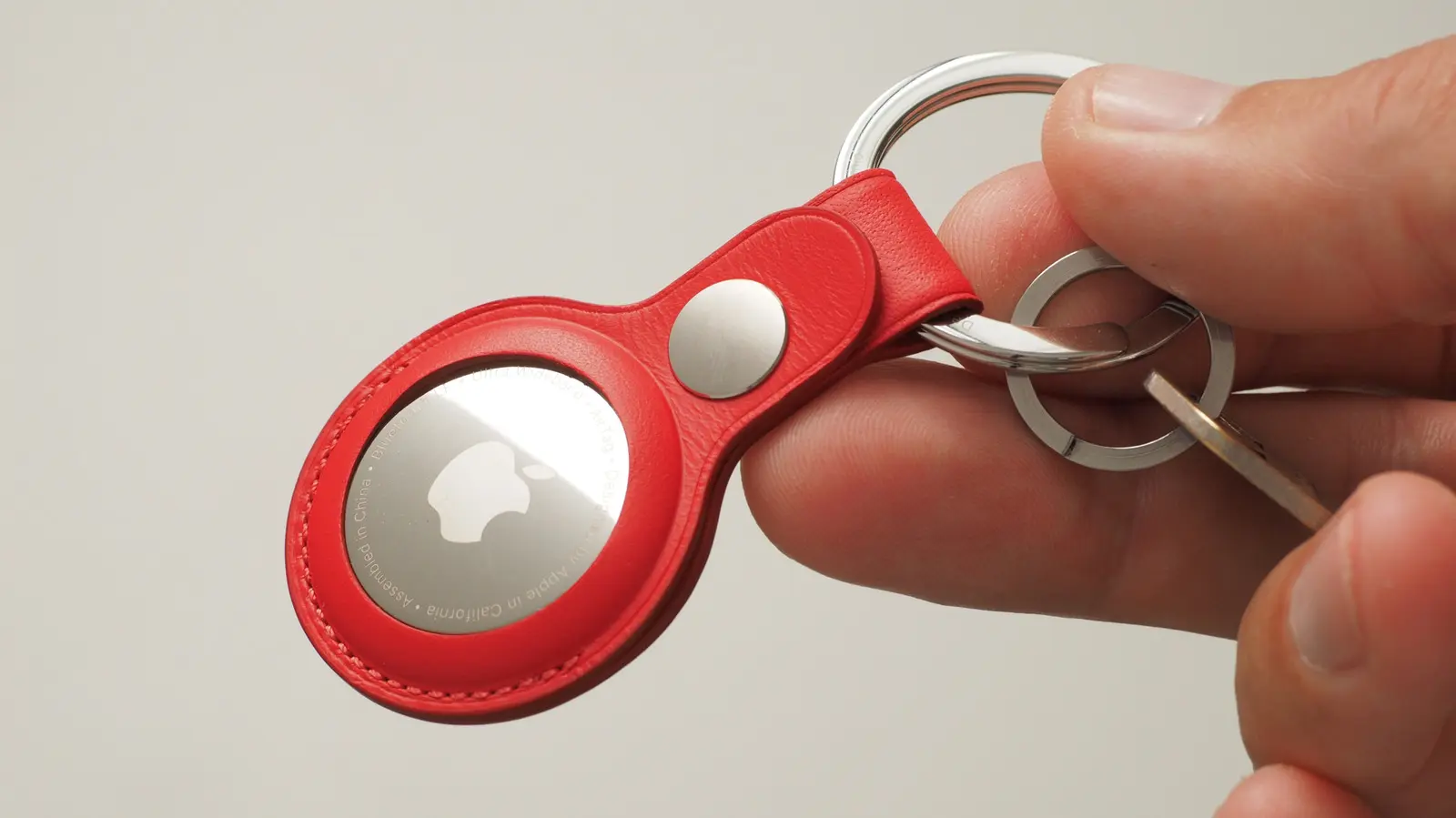
Whether it's an airline misplacing your checked luggage or you forgetting exactly where you left your backpack at home, it's nice to be able to look at your phone to locate the missing bag. That's why people have gravitated toward products like Apple AirTags and Life360's Tile trackers to keep tabs on their personal items. These trackers aren't terribly punishing on the wallet, either. A single AirTag costs $29, and your basic Tile Mate is just $24.99.
One thing you would hope to do with one of these trackers is attach it to an item and forget about it. After all, their usefulness only becomes apparent when something goes missing, which hopefully isn't very often. Unfortunately, these are battery-powered devices. So while they may be out of sight and out of mind most of the time, you do need to know when their batteries (or the trackers themselves) need to be replaced. For an Apple AirTag, you can expect the battery to last more than a year. Apple only produces one kind of AirTag, which recently received a serious upgrade, making it easy to remember the estimated life of its battery.
Life360, on the other hand, has multiple Tile tracker options. The Tile Pro's battery lasts for around one year, but the basic Tile Mate, Tile Slim, and Tile Sticker all have batteries that can last up to three years. That may make the Pro version seem like a worse deal, but in reality, you won't be replacing that device nearly as often as you'd have to with the sealed-battery Tile models.
Replaceable, Sealed, and Rechargeable Batteries
The Tile Mate, Tile Slim, and Tile Sticker can last up to three years, but once their permanent batteries die, you'll have to buy new trackers to replace them. Meanwhile, the Tile Pro has a replaceable battery. Even though the battery only lasts one year, all you need to do is get a CR2032 coin battery and replace it when it dies. Rather than spending $24.99 for a Tile Mate every three years, you're spending $34.99 upfront for a Tile Pro and can replace its battery as needed. A pack of four Duracell CR2032 batteries currently sells for $3.99 on Amazon; at that price, you're essentially spending $1 per year to replace the Pro's battery.
The Apple AirTag has a surprisingly similar setup. Despite Apple products rarely allowing for user-replaceable parts and batteries, you can replace an AirTag's battery once it's dead with the very same CR2032 battery the Tile Pro uses, so you don't have to purchase a $29 replacement AirTag every year. Your iPhone will simply alert you when the tracker's battery is low, and you can change it.
There's one big caveat to all of this, and that's Life360's pretty new GPS Pet Tracker. This is the only tracker of the bunch with a rechargeable battery, which lasts for about 14 days. It does have a six-month reserve mode, but with a pet being in constant motion, the battery can drain quite fast. The other trackers available are passive products, but this active one requires more regular upkeep.
Detailed Battery Life Analysis
When comparing battery life, users must consider not just the rated longevity but also the practical implications of battery replacement. The Tile Mate, Slim, and Sticker offer an impressive three-year battery life, which is a significant advantage for items that are rarely moved or accessed. However, the sealed design means that after three years, the entire tracker must be discarded and replaced. This results in a total cost of ownership that, over a decade, could amount to roughly $75 for the Mate (three replacements) compared to the Tile Pro's $34.99 upfront plus about $10 for ten years' worth of CR2032 batteries. From a cost perspective, the Pro is more economical in the long run, provided the user is comfortable with an annual battery swap.
Similarly, the AirTag's battery life of about one year is standard for coin cell-powered trackers. The ability to replace the battery easily mitigates the recurring expense, though some users have reported that the AirTag's battery can last up to 18 months under low usage conditions. The CR2032 battery is widely available and inexpensive, making the AirTag a cost-effective choice over time. Additionally, the AirTag integrates seamlessly with Apple's Find My network, offering precise location tracking via the U1 chip and ultra-wideband technology, which can be more accurate than Bluetooth-based Tile trackers in close-range search.
The Tile Pro, although similar in battery replacement, uses Bluetooth 4.0 and relies on the Tile network for crowd-sourced location updates. This network has grown significantly but may not be as dense as Apple's Find My network in some regions. The Tile Pro also offers a range of up to 400 feet, which is longer than the AirTag's Bluetooth range of about 30 feet, but both are limited when out of range unless they encounter other devices in their respective networks.
For users who prioritize battery longevity, the Tile Mate, Slim, and Sticker are attractive because of their three-year lifespan. However, this longevity comes at the cost of disposability. If sustainability is a concern, the replaceable battery models are more environmentally friendly, as they reduce electronic waste. Life360 has acknowledged this by offering a battery replacement service for some models, but the sealed trackers still end up in landfills after their battery expires.
Cost Analysis Over Time
To illustrate the financial implications, let's model a 10-year ownership period. For the Tile Mate, you would need to purchase a new tracker every three years, totaling roughly $75 (three purchases at $24.99 each, assuming no price changes). For the Tile Pro, the initial cost is $34.99, and you would need to replace the CR2032 battery ten times at a cost of about $10 for a multi-pack, totaling $44.99. The AirTag, at $29.99 initially plus about $10 for batteries, comes to $39.99 over ten years. Thus, the AirTag is the cheapest option, followed closely by the Tile Pro. The sealed Tile models are more expensive in the long run, though they require less frequent attention.
However, cost is not the only factor. The Tile Pro and AirTag both offer replaceable batteries, providing convenience and reducing e-waste. The sealed trackers are simpler to use initially, as there is no need to buy or replace batteries, but they require a full replacement when the battery dies. For users who attach the tracker to high-value items like laptops, cameras, or luggage, the peace of mind from a replaceable battery may outweigh the longer initial battery life.
Active Tracking vs. Passive Tracking
Another important distinction is between passive trackers (Tile Mate, Slim, Sticker, Pro, and AirTag) and active trackers like the GPS Pet Tracker. Passive trackers rely on periodic Bluetooth signals and crowd-sourced networks to update location. They are designed for items that are stationary for long periods. Active trackers, such as the GPS Pet Tracker, use GPS, cellular, and Wi-Fi to provide real-time location updates, which consumes significantly more power. The Pet Tracker's 14-day battery life reflects this constant communication, though the reserve mode can stretch it to six months if the tracker is in a low-usage state. This device is best suited for pets that roam outdoors, whereas passive trackers are ideal for keys, wallets, or luggage that stay indoors or are rarely lost.
Life360 also offers the Tile Sticker, which is small and intended for items like remotes, cameras, or even pets (though not as a GPS tracker). Its three-year battery life is impressive, but the sticker form factor means it cannot accommodate a replaceable battery. Similarly, the Tile Slim is designed for wallets, with a thin profile that also precludes a user-replaceable battery. The Pro and AirTag, with thicker designs, can house a coin cell compartment.
In summary, battery life is a crucial factor when choosing between Tile trackers and Apple AirTag. For users who want a set-it-and-forget-it approach for up to three years, the sealed Tile models are ideal. For those who prefer a sustainable, cost-effective solution with annual battery swaps, the Tile Pro or AirTag are better. The GPS Pet Tracker fills a niche for active pet monitoring but demands more frequent charging. By understanding the trade-offs between replaceable, sealed, and rechargeable batteries, consumers can select the tracker that best fits their lifestyle and usage patterns.
Source: SlashGear News