

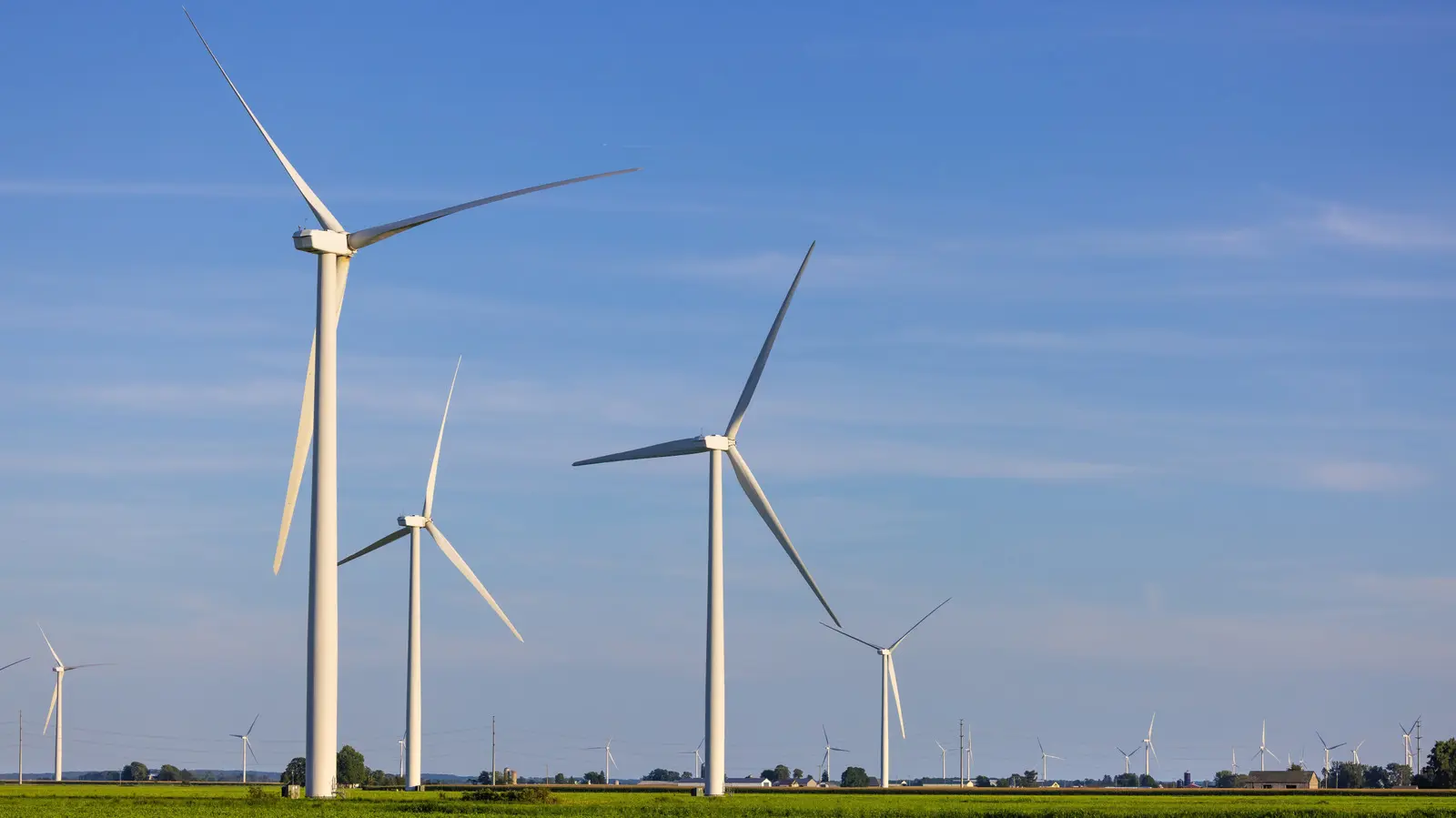
The U.S. Department of Energy (DOE) is spearheading a significant transformation in the way wind turbine blades are manufactured. For years, the traditional process of creating full-scale plugs and molds has been a major bottleneck, consuming considerable time, labor, and financial resources. Now, thanks to advances in 3D printing technology, researchers are developing methods that could dramatically accelerate production, lower costs, and introduce unprecedented flexibility in blade design.
Wind energy is already a substantial contributor to the nation's electricity supply, providing over 10% of U.S. power and serving tens of millions of homes. However, the ambitious goals set for renewable energy expansion require even more efficient and cost-effective installation of turbines. Blades are among the most critical and complex components; their manufacturing has long relied on a multi-step process that begins with a full-size physical model called a plug. This plug is used to create a mold, which then forms the composite blade. While effective, this method demands extensive manual labor, precision, and time—especially when different blade sizes and designs are needed for various turbine models and installation environments.
Traditional Blade Manufacturing: A Labor-Intensive Process
Building a wind turbine blade is not a one-size-fits-all affair. Turbines come in a wide range of sizes, from small residential units to massive offshore installations with rotor diameters exceeding 150 meters. Each blade length and aerodynamic profile requires a unique plug and mold. The traditional approach dictates that a plug must be sculpted from materials like wood, foam, or clay, then finished to exact specifications. This plug is then used to construct a mold—often made of fiberglass or metal—that can withstand the heat and pressure of composite curing. The entire cycle from design to first blade can take months, and any design iteration necessitates a new plug, making it difficult to experiment with novel blade concepts.
The costs are equally significant. According to industry estimates, the mold for a single large turbine blade can cost upwards of $1 million. Given that a typical wind farm may require hundreds of blades, the manufacturing investment is substantial. Moreover, the industry faces constant pressure to improve blade efficiency, reduce weight, and increase durability—all of which are hampered by the slow and expensive prototyping process.
Historically, blade design has evolved from simple airfoil shapes to complex, aerodynamically optimized structures with integrated lightning protection and sensors. Each improvement, however, has come with increased manufacturing complexity. The traditional plug-and-mold method, while proven, is inherently rigid and capital-intensive. As blade lengths have grown to over 100 meters for offshore turbines, the size of the required molds has become a logistical challenge, often requiring transportation on specialized trailers and assembly in custom-built facilities.
The 3D Printing Revolution
Enter additive manufacturing. The DOE's Wind Energy Technologies Office, in collaboration with the Advanced Manufacturing Office, national laboratories such as Oak Ridge National Laboratory (ORNL), and private sector partners, is pioneering the use of large-scale 3D printing to produce blade molds directly. The key enabler is ORNL's Big Area Additive Manufacturing (BAAM) machine, which can print polymer components more than ten times larger than conventional industrial 3D printers, and at speeds hundreds of times faster.
BAAM works by depositing layers of heated composite material—typically a carbon-fiber-reinforced thermoplastic—to build up the mold shape. Once the printing is complete, workers apply a fiberglass coating, machine the surface to the required finish, and integrate features such as integrated heating ducts for curing. The result is a ready-to-use mold that bypasses the plug stage entirely. Because the mold is generated directly from a digital design file, engineers can quickly produce molds for different blade sizes or geometries without the need for multiple physical plugs. This not only slashes lead times from months to weeks but also allows for rapid iteration and optimization of blade designs.
Moreover, 3D-printed molds offer greater geometric freedom. Traditional mold-making techniques are constrained by the need to remove the plug and mold from each other, which limits undercuts and complex shapes. Additive manufacturing can produce molds with integrated channels for heating or cooling, and even incorporate features that improve the blade's aerodynamic performance. This flexibility could enable the development of entirely new blade architectures beyond the standard three-bladed horizontal-axis rotor that dominates today.
In addition to BAAM, other additive systems are being explored at different scales. For instance, the DOE's Advanced Manufacturing Office has funded projects at the University of Maine's Advanced Structures and Composites Center, which operates a large-scale 3D printer capable of producing objects up to 100 feet long. Such machines could potentially print not only molds but also the blades themselves, using bio-based materials like cellulose-filled thermoplastics that are renewable and recyclable.
Broader Implications for Wind Energy
The DOE's initiative is part of a larger push to modernize wind turbine manufacturing and reduce the levelized cost of energy (LCOE). Cheaper blades mean cheaper turbines, which in turn make wind power more competitive with fossil fuels. The United States already boasts a strong wind turbine manufacturing base, with major factories producing nacelles, towers, and blades. By streamlining blade production, the DOE aims to reinforce domestic supply chains and reduce dependence on imports.
Furthermore, the environmental benefits extend beyond just energy production. Traditional mold manufacturing generates significant waste from the plug materials and the machining process. 3D printing, being an additive process, uses material only where needed, reducing scrap. The composite materials used in BAAM are also recyclable to some extent, addressing one of the wind industry's long-standing challenges: the disposal of decommissioned blades. Most blades are made from thermoset composites that are difficult to recycle, but thermoplastics used in 3D printing can be melted down and reused, potentially offering a circular economy solution.
Several other research groups and companies are exploring similar avenues. For example, the University of Maine has developed a large-scale 3D printer capable of producing boat hulls and other large structures, and is investigating wind turbine blade molds. Private firms like Siemens Gamesa and GE Renewable Energy are investing in automated blade manufacturing processes that incorporate robotics and additive elements. However, the DOE's coordinated effort across multiple national labs and industry partners provides a comprehensive approach that could accelerate commercialization.
Challenges and Future Directions
Despite the promise, several challenges remain. Scaling up 3D printing to handle the largest blades—some exceeding 100 meters—requires machines even larger than BAAM. Print speed and material properties must be optimized to ensure that molds can withstand the high temperatures and pressures of blade curing. Quality control is another issue: printed molds must meet stringent dimensional tolerances and surface finish requirements. Researchers are also exploring ways to directly print the blade itself, not just the mold, though this is still at an experimental stage.
The DOE's Wind Energy Technologies Office has announced funding for multiple projects focusing on advanced manufacturing. For instance, a partnership with the National Renewable Energy Laboratory (NREL) is investigating the use of digital twins and machine learning to optimize blade designs for printability. Another project with Sandia National Laboratories is studying the fatigue behavior of 3D-printed composite materials under the cyclic loading typical of wind turbine operation.
The transition from traditional to additive manufacturing will not happen overnight. Existing blade factories are equipped for conventional processes, and retooling requires capital investment. However, the DOE's strategy includes demonstration projects that prove the technology at scale, thereby reducing risk for private investors. If successful, the impact could be transformative: cheaper, lighter, and more efficient blades that can be produced in weeks rather than months, with designs tailored to specific wind regimes or deployment sites.
Wind energy already plays a vital role in America's energy mix, supplying over 10% of electricity generation and supporting thousands of jobs. The innovation in blade manufacturing comes at a time when the industry is poised for further growth, driven by federal incentives, state mandates, and corporate renewable energy procurement. With the DOE leading the charge, the next generation of wind turbines may be built not from traditional molds and endless plugs, but from the precise, layer-by-layer construction of 3D printers.
This approach not only addresses the immediate production bottleneck but also opens the door to radical new designs that could improve energy capture and reduce materials usage. As the technology matures, we may see blades with variable camber, integrated sensors, or even active morphing capabilities—features that are nearly impossible to manufacture with current methods. The U.S. Department of Energy's rethinking of wind turbine blade manufacturing is a clear signal that the nation is committed to advancing renewable energy infrastructure through cutting-edge innovation.
Source: SlashGear News