

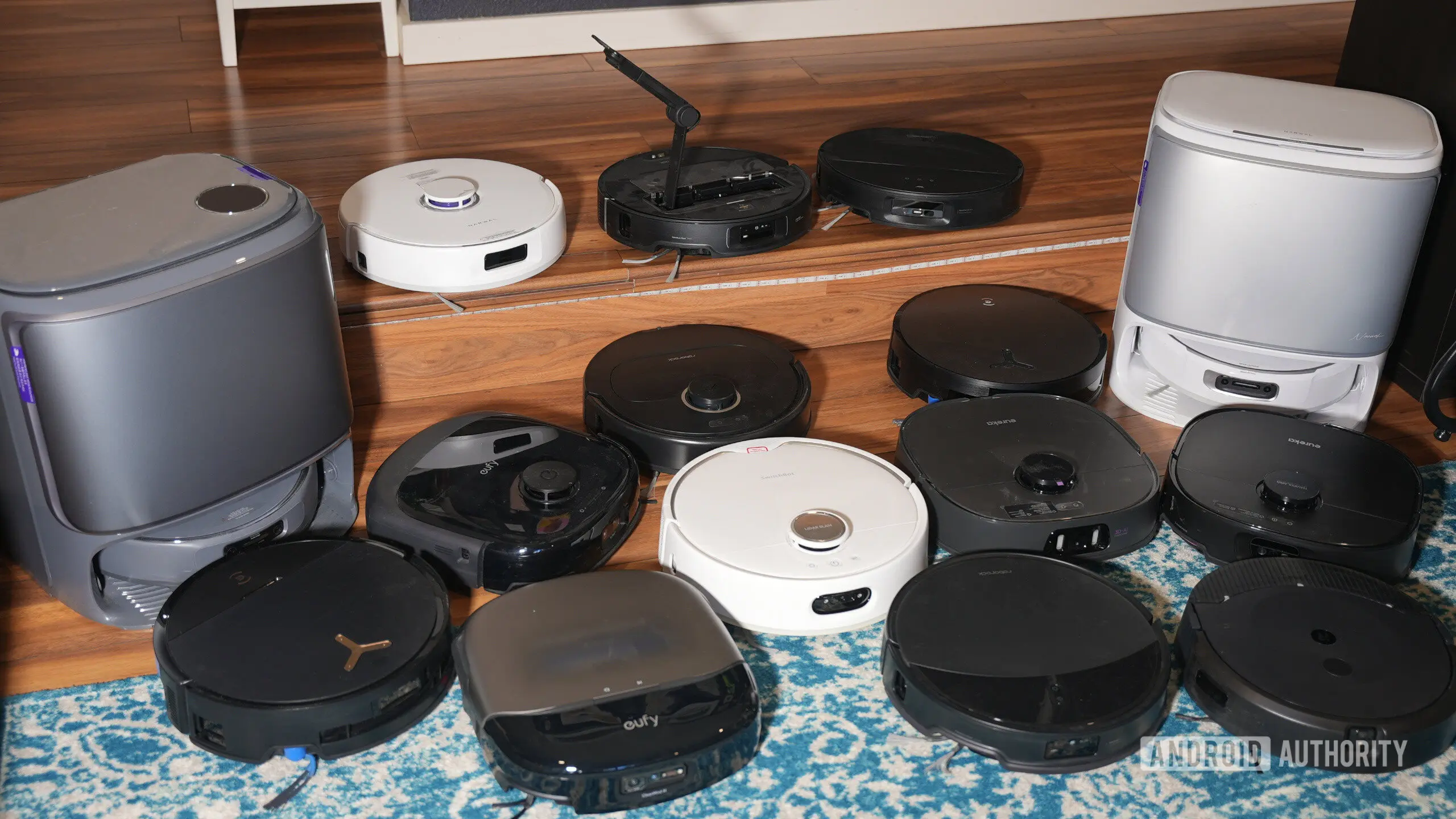
The current administration has a complicated relationship with China, to put it mildly, and when it’s not wreaking havoc on the global economy with tariffs, it’s fixating on the latest Chinese tech it wants to ban. This week, that has extended to banning foreign “advanced robotic devices,” but as it turns out, “advanced” may be a much lower bar than you’d think — so low, even robotic vacuums make the cut.
What the FCC Ban Actually Says
The Federal Communications Commission (FCC) announced the ban earlier this week, initially focusing on humanoid and quadruped robots — basically, anything that walks around — as well as power inverters. That would be a big enough deal, but the FCC has now confirmed to The Verge that this ban isn’t exclusive to robots with legs, and would extend down to the smart home appliances we use to keep our floors clean.
The official language targets “advanced robotic devices” that are deemed a national security risk. The FCC has been empowered to review and block imports of any such device that could be used for surveillance or cyberattacks. While the initial announcement highlighted walking robots, the agency later clarified that any robot with advanced sensing, connectivity, and autonomy — characteristics common in modern robot vacuums — falls under the new restrictions.
Security Concerns: Why the Ban Exists
Admittedly, there’s already evidence for why we might want to be concerned about some robot vacuums, following incidents like the one we saw where hackers took control of ECOVACS vacuums a couple years ago, or the more recent one revealing serious security flaws in DJI vacuums. With these kind of camera-equipped, self-propelled devices already in so many homes, that could pose a nation-wide security risk should some entity start compromising them en masse.
The FCC has been increasingly worried about the Internet of Things (IoT) devices that come from foreign adversaries. The agency's concern is not just about data theft but also about using these devices as nodes in botnets for distributed denial-of-service attacks or as physical surveillance tools. Robot vacuums, which map homes and collect data on floor plans, occupancy patterns, and sometimes even video footage, present a unique risk compared to simpler smart home gadgets.
While the ban is broad, it does include exceptions for devices that are certified to meet strict security standards. However, critics argue that the certification process is opaque and burdensome, potentially stifling innovation and competition.
Impact on the Robot Vacuum Market
Nothing’s happening to robot vacuums that have already been released, but this ban could spell very bad news for companies interested in selling new models in the US. The market is dominated by Chinese brands such as Roborock, Ecovacs, and DJI's RoboVac division. Together, they account for over 70% of US robot vacuum sales according to industry estimates. Even well-known US brands often rely on Chinese manufacturing or OEM partnerships.
We’ve reached out to the China-based Roborock to see if the company has any comment on this development. Considering how hungry the US has been for automated cleaning tech, and how many brands are located outside the country, the FCC’s ban has the potential to seriously upend this market.
Smaller US competitors like iRobot (maker of the Roomba) might see a temporary boost, but iRobot itself has faced financial struggles and production relies heavily on Asian supply chains. Other domestic startups are not yet ready to scale to replace the volume of imports. The ban could also accelerate efforts by companies like Samsung and LG to shift supply chains to secure countries, but such moves take years.
Historical Context: FCC's Previous Security Bans
The FCC has been on a roll with security-based bans. In 2020, it designated Huawei and ZTE as national security threats, effectively barring their equipment from US networks. Later it banned Chinese drone maker DJI (though that was partially reversed). The robot vacuum ban is the first time the agency has targeted consumer-grade appliances. This expansion signals a broader approach to IoT security that could affect other smart home devices like smart speakers, security cameras, and smart thermostats.
Critics argue that the FCC lacks the technical expertise to evaluate the myriad of devices flooding the market and that the process is often politicized. Supporters counter that the risks are real, especially given China's laws that compel companies to assist the government with intelligence gathering.
What This Means for Consumers
For now, if you already own a robot vacuum from a foreign brand, you can continue to use it without issue. The ban only applies to new imports after a certain date, which has not yet been announced. However, future purchases may be limited, leading to higher prices and fewer choices.
It could also spark a wave of firmware updates and security certifications as companies try to comply. Some brands may decide to exit the US market altogether rather than undergo the FCC's rigorous review process. Consumers might also see a rise in domestic clones or open-source robot vacuum projects, but these will likely be expensive and less polished.
The FCC has promised to release a list of approved devices, but until then, uncertainty looms. The smart home industry is watching closely, as the robot vacuum ban may be just the first step in a broader crackdown on foreign IoT devices. It remains to be seen how companies will adapt to this new regulatory landscape.
Source: Android Authority News