

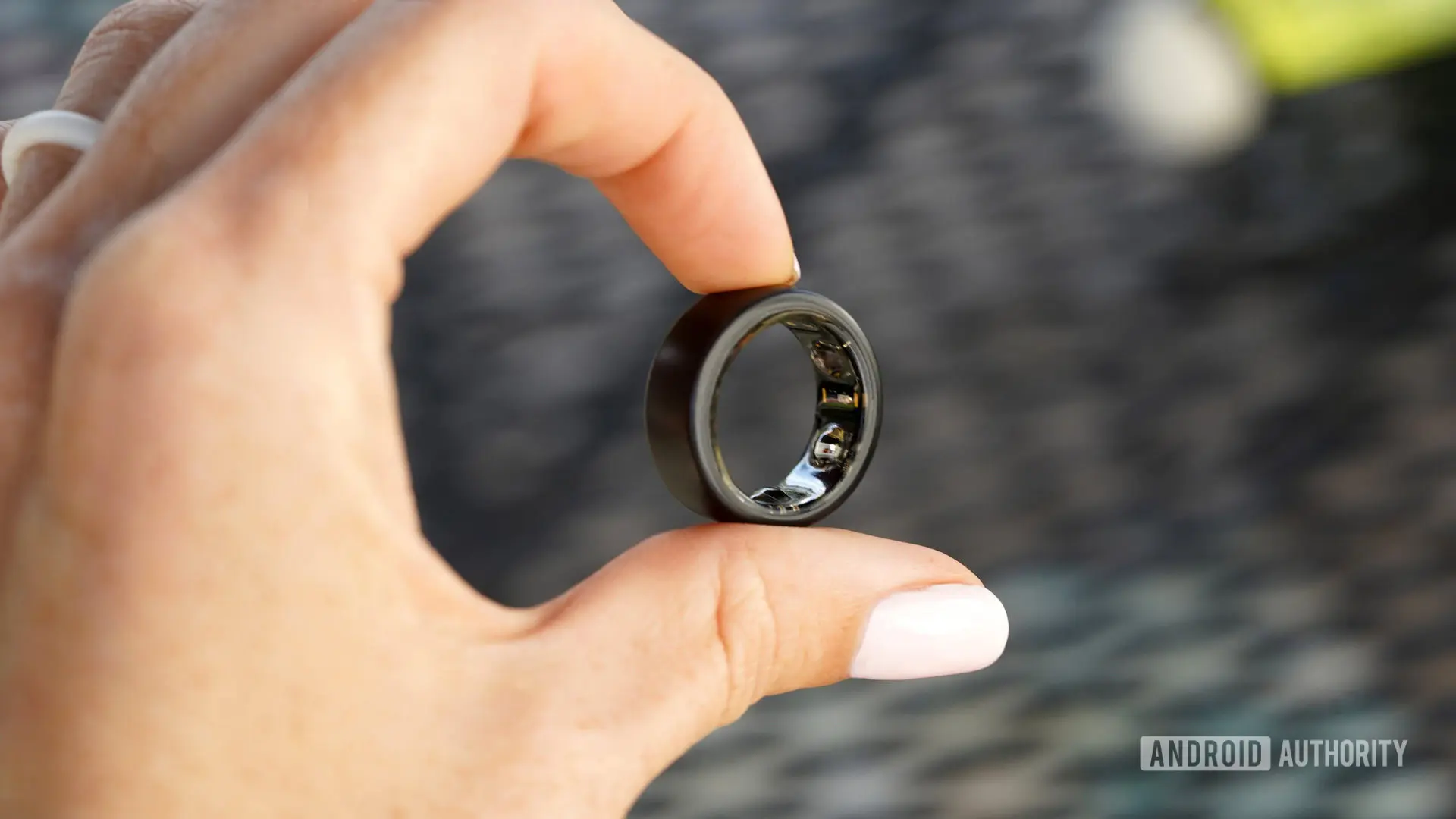
The quest for non-invasive health monitoring has driven wearable technology forward for years. While smartwatches and fitness bands have become adept at tracking heart rate, steps, and sleep patterns, one critical area has remained largely out of reach: the ability to measure biomarkers traditionally accessed only through blood analysis. Now, a team of scientists has published a groundbreaking paper in the journal Nature describing a smart ring prototype that can non-invasively analyze sweat to measure glucose, lactate, and even alcohol levels. This development could represent a significant leap forward in the realm of wearable health sensors.
The Challenge of Non-Invasive Monitoring
Current wearable devices rely on various techniques to gather physiological data. Optical sensors using photoplethysmography (PPG) can estimate heart rate and blood oxygen saturation by shining light through the skin and detecting changes in blood volume. However, these methods are indirect and often struggle with accuracy, especially during movement or in individuals with darker skin tones. For metrics like blood glucose, which is crucial for diabetes management, the standard remains a finger-stick test that draws blood. Patients with diabetes must endure multiple daily pricks to monitor their levels, which can be painful and inconvenient. This has fueled an intense search for a reliable, needle-free alternative.
Over the years, various approaches have been attempted. Some researchers have explored using infrared spectroscopy to measure glucose through the skin, but these optical methods are often confounded by other substances in the tissue and require frequent calibration. Others have turned to interstitial fluid, the fluid surrounding cells, which can be accessed through microneedles or reverse iontophoresis (applying a mild electric current to draw fluid to the surface). The FreeStyle Libre system, for example, uses a small sensor inserted just under the skin to measure glucose in interstitial fluid, but it still requires a needle-like insertion and is not truly non-invasive. Sweat, on the other hand, has long been recognized as a rich source of biomarkers, but collecting and analyzing it in a consistent, wearable format has proven difficult.
How the Sweat-Analyzing Ring Works
The newly developed smart ring addresses these challenges through an innovative design centered on an osmotic hydrogel polymer. This material actively draws sweat away from the skin, even when the wearer is not heavily perspiring. Unlike passive sweat collectors that require the user to be actively exercising, the hydrogel creates a constant wicking action that ensures a steady supply of sweat to the sensor array. The ring incorporates microfluidic channels that transport the sweat to electrochemical sensors capable of detecting multiple biomarkers simultaneously. In the prototype described in the paper, the system can measure glucose, lactate, and alcohol levels with a sensitivity that reportedly matches traditional blood analysis.
The device operates on a small battery that currently provides about 12 hours of continuous use. While this is short compared to commercial smart rings like the Oura Ring or Galaxy Ring, which can last several days, the researchers note that the ring is a proof-of-concept. Further miniaturization and power management improvements could extend battery life significantly. The current housing is also bulky, looking more like a piece of laboratory equipment than a sleek piece of jewelry. However, the core technology—the hydrogel wicking and the sensor chemistry—is adaptable to smaller form factors.
The sensors themselves are based on enzymatic reactions. For glucose, an enzyme called glucose oxidase breaks down glucose, producing hydrogen peroxide that is then measured electrochemically. For lactate, lactate oxidase is used, and for alcohol, alcohol oxidase. This approach is well-established in laboratory settings, but integrating it into a wearable that can function reliably over time, despite sweat evaporation and varying pH Levels, has been a major engineering hurdle. The team behind the ring claims they have solved these issues using specialized membranes and coatings that protect the sensors and maintain their accuracy.
Comparison with Existing Technologies
Non-invasive glucose monitoring has been the holy grail of medical wearables for decades. Companies like Apple, Google, and Samsung have invested heavily in optical methods, but none have successfully brought a commercial product to market. The Dario Glucose Smart Meter and other devices still require blood pricks. Startups such as Know Labs have explored radiofrequency spectroscopy, but results have been mixed. The sweat-based approach offers a distinct advantage because it directly measures the target molecules rather than inferring them from other signals. This direct measurement could lead to higher accuracy and less individual calibration.
On the other hand, sweat is not as tightly regulated as blood. Sweat glucose levels correlate with blood glucose but can lag behind during rapid changes and can be affected by sweating rate. The researchers in the Nature paper addressed this by incorporating algorithms that compensate for sweat flow rate and external temperature. They validated their ring against standard lab tests and found a strong correlation, giving them confidence in the technology's potential. Lactate measurements from sweat are also known to reflect muscle activity and metabolic stress, which could be valuable for athletes monitoring training intensity. Alcohol sensing could find applications in law enforcement or personal monitoring, similar to alcohol ignition interlocks but in a non-invasive wrist-worn form.
Current smart rings focus primarily on sleep tracking, heart rate, and SpO2. Adding glucose and lactate monitoring would vastly expand their utility. For instance, a ring that tracks glucose could help people with prediabetes manage their diet and exercise in real-time without finger sticks. Athletes could use lactate readings to optimize their training zones. The ring could also provide continuous alcohol readings, which might serve as a deterrent for those who want to stay within legal limits for driving or simply track their consumption.
Potential Applications and Limitations
The immediate potential use case for such a ring is diabetes management. Even if the device cannot fully replace finger sticks for insulin dosing, it could offer continuous trend data that helps patients and doctors make better decisions. For people with Type 2 diabetes who do not use insulin, the ring could be a game-changer, allowing them to see how different foods and activities affect their glucose levels without any needles. Similarly, for athletes, lactate monitoring could help avoid overtraining or plan pacing strategies.
Beyond health monitoring, the ring could have applications in wellness and fitness. Many people wear smart rings for sleep tracking; adding metabolic data could provide a more holistic picture of recovery. The alcohol detection feature, while not medically critical, could be popular among users who want to be aware of their blood alcohol concentration without needing a breathalyzer.
However, there are significant limitations to overcome. The current prototype's battery life is only 12 hours, which would require daily charging—an inconvenience for a ring intended to be worn continuously. The bulky design is also impractical for everyday wear. The sensors may need to be replaced periodically, and the cost of such a device could be high initially. Furthermore, the hydrogel needs to be in contact with the skin at all times, which may cause irritation or hygiene issues over extended use. Finally, regulatory approval from bodies like the FDA would be required for any medical claims, which can take years and millions of dollars.
The Road to Commercialization
Translating a laboratory prototype into a commercially viable product is a complex and uncertain journey. The researchers acknowledge that their work is a proof-of-concept, and many engineering challenges remain. However, the approach has attracted interest from several wearable manufacturers and may be adopted in future devices. The ring's reliance on an osmotic hydrogel is a particularly clever solution to the problem of insufficient sweat. Traditional sweat sensors require the user to be sweating heavily, which is not practical for continuous monitoring. The hydrogel ensures that even during rest or low activity, a small amount of sweat is continuously wicked and analyzed.
Another hurdle is the integration of all necessary electronics—sensors, microfluidics, battery, communication chip—into a ring-sized package. Current smart rings use low-power Bluetooth to send data to a smartphone app, but the additional energy required for the sensors and pump (if any) could strain the battery. Advanced power management and possibly a custom chip may be needed. Additionally, the ring must be waterproof to survive daily wear, including washing hands and exposure to rain.
Several companies are already working on similar technologies. The startup Lief Therapeutics and others have explored sweat sensing, but few have reached the stage of clinical validation achieved by this new study. If the results hold up in larger trials, it could accelerate development. The market for non-invasive glucose monitors alone is estimated to be worth billions of dollars, and the company that cracks the code will have a massive competitive advantage.
For now, the smart ring described in Nature is a promising demonstration that non-invasive biomarker monitoring via sweat is achievable. It does not yet match the convenience or battery life of current commercially available smart rings, but the progress is undeniable. As the researchers continue to refine their design, we may see a new generation of wearables that go beyond tracking steps and heart rate to provide real-time insights into our body's internal chemistry. The dream of a truly non-invasive health monitor is one step closer to becoming a reality."
Source: Android Authority News