

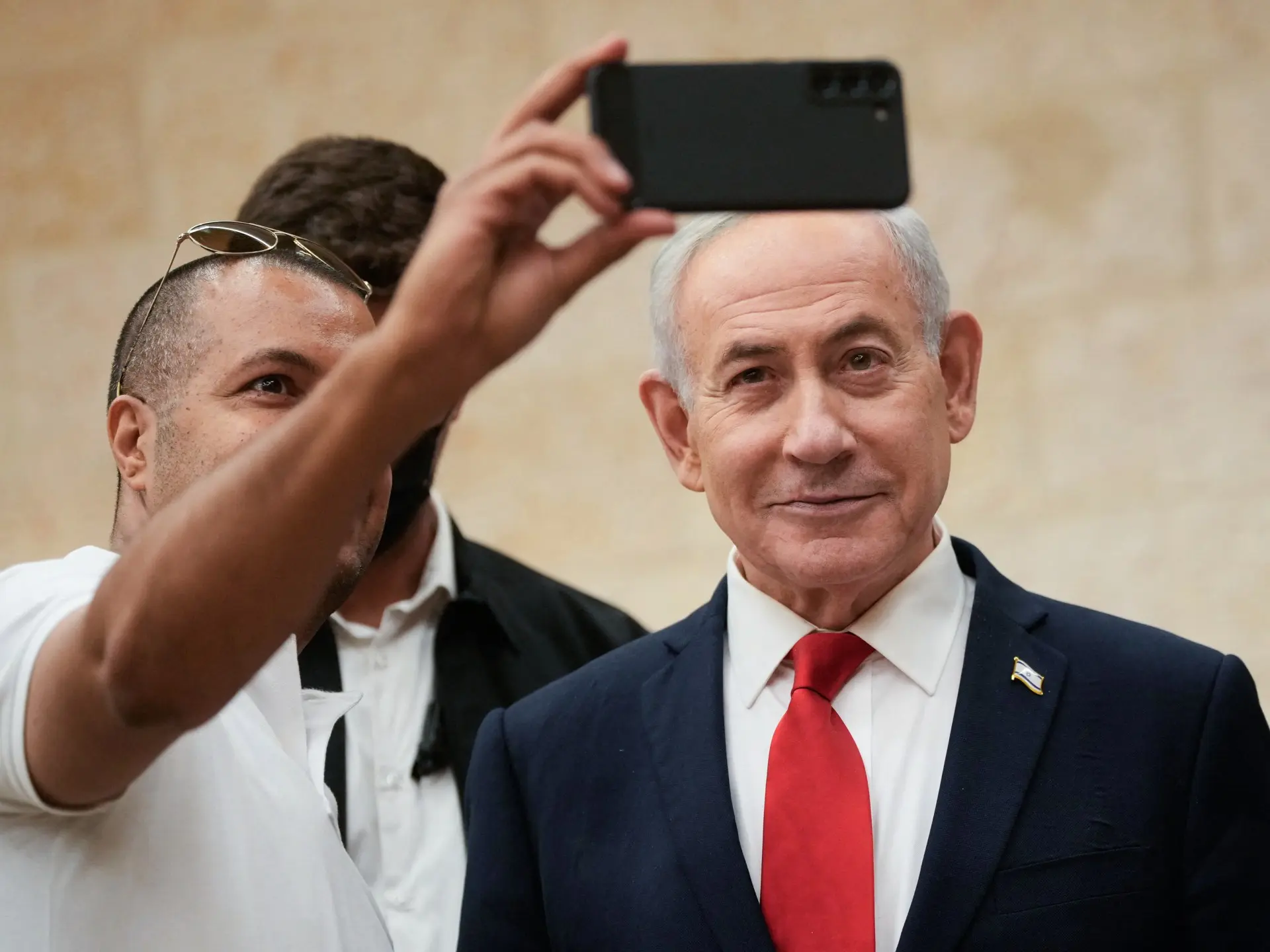
Israeli Prime Minister Benjamin Netanyahu has openly boasted of ordering the bombing of Qatar, while firmly rejecting domestic accusations that Qatari funds directed toward Gaza were ever used for anything other than humanitarian assistance. In an interview broadcast on Israel’s i24NEWS and shared on social media on Saturday, Netanyahu described Qatar as a “hostile” state that did not dictate Israeli policy during the genocidal war against Hamas in Gaza.
“I attacked Qatar, I also bombed it and attacked them during the war, and they attacked me,” Netanyahu boasted, in remarks that immediately drew international attention and condemnation from critics who see his rhetoric as increasingly erratic and bellicose. The interview comes barely a week before the one-year anniversary of Israel’s September 9, 2025, strike on Doha, a bold attack that killed five Hamas members and a Qatari security officer during a meeting to discuss the United States-backed Gaza ceasefire proposal.
Context of the Doha strike
The precision strike on Doha marked a dangerous escalation in Israel’s regional confrontation with Hamas and its supporters. Qatar, a peninsular monarchy in the Persian Gulf, has long served as a key mediator in Middle East conflicts, often hosting diplomatic negotiations and providing financial support for causes ranging from Palestinian reconciliation to Sudanese peace talks. Since 2012, Qatar has also hosted Hamas’s political office at the request of the United States, a role that made it a vital, though often controversial, backchannel between Washington, Tel Aviv, and Hamas leaders.
According to officials familiar with the episode, the meeting targeted in the strike was specifically convened to discuss the contours of the latest ceasefire initiative supported by Washington. The killing of five Hamas members, including senior operatives involved in negotiating prisoner exchanges, dealt a heavy blow to the mediation track. But the death of a Qatari security officer was a step too far for Doha, which condemned the attack in the most powerful terms. Qatari Ministry of Foreign Affairs spokesperson Majed al-Ansari called it a “cowardly” assault, while the government issued a statement denouncing the strike as a “blatant violation of all international laws and norms.”
The international reaction was swift and severe. Several countries in the region, including Iran and Pakistan, expressed strong condemnation. In a rare display of unity, leaders from Jordan, the United Arab Emirates, and Saudi Arabia visited Qatar shortly after the attack in a show of solidarity with the wounded Gulf state. The United Nations Secretary-General António Guterres called the strikes a “flagrant violation” of Qatar’s sovereignty and territorial integrity, urging Israel to refrain from further acts that could destabilize an already volatile region.
Behind the scenes, however, diplomatic damage control was already underway. During a meeting later that month at the White House, Netanyahu and US President Donald Trump telephoned Qatar’s Prime Minister and Minister of Foreign Affairs, Sheikh Mohammed bin Abdulrahman bin Jassim Al Thani, to apologize for the strike. The apology was widely seen as a face-saving measure, but it did little to repair the trust eroded by an attack that targeted a nation officially mediating on Israel’s behalf.
Qatari funds to Gaza: Netanyahu defends the transfers
In addition to his remarks about the bombing, Netanyahu used the i24NEWS interview to defend his government’s role in facilitating the transfer of millions of dollars in Qatari funds to Gaza. These transfers, which had been a recurring feature during the years leading up to the October 7, 2023, attack, were intended for humanitarian purposes, according to Netanyahu. He insisted that they were carried out on the recommendation of Israeli security agencies, specifically Mossad and Shin Bet.
“All this money is worth 2 percent – 2 percent of all the money that entered the Strip,” Netanyahu said, attempting to minimize the significance of the Qatari aid in relation to the overall flow of goods and funds into Gaza. This percentage, however, does little to quiet his critics. Some of Netanyahu’s domestic detractors have alleged that the Qatari funds, instead of benefiting ordinary Palestinians, were diverted by Hamas to construct tunnels and purchase military equipment in preparation for the October 7 cross-border raid that precipitated the deadliest war in the Israeli-Palestinian conflict’s history.
The accusation that Qatar financed Hamas has been a recurring theme among Netanyahu’s political opponents. During the years when Netanyahu authorized these cash deliveries, often in suitcases to be handed over to Hamas-controlled authorities, questions were repeatedly raised about the wisdom of such a policy. In November 2018, Israeli security officials admitted that the funding was a necessary evil to prevent the collapse of Hamas’s administration, but they did little to explain why Qatar, a state that engages in extensive diplomatic mediation, was singled out to provide assistance.
Qatar itself categorically denies all allegations of funding Hamas for military purposes. Sheikh Mohammed bin Abdulrahman bin Jassim Al Thani made this explicit during last year’s Doha Forum when he stated: “Today, when they [Israel] are claiming that this is the financing of Qatar to Hamas, it has no basis. All our aid … went to Gaza, went to the people, and was under a very transparent process that the United States is fully aware about.”
Qatari officials point to the strict oversight mechanisms that govern their aid program, which includes unannounced international inspections and full visibility for the US government. In many ways, the $30 million monthly stipend that Qatar provided for Gaza during the ceasefire period was one of the most supervised transfers in the entire humanitarian system. International organizations, including the United Nations, also supported the aid channel, arguing that it prevented a humanitarian catastrophe in a strip already under an Israeli siege for over a decade.
Netanyahu’s renewed defense of these transfers is generally seen as an attempt to deflect attention from his own responsibility for the October 7 intelligence and security failure. If Hamas indeed prepared its attack using funds that flowed through Israeli sanctioned channels, the prime minister’s critics argue, then Netanyahu stands personally liable for empowering adversaries. By pointing to the security agencies that advised him, Netanyahu seems to be constructing a legal and political shield, but such defenses may prove fragile in the court of public opinion.
Political context: Elections on the horizon
Netanyahu’s remarks come weeks before Israelis head to the polls on October 27, in the country’s first general election since the Gaza war began in 2023. The election is shaping up to be a referendum not only on Netanyahu’s conduct of the war but also on his overall management of Israel’s economy and the ongoing conflict with Iran. Nearly three years of sustained conflict have taken a devastating toll on Israel, with thousands of soldiers killed, a decimated economy, and fragmented national morale.
In this high-stakes context, Netanyahu faces mounting pressure at home. The Gaza war, which many Israelis initially saw as a necessary response to Hamas’s October 2023 massacre, has proven intractable. Repeated attempts by the international community to broker a ceasefire have failed, and the hostages taken during the initial attack remain either dead or unaccounted for. Meanwhile, the war with Iran has evolved into a series of direct military exchanges, with Israel conducting strikes on Iranian nuclear facilities and Tehran responding with ballistic missile salvos against Israeli cities.
Netanyahu’s popularity ratings have fluctuated widely, and he has repeatedly tried to alter the political conversation by focusing on foreign policy flashpoints. Analysts and critics have noted a pattern: whenever Netanyahu faces an imminent political threat, he stokes tensions with other states to rally nationalist support. During the current campaign, he has picked fights not only with Qatar but also with the United States over ceasefire terms, France over possible sanctions, and even Saudia Arabia over its insistence on a Palestinian state.
In the case of Qatar, Netanyahu’s boast about bombing the country appears particularly self-defeating. Qatar continues to facilitate the release of prisoners and hosts the Palestinian group’s political bureau, and any Israeli prime minister would need Qatar’s cooperation to secure a future deal. Yet Netanyahu’s rhetoric may appeal to a segment of the Israeli electorate that views any overture toward Qatar as appeasement. His language of “hostility” towards Doha mirrors his broader narrative of Israel’s isolation in a neighborhood filled with enemies.
However, political analysts point out that Netanyahu’s advantage in these verbal tirades is limited. His opponents in the upcoming election, including Benny Gantz and Yair Lapid, have repeatedly criticized him for jeopardizing Israel’s strategic relationships with energy-rich Gulf states, particularly after the signing of the Abraham Accords. Normalization with Bahrain, UAE, and Morocco was supposed to create an anti-Iranian bloc, but Netanyahu’s bombing of Qatar, a member of the Gulf Cooperation Council, strains those fragile ties.
The Qatar bombing anniversary also reminds the public that Netanyahu’s aggression often elicits severe retaliation. While Israel managed to reopen communications after the apology, Qatar has temporarily suspended its mediation efforts, which led to a yearlong deadlock in ceasefire talks. Families of the hostages have accused Netanyahu of prioritizing his political survival over bringing the captives home, and his new boast about attacking Qatar has only intensified those accusations.
As the election approaches, the question of Qatar will remain a dividing line. Netanyahu’s supporters may see his willingness to confront even a “frenemy” like Qatar as proof of his commitment to national sovereignty. His detractors, however, see it as another example of reckless leadership that ignores the long-term consequences of short-term political gains. Within Israeli security circles, a growing number of retired generals and intelligence chiefs have publicly expressed alarm at Netanyahu’s approach to foreign policy, warning that Israel cannot afford to antagonize multiple adversaries simultaneously.
In the coming weeks, the i24NEWS interview will be dissected by commentators and campaign strategists alike. Netanyahu’s boast may have been crafted to project strength, but it also provides a clear insight into his increasingly transactional view of diplomacy. For Qatar, the interview and subsequent commentary are less about electioneering and more about a fundamental shift in the region’s power dynamics. A once-respected mediator has become a target, and the implications of that transformation are still unfolding.
For now, Netanyahu seems willing to pay the diplomatic price for what he perceives as domestic advantage. Whether that calculation will pay off on election day remains an open question, but the Gaza war and its regional consequences have already reshaped Israeli politics in ways that no single interview can control.
Source: Al Jazeera News