

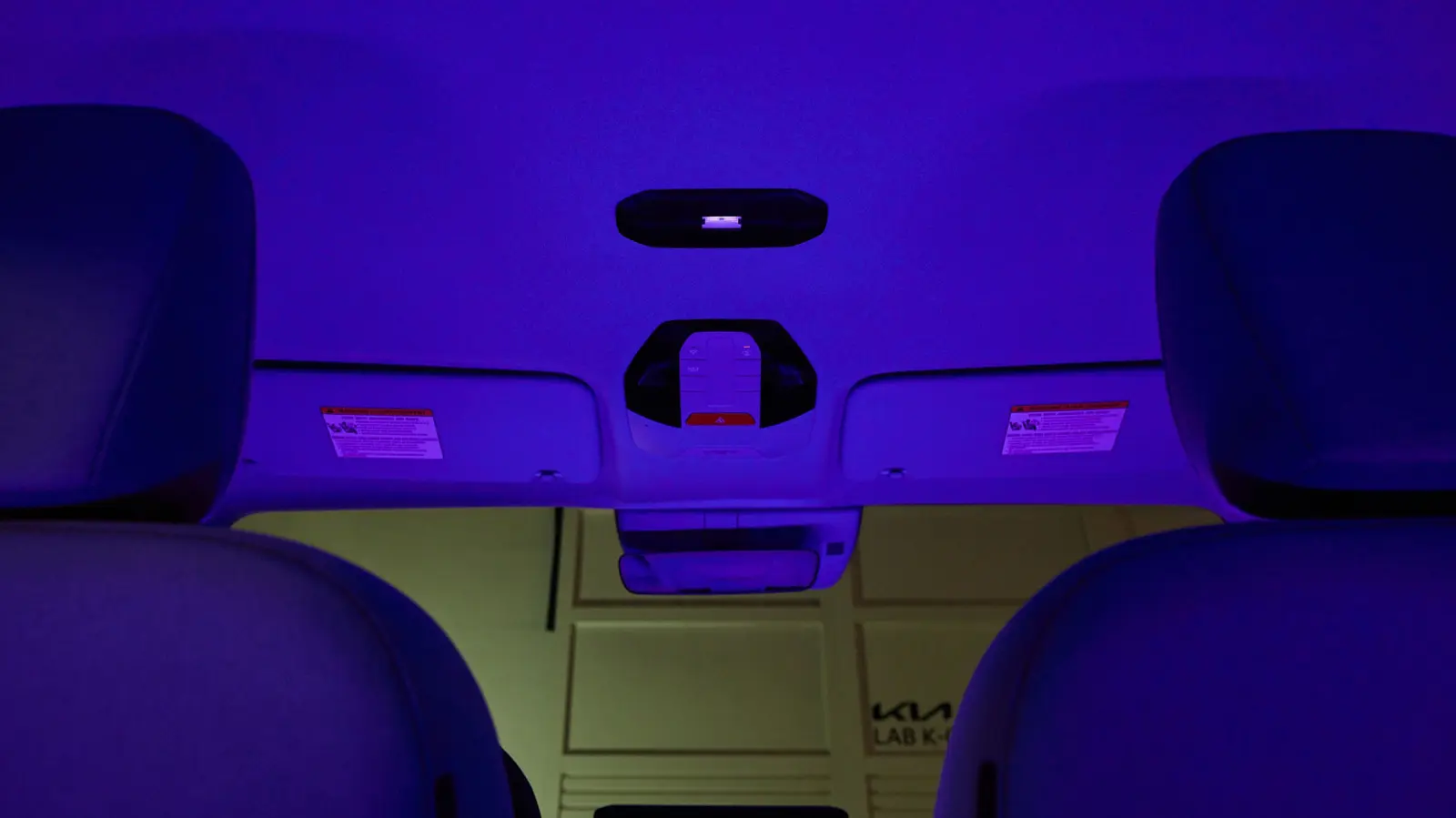
For most car owners, keeping a vehicle interior impeccably clean is a constant struggle. Dust, food crumbs, and pet hair are common nuisances, but the invisible threat of germs, bacteria, and viruses poses a more serious health concern. Hyundai and Kia have stepped up to address this challenge with their latest innovation: a cabin sterilization system that uses far-ultraviolet C (far-UVC) light. Revealed on July 26, 2026, the technology—dubbed "Plasma Care UVC"—represents a significant leap forward in automotive hygiene, offering drivers and passengers a way to sanitize their vehicle in real time, even while on the road.
The principle behind UV sterilization is well established. Ultraviolet light, particularly in the UVC range (200–280 nanometers), has been used for decades to disinfect medical equipment, water, and air. Traditional UVC lamps emit light at around 254 nanometers, which is highly effective at destroying the DNA and RNA of microorganisms. However, this wavelength also poses risks to human health, causing skin burns and eye damage upon prolonged exposure. Hyundai's far-UVC technology, by contrast, operates in the 200–230 nanometer range, which has a shorter wavelength. Research has shown that far-UVC light cannot penetrate the outer layer of human skin or the tear film of the eye, making it safe for use in occupied spaces. At the same time, it retains enough energy to penetrate and inactivate bacteria and viruses, including those that cause influenza, colds, and even coronaviruses.
Hyundai's engineers faced several hurdles in adapting this technology for automotive use. One of the primary challenges was miniaturization. The far-UVC systems used in hospitals and classrooms are often bulky, requiring large lamps and complex power supplies. To fit inside a car's HVAC system or roof liner, Hyundai's team had to develop a compact version that could deliver effective sterilization without compromising performance. They also integrated an optical filter to ensure that no harmful wavelengths—even those above 230 nanometers—could escape into the cabin. This filter acts as a safety mechanism, guaranteeing that occupants are never exposed to radiation that might cause harm.
The initial testing of Plasma Care UVC was conducted on a PV5 minivan, a versatile commercial vehicle that can be configured for passenger transport, cargo delivery, or even food service. Hyundai chose this platform because of its diverse use cases: a minivan that shuttles schoolchildren or delivers meals is especially susceptible to germ buildup. During the tests, the far-UVC system was installed in the climate control ducts, allowing it to treat the air as it circulated through the cabin. In addition, surface-mounted units were placed near frequently touched areas such as the steering wheel, door handles, and center console. The results showed a significant reduction in microbial contamination, comparable to the sanitization levels achieved in healthcare environments.
This technology arrives at a time when consumers are more conscious than ever about indoor air quality and surface hygiene. The COVID-19 pandemic heightened awareness of how easily germs can spread in shared spaces, including vehicles. Ride-hailing services, taxis, and even personal cars have become focal points for hygiene-conscious individuals. Hyundai and Kia are not the first automakers to explore UV sterilization; Tesla and other manufacturers have experimented with similar concepts, but those efforts either required the cabin to be empty during operation or were limited to air purification. Hyundai's far-UVC approach stands out because it can function continuously while people are inside the car, providing ongoing protection throughout a trip.
From a technical standpoint, far-UVC light works by disrupting the genetic material of pathogens. When bacteria or viruses are exposed to this specific wavelength, their DNA or RNA absorbs the energy, causing lethal damage that prevents replication. Unlike chemical disinfectants, which can leave residues or cause allergic reactions, UV treatment leaves no byproducts. It also does not generate ozone when properly filtered, making it environmentally friendly. Hyundai's system includes sensors that monitor UV output and automatically adjust exposure levels to maintain safety standards.
Looking ahead, Hyundai envisions applying this sanitizing technology beyond conventional passenger cars. The company has been aggressively developing Purpose Built Vehicles (PBVs)—modular electric vehicles designed for specific tasks such as ride-hailing, last-mile delivery, mobile retail, and medical transport. In these settings, maintaining a sterile environment is often critical. For example, a self-driving shuttle that transports hospital patients or a food truck that serves meals could benefit immensely from continuous UV sterilization. Hyundai also suggests that autonomous vehicles, which may not have a driver to manually clean surfaces, could rely on such systems to ensure passenger safety between trips.
The automotive industry as a whole is paying close attention to indoor health technologies. Air filtration systems with HEPA filters and ionizers are now common in luxury and even mid-range vehicles. However, surface sterilization remains a largely untapped area. Volvo and BMW have experimented with UV light in their interiors, but those implementations typically require the vehicle to be unoccupied. Hyundai's far-UVC system eliminates that restriction, opening the door for more widespread adoption. Additionally, the miniaturization of the technology could allow aftermarket installations in older vehicles, further broadening its impact.
Despite the promising initial results, Hyundai has not announced a specific timeline for bringing Plasma Care UVC to production models. The company states that additional safety and technical validation tests are needed before the system can be approved for mass production. These tests will likely include long-term exposure studies to confirm that far-UVC light remains harmless to human skin and eyes over thousands of hours of use. Also, durability assessments in extreme temperatures and humidity—common in automotive environments—will be necessary. Given the rigorous validation process typical of the auto industry, it may be two or three years before the technology appears in showrooms. However, some analysts predict that Hyundai might fast-track the feature for its premium Genesis brand or for fleet vehicles used in healthcare and hospitality.
Another aspect that could influence adoption is cost. Integrating far-UVC emitters, optical filters, and control electronics into a vehicle's existing HVAC and electrical systems will add to the manufacturing expense. Hyundai has not disclosed pricing details, but early adoption could be limited to higher-trim models or optional packages. As the technology matures and production scales up, costs are likely to decline, making it accessible to a broader customer base.
In addition to in-car use, Hyundai is exploring collaborations with public health organizations to study the effectiveness of far-UVC in mitigating disease transmission in enclosed spaces. The company has already partnered with research institutions to validate its results independently. If these studies confirm the system's efficacy, it could pave the way for regulatory approvals in markets like Europe, where strict standards for automotive health technologies exist.
For germaphobes and health-conscious drivers, the arrival of far-UVC sanitization in cars represents a dream come true. No longer will they need to rely solely on sprays, wipes, or UV phone sanitizers; the car itself can become a self-cleaning bubble. While the technology is still not ready for dealerships, its successful demonstration in the PV5 minivan marks a critical milestone. As Hyundai and Kia continue to refine their Plasma Care UVC system, the automotive world waits to see how quickly this innovation can transition from concept to reality.
Source: SlashGear News