

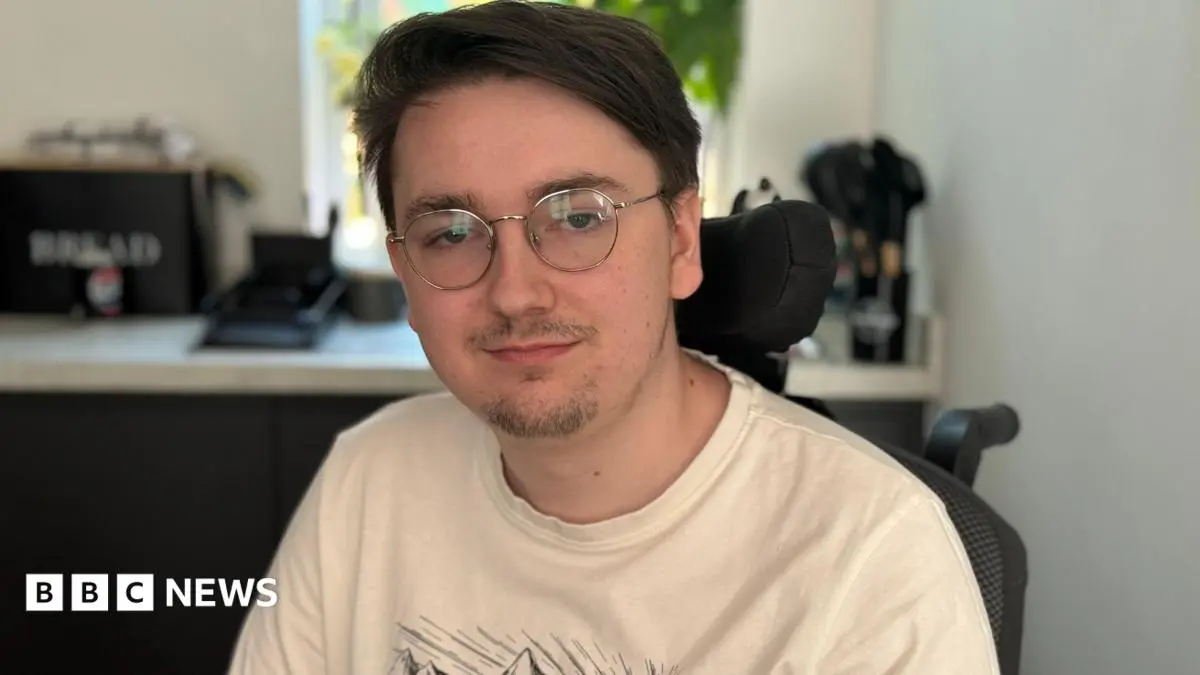
When Jack Tolley left home to attend university in Bournemouth, he imagined it would be the start of an exciting new chapter in his life. Even after being diagnosed with severe epilepsy during his first year, he believed that consistent use of regular medication would let him manage the condition effectively. But ongoing shortages of critical epilepsy drugs turned that dream into a daily battle for survival.
"It should just be so simple to get hold of," said Tolley, now 20. Instead, the shortages of his prescribed medicines became one of the main reasons he had to leave university and return to his family home in Stourbridge, West Midlands.
A daily regime of 17 tablets
Jack's epilepsy is unusually severe. On one occasion, doctors had to place him in an induced coma after he suffered multiple seizures. To control his condition, he takes 17 tablets every day across four different types of medicines. Any lapse in that routine can have catastrophic consequences.
While at university, he found himself spending hours each week travelling between different pharmacies, desperately searching for the medication he needed. Because of his epilepsy, he is not allowed to drive, leaving him reliant on public transport. "I rely on public transport to get to these places but you're also fighting that with the risk of having a seizure," he explained.
The constant uncertainty and physical toll of scrambling for medication undermined his independence. "I wasn't able to go out by myself very often at all because there was too much risk of me collapsing in public or collapsing on a bus and the effects of that could be catastrophic," Tolley said. "I really struggled with leaving university because of the friendships that I'd made there, because of the people that I had to leave behind, because of this lack of medications."
A mother's desperate search
His mother, Rachel Murphy, described the ordeal of trying to secure her son's medication from their local pharmacy in the West Midlands. The 40-year-old said she would order the drugs weeks in advance, but that did not guarantee they would arrive. Often, she found herself driving from chemist to chemist in search of the specific brands and dosages her son needed.
"As a parent our job is to protect our children and if I can't get that medication that I know can save my son's life, it's a horrible feeling. It's very scary," she said. Murphy is not alone. Her family is among many across the UK facing similar struggles as shortages of essential medicines become increasingly common.
Record shortages across the UK
The National Pharmacy Association (NPA) has described the current medicines market as "more volatile than ever." Record shortages in recent months have affected common items such as painkillers, blood pressure tablets, and, critically, epilepsy medication. The NPA attributes the problems to a combination of global ingredient shortages and intense international competition for supplies.
The British generic medicines market is heavily reliant on imports, and when overseas manufacturers face disruption or shift production to higher-margin markets, the UK can quickly run short. For epilepsy patients, these shortages are not merely an inconvenience. The Epilepsy Society has warned that some people with the condition have what it calls "cliff-edge conditions," meaning that missing even a single dose can trigger life-threatening seizures or status epilepticus, a condition where seizures do not stop without urgent medical intervention.
Deaths linked to shortages
Clare Pelham, chief executive of the Epilepsy Society, revealed that the organisation has been made aware of two deaths where medicine shortages were directly implicated in coroners' concerns. "We have very sadly been made aware of two deaths, both of young men, where the coroner issued a prevention of future deaths notice because they were so concerned about the impact of medication shortages," she said.
One of those notices concerned the death of David Crompton in Yorkshire, and another was issued after the death of Charlie Marriage in London. Both young men died after being unable to obtain their epilepsy drugs due to shortages, their inquests heard. These cases have intensified demands for immediate action to protect the most vulnerable patients.
Pharmacists at breaking point
Sanjeev Panesar, superintendent pharmacist at Pan Pharmacy in Sheldon, Birmingham, and a board member of the NPA, is witnessing the crisis first-hand. He described the current situation as "the worst I've ever seen" in his career.
"The amount of time I'm having to invest in trying to source medicines or communicate to patients and surgeries the alternatives and trying to support them - it takes up a lot of time," Panesar said. But the burden goes beyond time. "What essentially is happening is we're expected to supply medicines at a loss which is not sustainable. So if we're getting paid by the government less money than what we're able to buy the medicines in for, we're running at a loss. When you think about the high volume of medicines that we're having to supply for these medicines that are in short supply, that has a massive impact on the operating costs and the viability of us to function as a pharmacy business and as a healthcare provider to the community." He emphasised that pharmacists are doing everything they can to help patients, but the strain is mounting.
Beyond epilepsy: blood pressure patients at risk
The consequences extend to other chronic conditions. Richard Stables, a customer at Pan Pharmacy, said he sometimes has to go back to his doctor to get alternative prescriptions because his usual blood pressure tablets are unavailable. "It's blood pressure tablets, so you could have a stroke or heart attack any second," he said. "It's a bit annoying [to] keep going up and down, up and down – more stress." For patients like Stables, the compounding stress of chasing medication can itself worsen their underlying health issues.
Government response and calls for emergency supplies
A spokesperson for the Department of Health stated that most medicines in the UK are in good supply. "This government is investing in the UK medicine manufacturing industry to manage supply disruptions where they occur," they said, pointing to a £520m boost through the Life Sciences Innovative Manufacturing Fund to increase UK production.
However, the Epilepsy Society argues that such long-term investments do little to help those who need medicines today. The charity is calling on ministers to create emergency supplies for people with cliff-edge conditions, so that when a shortage strikes, a safety net exists. Clare Pelham stressed that rapid action is essential to prevent further tragedies.
For epilepsy patients, changing brands or formulations of a drug is not always a safe solution. The Epilepsy Society warned that some people cannot change brands without risking seizures, because different brands may have different release profiles or inactive ingredients that affect how the drug works in the body. This makes the issue far more complex than simply swapping to an alternative.
Funding and the future of UK medicines
The NPA has repeatedly highlighted that the generic medicines market in the UK operates under severe financial pressure. Many pharmacists say that the reimbursement rates set by the government do not cover the actual costs of acquiring medicines, especially during shortages when prices spike. As a result, some pharmacies may be forced to close or stop stocking certain drugs altogether, creating a downward spiral that hits patients hardest.
The £520m Life Sciences Innovative Manufacturing Fund is intended to encourage companies to produce medicines on British soil, reducing reliance on overseas suppliers. Industry experts argue that while this is a positive step, it will take years to transform the supply chain. In the meantime, patients and pharmacists must navigate a volatile market where essential drugs can vanish without notice.
A personal story amid a national crisis
For Jack Tolley, the shortage has redefined his early adult life. His mother's round-the-clock efforts to secure his medicines have become a feature of daily existence. "As a parent our job is to protect our children," Rachel Murphy said. "If I can't get that medication that I know can save my son's life, it's a horrible feeling."
Tolley's experience is a stark reminder of what is at stake. When the simplest act of collecting a prescription becomes a hazardous mission, people with serious medical conditions lose more than just their drugs - they lose their autonomy, their educational opportunities, and their peace of mind.
The Department of Health insists that the situation is being managed. "If you're affected by a shortage, speak to your pharmacist," a spokesperson advised. "They can advise whether an alternative medicine or formulation is right for you, or help you find a pharmacy that has it in stock." But the Epilepsy Society cautions that for some people, there is no acceptable alternative. It is urging regulators and the pharmaceutical industry to prioritise the security of supply for those who stand to lose the most.
As the UK continues to grapple with global supply chain issues, the stories of Jack Tolley, Richard Stables, and the families of David Crompton and Charlie Marriage serve as a powerful reminder that medicine shortages are not an abstract problem. They have real, sometimes fatal, consequences. The hope is that renewed investment and the creation of emergency buffers will ensure that no more young lives are cut short or derailed by a failure to access the medicines they cannot live without.
Source: BBC News News