

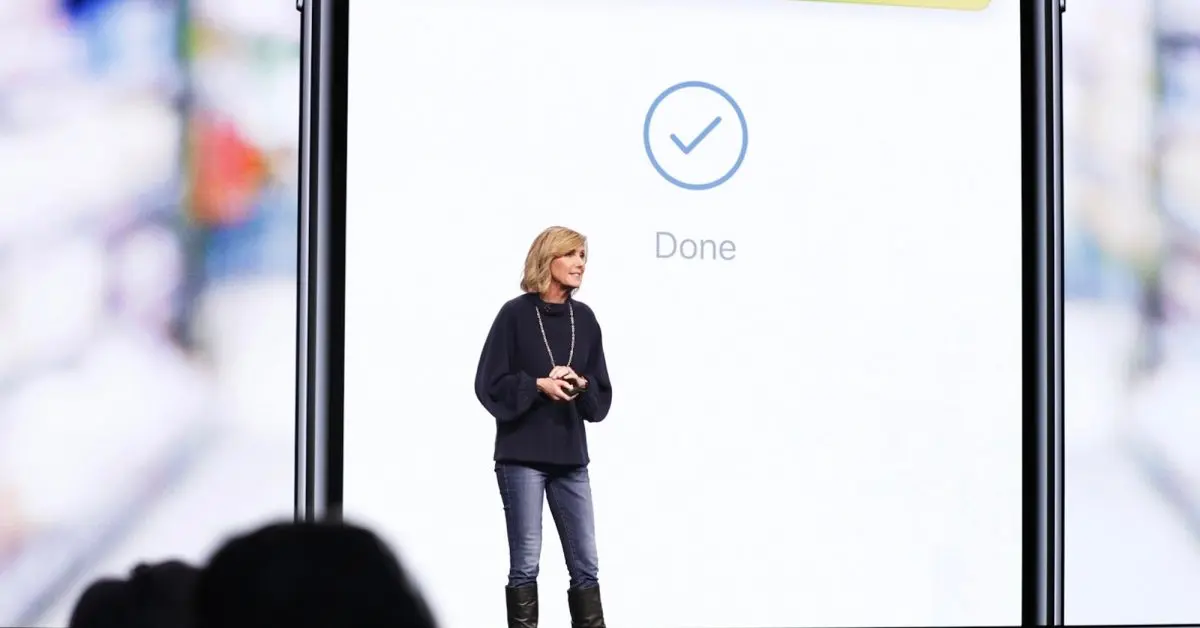
Apple's vice president of Apple Pay and Wallet, Jennifer Bailey, is retiring in October after more than 25 years at the company. The news was announced internally through a memo from Eddy Cue, Apple's senior vice president of services, according to a report. Bailey's departure will mark the end of a long career that spanned online retail, the launch of the iPhone, and the creation of one of the most widely used mobile payment systems in the world.
Key facts at a glance
- Jennifer Bailey will retire from Apple in October 2026.
- She joined Apple in the early 2000s and became vice president of Apple Pay in 2014.
- She previously led Apple's Online Store team starting in 2003.
- Eddy Cue announced the transition and said a succession plan will be shared before her departure.
- Bailey will remain in an advisory role after her executive position ends.
- Josh Rosenstock, a senior director of corporate communications, is also leaving Apple.
- The departures come as John Ternus is set to replace Tim Cook as CEO on September 1.
A career tied to Apple's modern era
Bailey joined Apple in the early 2000s, a time when the company was rebuilding itself after years of struggle. The iPod had brought a new generation of customers to Apple, but the company was still best known for computers. In 2003, Bailey began leading the Apple Online Store team, giving her responsibility for a retail channel that would become central to Apple's direct sales model. Over the next several years, she helped guide the online store through a period of significant growth and international expansion. That role gave her hands-on experience with large-scale consumer operations, digital commerce, and customer trust, all of which became essential when Apple entered payments.
When Apple introduced the iPhone in 2007, the online store and Apple's wider retail infrastructure became key parts of the product's early success. Bailey's work on the online store contributed to Apple's ability to reach customers around the world with new products, and her reputation inside the company grew accordingly. She later moved into leadership roles connected to Apple's emerging services ambitions.
The launch of Apple Pay
In September 2014, Apple unveiled the iPhone 6, the Apple Watch, and Apple Pay at the same event. Apple Pay was designed to replace physical credit and debit cards with the iPhone's built-in NFC chip and Secure Element. Bailey was placed in charge of the new platform. Her team had to negotiate agreements with banks, card networks, and retailers to make the service work from day one.
The initial launch supported American Express, Mastercard, and Visa cards from many major U.S. banks. Apple Pay's key selling point was privacy and security: transactions used a unique Device Account Number instead of the actual card number, and transactions required a fingerprint or passcode. Apple also said it would not track purchase history, a stance that set Apple Pay apart from other payment systems.
Bailey became a familiar figure on stage at Apple events. She introduced Apple Pay with a live demo and returned in later years to announce Apple Card, new Wallet features, and additional international launches. Her presentations reflected a focus on partnerships and simplicity, emphasizing how Apple Pay could fit into everyday life.
Apple Pay and Wallet milestones
- 2014: Apple Pay launches in the United States in conjunction with iPhone 6 and Apple Watch.
- 2015: The service expands to the United Kingdom, Canada, and Australia, followed by more European and Asian markets.
- 2017: Apple Cash brings peer-to-peer payments to Messages and Apple Wallet.
- 2019: Apple Card launches in the U.S., integrated with Wallet and built on Apple's own account system with Goldman Sachs.
- 2020: Digital car keys launch in Wallet compatible with select BMW models, using iPhone or Apple Watch to unlock and start a car.
- 2021: Apple begins pilots for digital state IDs in Wallet, starting with Arizona and Georgia, with more states added over time.
- 2022: Apple Pay Later is announced, expanding Apple's buy now, pay later offerings.
- 2023: Apple Pay Later becomes broadly available to eligible U.S. consumers.
These milestones show how far Apple Pay has moved beyond simple contactless payments. The Wallet app now serves as a container for transit passes, boarding passes, tickets, rewards cards, student IDs, and hotel keys. In some cities, riders tap the iPhone or Apple Watch to board transit without using a physical card. In many markets, customers use Apple Pay for online shopping and in-app purchases as well as in stores.
Succession and Bailey's next steps
Eddy Cue's memo praised Bailey's career in strong terms. “After more than 25 years at Apple, Jennifer Bailey has decided to retire in October. During her tenure, Jennifer has made extraordinary contributions from leading the Apple Store Online through a period of significant growth and global expansion to overseeing the launch of Apple Pay,” Cue wrote. He added that Apple will announce a succession plan before her transition at the end of October and that Bailey will remain available to support the transition in an advisory role.
According to the report, the departure is being treated as a major loss within Apple. Bailey's leadership has been central to the company's ability to work with financial partners and to navigate heavily regulated industries. Replacing her will require finding an executive with the right mix of relationship management, product judgment, and experience with complex corporate deals.
Cue also expressed confidence in the team's future. “As we continue to work toward our vision of replacing the physical wallet, I'm more confident than ever in the work that we are all doing and look forward to an exciting future ahead,” he wrote in the memo.
Another senior departure
The same report revealed that Josh Rosenstock, a senior director of corporate communications at Apple, is leaving the company in an unrelated move. Rosenstock was responsible for financial and investor communications, including work tied to Apple's quarterly earnings releases and investor relations. His departure adds to the list of leadership changes inside Apple, though it is not connected to Bailey's retirement.
A broader leadership transition
Apple is preparing for a significant change at the top. John Ternus, currently senior vice president of hardware engineering, will become CEO on September 1, replacing Tim Cook. Cook has been CEO since 2011 and oversaw Apple's rise to become one of the most valuable companies in the world. During that period, Apple's services business, which includes Apple Pay, Apple Music, iCloud, and the App Store, became a major source of revenue.
The transition comes as Apple faces new competitive pressure in mobile payments from regulators and rivals, particularly in Europe where new rules have opened access to NFC technology. Apple has also expanded its financial services offerings, and its leadership choices in the coming months will shape how aggressively it continues down that path.
Bailey's successor will inherit a product area that touches nearly every iPhone user and that continues to expand. The next leader of Apple Pay and Wallet will have to manage existing partnerships, regulatory questions, and the company's broader push toward a dashboard for everyday identity documents, car keys, transit passes, and payments.
Bailey's retirement is not effective until the end of October, and she will continue advising after that. In the meantime, Apple is expected to announce its succession plan, giving the company and the industry time to prepare for the next chapter of Apple Pay.
Source: 9to5Mac News