

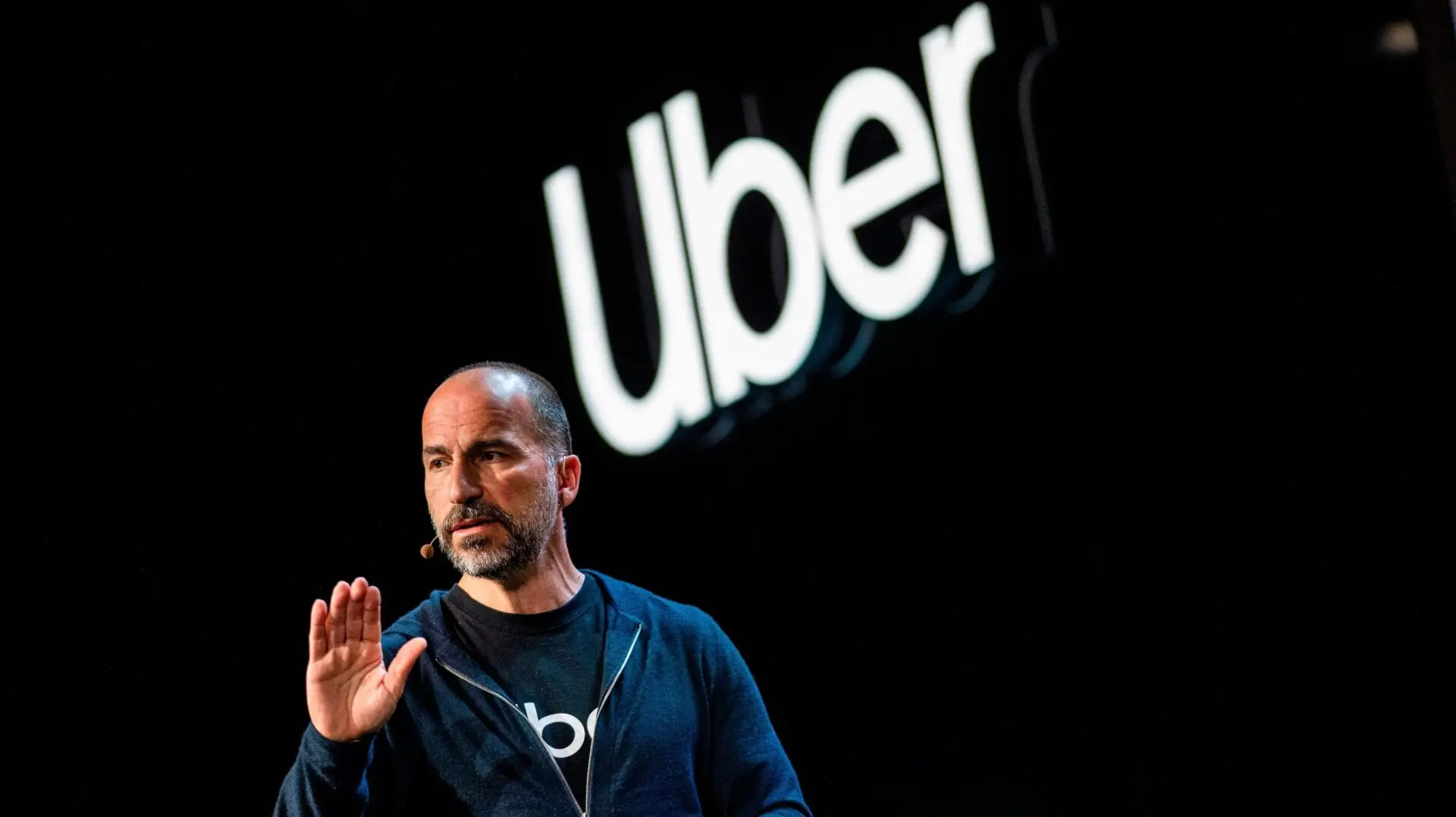
Uber is the latest Silicon Valley company to blame too much bureaucracy for job cuts. The ride-hailing and delivery giant said it will reduce its workforce by about 10%, or roughly 3,300 employees, in a major reorganization that CEO Dara Khosrowshahi says is meant to strip away redundant management layers and accelerate decision-making.
In a memo sent to staff on Wednesday, Khosrowshahi described the move as an effort to remove layers, simplify team structures, refine the company's global location strategy, and focus people and investments on the biggest opportunities. The company confirmed that the layoffs would hit employees in middle management especially hard, although some individual contributors in overlapping roles could also be affected.
The announcement is notable because it comes shortly after Uber reported strong financial results for the latest quarter. The company posted $14.2 billion in quarterly revenue and $2.4 billion in net income, both significantly higher than the same period a year earlier. For many outside observers, the contradiction between healthy profits and sweeping job cuts raises a familiar question in the technology industry: Are companies like Uber really eliminating jobs because of inefficiency, or are they using efficiency as cover for something else, like pressure from investors or a bigger bet on artificial intelligence?
Khosrowshahi's memo did not mention AI at all. Yet the company has made clear in recent earnings calls and public statements that AI is changing how it builds software and organizes work. Earlier this year, Khosrowshahi said that about 10% of Uber's code was being written by AI agents. Employees in legal, marketing, and other departments have also begun incorporating AI tools into daily workflows. The company reportedly began slowing some hiring as it measured the productivity gains from those tools.
At the same time, Uber is facing a new competitive threat from autonomous vehicles. Alphabet's Waymo now operates fully autonomous rides in 14 U.S. cities and continues to expand. In Atlanta, where Waymo rides are booked through Uber's app, drivers for Uber and Lyft have reported lower earnings, fewer ride requests, and longer waits between trips since the robotaxi service launched. Uber has been investing billions in its own autonomous vehicle strategy and has announced partnerships with Lucid, Nuro, and Rivian to build a robotaxi fleet. The company also said it plans to invest more than $10 billion to bring autonomous vehicles to market at scale.
All of these forces form the backdrop for Wednesday's restructuring. But the stated rationale was organizational complexity, not competition or AI. Khosrowshahi wrote that the company's growth had also brought complexity, including more layers, more coordination needs, and fragmented ownership. In that sense, the cuts are a response to the classic problems that arise when a startup scales into a global enterprise.
Why a profitable company is cutting thousands of jobs
Uber's financial position does not resemble that of a distressed company. Its latest quarterly earnings showed revenue up sharply year over year, and its bottom line has improved as the company moved past years of losses. But profitability does not automatically guarantee job security, especially when executives believe that headcount has grown faster than the work requires.
Tech companies across the sector spent the early part of the decade hiring aggressively. Low interest rates, pandemic-era demand for digital services, and a booming stock market encouraged expansion. As the economy shifted, many of those same companies concluded that they had overhired. Layoffs followed at companies large and small, often framed as efforts to eliminate redundancy rather than as admissions of failure. At Amazon and Meta, executives have used similar language to justify job cuts. They argue that layers of management slow down product development and make it harder to respond to new competition. Khosrowshahi's Wednesday memo fits squarely into that broader narrative.
A plan to flatten Uber's hierarchy
The details of Uber's reorganization are more concrete than a vague promise to be more efficient. According to the memo, the company is reducing the number of employees who sit seven or more levels below the CEO by about 20%. It is also cutting the number of micro-teams, or teams with only one or two direct reports, by nearly 50%.
Those may sound like abstract corporate metrics, but they have practical implications for how work gets done. When a manager has only one or two direct reports, the team tends to spend more time on status meetings, performance reviews, and coordination than on building products. By stacking fewer layers and broadening spans of control, Uber hopes to shorten the path from idea to decision.
Middle managers are often the group most affected by this kind of flattening. They may be responsible for translating strategy into tasks, but when the strategy shifts to removing hierarchy, their own roles become vulnerable. That is why the current layoffs are described as targeting middle management, even though some lower-level employees may also be caught in the restructuring.
Khosrowshahi also mentioned refining Uber's global location strategy. That phrase suggests the company is rethinking where employees should be based. In practice, it could mean closing or shrinking offices, encouraging remote or hybrid work, or shifting hiring toward lower-cost markets. Uber has offices around the world, and the company has been adjusting its real estate footprint since the pandemic changed office norms.
AI: the elephant in the memo
Although AI was not mentioned in the memo, it is impossible to separate this announcement from the rapid adoption of generative AI across the tech industry. Uber's own leader has talked openly about AI's impact on the company. In addition to AI-generated code, the company has deployed AI tools in legal, marketing, and customer support operations. If workers can produce the same output with fewer people, then AI naturally becomes a reason to slow hiring or reduce headcount.
Earlier reporting in June indicated that Uber was setting spending caps on some AI tools after going through its annual budget for those tools in a matter of months. That suggests enthusiasm for AI inside the company is high, and employees are actively experimenting with large language models, code assistants, and other tools. It also signals that Uber is still trying to understand exactly how much value AI creates and where it makes sense to invest.
Uber is not alone in drawing a line from AI to smaller teams. When Block cut thousands of jobs earlier this year, CEO Jack Dorsey told employees that its intelligence tools made it possible to operate with smaller and flatter teams. Other tech companies have made similar statements, arguing that AI lets them do more with less.
Waymo and the rise of robotaxis
The growth of Waymo gives Uber another reason to restructure. Waymo's fully autonomous ride-hailing service is expanding quickly, and cities where it operates are experiencing a shift in the economics of ridesharing. In Atlanta, where Waymo trips are available through Uber's platform, drivers have said their earnings are falling because robotaxis take some of the highest-value trips and create more competition for human drivers.
Uber's initial reaction to Waymo was not panic. The company struck a deal to put Waymo vehicles on its platform in some cities, which allows Uber to offer autonomous rides without building the entire stack itself. But that relationship is complicated because Waymo's parent, Alphabet, could eventually decide to push its own app more aggressively or enter more markets without Uber.
Uber has also been building its own autonomous future. It has partnered with Lucid, Nuro, and Rivian to develop robotaxis, and it has said it will invest more than $10 billion to bring autonomous vehicles to market at scale. Building an autonomous vehicle business is expensive, and money spent on AV research is money that cannot be used to support a sprawling corporate bureaucracy. That is one reason why cost discipline and lean teams are becoming central themes for Uber's leadership.
A familiar cycle in Silicon Valley
Layoffs are never just about the numbers in a memo. They are also signals to investors, employees, and the market. By framing the cuts as a move against bureaucracy, Uber hopes to project an image of speed and agility. But the announcement also raises questions about whether the company's management structure had become bloated after years of rapid growth.
Uber has gone through multiple waves of layoffs since the pandemic began. In earlier years, the company cut jobs to survive the sudden drop in travel demand. More recently, it has cut jobs while reporting strong financial performance, a pattern seen across the technology industry. Investors have rewarded companies that operate with lean workforces, especially as interest rates have risen and attention has turned to profitability.
The risk for Uber is that excessive cuts can go too far. Removing too many experienced managers can lead to burnout among remaining employees, loss of institutional knowledge, and slower execution in critical areas. The challenge is to flatten the organization without breaking the processes that keep a global ride-hailing and delivery platform running.
What Khosrowshahi told employees
In the Wednesday memo, Khosrowshahi said the cuts would give Uber more capacity to invest in drivers, couriers, and merchants, as well as to build the autonomous future. That framing is meant to reassure employees and outsiders that the layoffs are strategic rather than reactive. Uber still sees itself as a growth company, but the growth now depends on a more focused and less layered organization.
The company will need to manage the transition carefully. Employees who survive the cuts may be asked to take on broader responsibilities, while managers who leave will take with them years of experience in ride-hailing operations, regulatory affairs, and safety. Uber will also need to maintain trust with its remaining workforce at a time when many tech employees feel uncertain about job security.
For now, Uber is following a playbook that has become standard in Silicon Valley: acknowledge complexity, blame bureaucracy, cut layers, and promise that the company will emerge faster and stronger. Whether the latest round of layoffs actually achieves that goal will depend on how well Uber executes its reorganization in the coming quarters. The company is betting that smaller teams can build the future more effectively than a sprawling workforce, and Khosrowshahi has made clear that he believes the future includes autonomous driving, AI-powered tools, and a far more disciplined approach to headcount. That bet will now be tested in the real world of app updates, driver incentives, regulatory battles, and robotaxi competition.
Source: Gizmodo News