

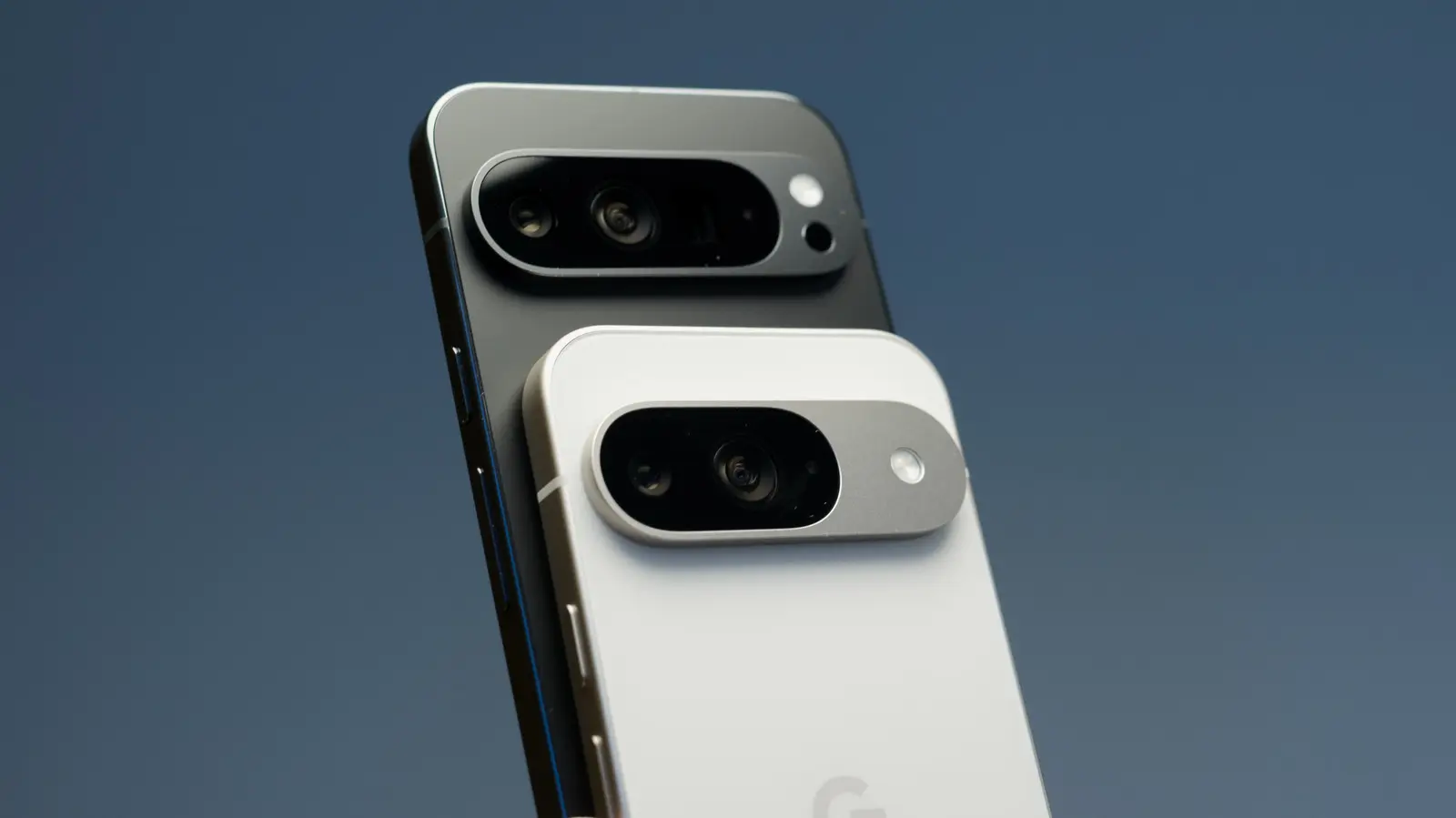
Google has been in the smartphone business since the early days of Android, but its early Nexus lineup was manufactured by partners like HTC, Samsung, LG, and Huawei, leading to inconsistent designs. The Pixel lineup, launched in 2016, finally gave Google a consistent identity and a focus on software excellence. Today, Pixel phones are known for receiving up to seven years of Android updates on day one and for having some of the best camera systems in the industry. Yet, despite these strengths, Pixel phones are not always the easiest recommendation in the Android world. Performance compromises, slow hardware evolution, and a premium price tag that often exceeds rivals like the Samsung Galaxy S26 series hold them back. Here is a detailed look at four key drawbacks that may make you think twice before buying a Google Pixel phone.
Google's Tensor chip is falling behind
Performance matters, especially when you are spending nearly $1,000 on a flagship smartphone. All current Google Pixel flagships, with the exception of the budget Pixel 10a, use Google's in-house Tensor G5 processor. On paper, the Tensor G5 lags far behind Qualcomm's latest Snapdragon offerings. According to NanoReview, the Snapdragon 8 Elite Gen 5 scores up to 2.7 times higher than the Tensor G5 in AnTuTu benchmarks, a comprehensive performance test that measures CPU, GPU, memory, and UX performance. The gap is especially wide in GPU performance, meaning graphically intensive games will run noticeably smoother on Snapdragon-powered devices. For casual users, day-to-day tasks like browsing, messaging, and social media may feel perfectly fine, and in our review of the Pixel 10 Pro XL we did not report any major stuttering or lag. However, for mobile gamers or power users who run demanding applications, the Tensor chip's weaker GPU and lower raw processing power can be a real limitation. Google's reliance on Samsung's foundry for manufacturing the Tensor G5 also means thermal efficiency and sustained performance are often worse than TSMC-made Snapdragon chips. Over time, this can lead to faster throttling under sustained loads. While Google continues to improve its AI and machine learning capabilities through the Tensor architecture, the raw performance gap against competitors is only widening.
Some Pixel features are region-locked
Google is a software-first company, and many people buy Pixel phones specifically for the exclusive software features. However, a surprising number of these headline features are not available globally. For instance, enhanced call screening—which lets Google Assistant screen unknown callers—is limited to just a handful of countries like Germany, France, Australia, and India. The automatic screening feature that works without manual intervention is available only in the United States. Call Notes, a feature that transcribes and summarizes your phone conversations, is also restricted to select regions and languages, and does not even work on Google's budget A-series devices. Other useful tools like Hold for Me and Take a Message are similarly gated by geography. Even the basic Scam Detection feature, which alerts you to potential scam calls, is far from universal. While other manufacturers like Apple and Samsung also region-lock certain features, Google's marketing often highlights these features as key selling points without clearly indicating their limited availability. If you are buying a Pixel because you saw a demo of call screening or Call Notes, you should first check whether those features are supported in your country and language. Otherwise, you might end up with a phone that lacks the very software advantages that made you choose it over the competition.
Pixel phones may not appear to be that exciting
Modern Pixel phones are well built, with a glass sandwich design and an aluminum frame, plus a bright display with uniform bezels and a flagship camera system. Yet compared to the rest of the Android market, the Pixel lineup feels conservative and safe. For example, Oppo's flagship Find X9 Ultra pushes camera hardware boundaries with a large 1-inch sensor and a periscope lens that achieves 10x optical zoom without add-on attachments. OnePlus offers some of the most powerful smartphones at competitive prices, often undercutting the Pixel on value. Many Chinese brands like Xiaomi and Vivo have adopted silicon-carbon batteries, which are high-density and offer capacities of 7,000mAh or more, providing exceptional battery life. Gaming phones like the RedMagic series feature active cooling, capacitive shoulder triggers, and high refresh rate screens, delivering an experience closer to a dedicated gaming handheld. Even on the software front, Pixel's stock Android interface can feel bland. Samsung's One UI and OnePlus's OxygenOS are packed with customization options, multitasking features, and productivity tools that make the Pixel experience seem minimalistic by comparison. In our review of the Pixel 10a, we noted that it is essentially the same phone as the previous year's model. While there is nothing wrong with a formula that works, the lack of innovation makes Pixel phones feel less exciting and may disappoint users who want cutting-edge hardware or standout features.
Pixel phones sometimes struggle with battery life
Battery life is one of the most important aspects of any smartphone, and Pixel phones have consistently struggled to match the competition. How long a phone lasts on a single charge depends on workload, screen brightness, and network usage, but manufacturers have been fitting their phones with ever-larger batteries to meet growing demands. Several Android phones now use silicon-carbon technology to pack 7,000mAh or more. Even mainstream brands like Samsung have optimized the 5,000mAh battery in the Galaxy S series to deliver all-day battery life through improved display and chipset efficiency. Chinese manufacturers such as OnePlus and Xiaomi offer not only larger batteries but also ultra-fast charging speeds up to 120W, fully charging a phone in 20-30 minutes. In contrast, Google Pixel phones have slower charging (typically around 27W to 30W) and smaller battery capacities. A comprehensive battery test by YouTuber MrWhoseTheBoss found that the Pixel 10 Pro XL lasted only 9 hours and 53 minutes in a web browsing loop, placing last among flagships. The Samsung S25 Ultra managed 10 hours and 43 minutes, and other competitors like the OnePlus 13 and Xiaomi 15 Pro performed significantly better. For heavy users, the Pixel's battery life can be a real concern, especially if you rely on 5G connectivity or use the camera extensively. While battery optimization in Android 16 may improve the situation slightly, the hardware limitations make the Pixel less appealing for users who prioritize long battery life and fast charging.
Source: SlashGear News