

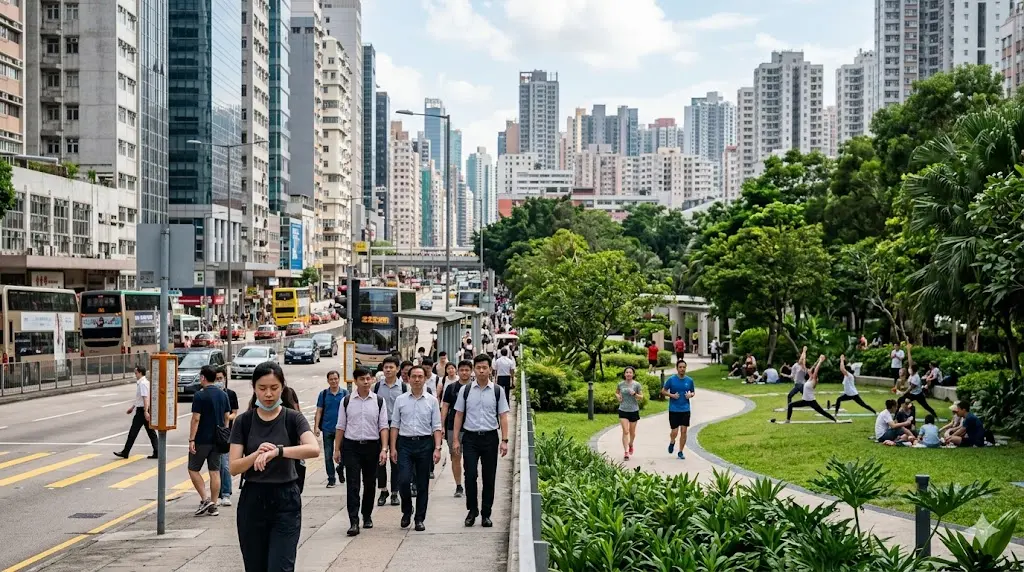
Urbanisation and human health are now deeply connected in ways many people didn’t expect twenty years ago. Researchers studying city growth have found that urban environments influence everything from mental wellbeing and respiratory health to sleep quality, diet, stress levels, and even life expectancy. Some cities improve healthcare access and create healthier lifestyles, while others quietly increase chronic illness, anxiety, and environmental exposure.
Here’s the thing. Urbanisation itself isn’t automatically harmful. The real issue is how cities are designed, managed, and experienced by the people living in them. In most cases, healthy urban living depends less on population size and more on transportation systems, green spaces, healthcare access, housing quality, and social balance.
Research findings about urbanisation and human health show that modern city growth can improve healthcare, employment, and infrastructure while also increasing risks linked to pollution, stress, sedentary lifestyles, poor sleep, and mental health challenges when urban planning fails to prioritize public wellbeing.
What Is Urbanisation and Human Health?
Urbanisation and Human Health: The relationship between expanding urban development and the physical, emotional, environmental, and social wellbeing of populations living in cities.
Urbanisation happens when more people move from rural communities into towns and cities. Over time, these areas become economic centers filled with businesses, residential housing, public transportation systems, industrial development, healthcare facilities, and digital infrastructure.
Human health changes alongside this transformation.
Researchers examining urban population health studies have consistently found that city living shapes daily routines in subtle but powerful ways. People may walk less, spend more time indoors, experience greater noise exposure, consume more processed food, and face constant digital stimulation.
At the same time, urban areas often provide faster medical treatment, better educational opportunities, and stronger economic stability.
That contrast is what makes the topic so fascinating.
In my experience, most people talk about urbanisation only in terms of traffic or overcrowding. What often gets missed is how deeply cities affect emotional behavior, attention span, physical movement, sleep quality, and long-term disease risk.
Even something as simple as the number of trees near a residential block can influence stress levels and air quality.
Researchers have also found that city environments may shape social relationships differently. Some urban residents experience stronger professional networks and career growth, while others report loneliness despite living among millions of people.
It’s a weird contradiction, honestly.
Why Urbanisation and Human Health Matters in 2026
Urbanisation is expanding rapidly across both developed and developing economies in 2026. More than half of the global population now lives in urban areas, and that percentage keeps climbing.
As cities grow denser, healthcare researchers are paying closer attention to the long-term consequences of urban lifestyles.
Air pollution remains one of the most widely studied concerns. Traffic emissions, industrial activity, and construction dust continue affecting respiratory and cardiovascular health in many metropolitan regions. Long-term exposure to polluted air has been linked to asthma, lung disease, hypertension, and even cognitive decline.
But pollution isn’t the only issue.
Mental health research connected to urban living has increased sharply over the past few years. Fast-paced schedules, financial pressure, social comparison, crowded transportation systems, and reduced personal space can gradually affect emotional wellbeing.
What surprised researchers most is that stress often builds silently.
People adapt to noisy environments, packed schedules, and constant stimulation without realizing how exhausted they’ve become. Over time, chronic stress may contribute to sleep disorders, anxiety, burnout, and weakened immune response.
Expert Tip
Cities that prioritize parks, cycling routes, public transport, and community wellness programs usually report stronger public health outcomes within a few years. Urban design directly influences daily behavior.
A realistic example can be seen in rapidly growing business districts where professionals work long hours in high-density office environments. Researchers studying similar zones found increased complaints related to migraines, eye strain, anxiety, posture pain, and sleep disruption. Once companies introduced flexible schedules, wellness areas, and healthier urban workspaces, employee wellbeing improved noticeably.
Interestingly, not all research paints cities negatively.
Some urban regions with walkable neighborhoods and strong public transportation actually report longer average life expectancy than car-dependent suburban areas. That sounds backward at first, but people living in walkable cities naturally move more throughout the day and maintain higher social interaction levels.
How Urbanisation Changes Physical Health
Physical health is one of the clearest areas affected by urban growth. Daily habits shift dramatically once people move into dense metropolitan environments.
In rural communities, movement often happens naturally through outdoor labor, walking, and open-space activities. Urban residents, however, may spend long periods sitting in offices, commuting through traffic, or using digital devices indoors.
This change contributes to sedentary lifestyles.
Research findings show strong links between urban inactivity and rising obesity rates, diabetes, cardiovascular disease, and posture-related conditions.
Diet also changes significantly in cities.
Fast food availability, delivery culture, processed meals, and irregular schedules influence eating habits. Many urban workers skip balanced meals because of time pressure or commuting demands.
I think this is one of the most underestimated urban health issues.
People often blame individual discipline, but city structure itself affects food choices. When healthy options are expensive or inconvenient, fast alternatives become routine.
Noise exposure is another major factor.
Continuous traffic sounds, construction work, nightlife activity, and crowded public spaces affect concentration and nervous system recovery. Researchers studying urban sleep patterns found that nighttime environmental noise reduces deep sleep quality even when people believe they’ve “gotten used to it.”
That’s pretty alarming when you think about it.
Expert Tip
Improving sleep quality may be one of the fastest ways urban residents can improve long-term health. Even small adjustments like reducing nighttime screen exposure or using quieter sleeping environments can help.
What Research Says About Urban Mental Health
Mental health discussions connected to urbanisation have become much more serious in recent years.
Earlier research mainly focused on physical illness and pollution. Now, scientists are exploring emotional wellbeing, social isolation, overstimulation, and cognitive fatigue connected to city living.
Several studies indicate that urban residents report higher levels of anxiety disorders and chronic stress than rural populations.
There are many possible reasons.
Financial competition in cities can feel relentless. Housing costs continue rising. Work culture often rewards overworking. Digital comparison through social media adds another layer of psychological pressure.
Then there’s overstimulation.
Bright lights, crowded transit systems, endless notifications, advertising screens, and environmental noise constantly demand attention. Human brains weren’t really built for nonstop sensory input.
Here’s my slightly unpopular opinion. I think urban burnout is becoming normalized in a way that’s genuinely unhealthy.
Many professionals treat exhaustion as proof of productivity, especially in large cities. But long-term stress doesn’t just affect mood. It can impact heart health, digestion, immunity, and memory function too.
Still, cities can also support mental health positively.
Urban environments provide better access to therapy services, support groups, educational opportunities, recreation, and social diversity. When city planning includes green spaces and community-centered infrastructure, emotional wellbeing tends to improve.
A hypothetical case study helps explain this.
Imagine two individuals with similar income levels and work responsibilities. One lives in a highly walkable neighborhood with public parks, social spaces, and short commute times. The other spends three hours daily in traffic while living near noisy highways with little outdoor access.
Over several years, their stress levels, sleep quality, physical activity, and emotional health may differ dramatically despite having similar careers.
How Urbanisation Affects Children and Families
Children experience urban environments differently from adults, and researchers are paying increasing attention to how city growth shapes childhood health.
Urban children often gain access to better schools, healthcare facilities, extracurricular opportunities, and digital resources. Yet they may also spend less time outdoors and face greater exposure to pollution.
That tradeoff matters.
Studies suggest that reduced outdoor play and excessive indoor screen time may contribute to obesity, attention difficulties, and emotional stress among children living in dense urban areas.
Families in crowded cities also face housing pressure.
Smaller living spaces can increase stress and reduce opportunities for relaxation or physical activity. Parents balancing long commutes and demanding jobs may have less time for social interaction or family wellness routines.
One counterintuitive finding from recent research is that some children growing up in highly urbanized neighborhoods develop stronger adaptability and social awareness because they interact with more diverse communities.
So the story isn’t entirely negative.
Urbanisation creates both opportunity and strain simultaneously.
Expert Tip
Cities that invest in child-friendly infrastructure such as safe playgrounds, clean parks, pedestrian zones, and school wellness programs often see measurable improvements in family health outcomes.
Can Smart Cities Improve Human Health?
Smart city technology has become one of the fastest-growing areas within urban health research.
Cities worldwide are using digital systems to monitor pollution levels, traffic flow, public transportation efficiency, energy usage, and healthcare access.
Some researchers believe smart cities could significantly improve public wellbeing by reducing congestion and environmental exposure.
For example, real-time traffic management systems may reduce commuting stress and lower vehicle emissions. Air quality sensors can alert authorities before pollution reaches dangerous levels. Telemedicine platforms allow urban residents to access healthcare faster without long travel times.
Those developments sound promising.
Still, technology creates new concerns too.
Many urban residents already spend most of their day connected to screens. Excessive digital dependency may contribute to eye strain, sleep disruption, reduced physical movement, and mental fatigue.
Honestly, I think some cities risk becoming “efficient” while forgetting what actually makes people feel healthy and human.
Technology should support wellbeing, not replace genuine social connection or outdoor living.
Researchers increasingly argue that smart cities work best when digital innovation combines with human-centered urban planning.
How to Improve Urbanisation and Human Health — Step by Step
1. Expand Green Infrastructure
Parks, urban forests, rooftop gardens, and public recreational spaces improve air quality and emotional wellbeing. Green environments also encourage walking and outdoor activity.
Cities with limited greenery usually struggle with heat buildup and stress-related health problems.
2. Improve Public Transportation Systems
Reliable public transit reduces traffic congestion and lowers pollution exposure. It also encourages physical movement because people naturally walk more when using trains or buses.
From what I’ve seen, shorter commutes often improve emotional health faster than people expect.
3. Design Walkable Communities
Walkable neighborhoods make daily physical activity part of routine life rather than a separate fitness task. Shops, schools, offices, and public spaces should remain easily accessible on foot.
4. Prioritize Affordable Healthy Housing
Good housing affects ventilation, sleep quality, stress levels, and respiratory health. Crowded or poorly designed apartments often create long-term health problems.
5. Support Mental Wellness Programs
Urban stress requires serious attention. Community counseling services, social engagement initiatives, and workplace wellness programs help reduce emotional exhaustion.
6. Reduce Noise and Pollution Exposure
Stronger environmental regulations and cleaner transport systems improve both physical and mental health outcomes.
Expert Tip
Urban healthcare planning should focus on prevention instead of only treatment. Healthier city environments reduce hospital pressure long term.
The Urban Sleep Crisis Nobody Talks About Enough
Most conversations about urbanisation focus on pollution or traffic.
Personally, I think sleep disruption deserves far more attention.
Artificial lighting, constant notifications, apartment noise, and late-night work culture affect millions of urban residents. Poor sleep gradually increases obesity risk, emotional instability, weakened immunity, and cardiovascular problems.
Researchers studying urban sleep behavior found that people living in noisy environments often underestimate how sleep-deprived they actually are.
That’s probably because fatigue becomes normal.
One realistic example involves shift workers living in busy commercial districts. Over time, irregular sleep schedules combined with environmental noise contribute to chronic exhaustion and rising anxiety symptoms.
Cities rarely treat sleep quality as a public health issue, but maybe they should.
People Most Asked About Urbanisation and Human Health
How does urbanisation affect human health?
Urbanisation affects health through environmental exposure, lifestyle changes, healthcare access, and emotional stress. City living may improve medical access while increasing risks linked to pollution and chronic stress.
Why is air pollution dangerous in cities?
Urban air pollution contributes to respiratory disease, heart conditions, asthma, fatigue, and reduced cognitive performance. Long-term exposure can gradually weaken overall health.
Can cities improve mental wellbeing?
Yes, especially when cities include parks, social spaces, public transportation, and accessible healthcare systems. Urban design strongly influences emotional wellness.
Are walkable cities healthier?
In many cases, yes. Walkable environments encourage daily movement, social interaction, and reduced dependence on vehicles, all of which support healthier lifestyles.
How does urbanisation affect children?
Urbanisation can expose children to pollution and reduced outdoor activity, but it may also improve educational access, healthcare services, and social opportunities.
What are the biggest urban health risks in 2026?
Major concerns include pollution exposure, chronic stress, poor sleep, sedentary lifestyles, mental health issues, and overcrowded housing conditions.
Can smart city technology improve health?
Smart systems may improve transportation efficiency, healthcare access, and environmental monitoring. However, technology alone cannot replace thoughtful human-centered planning.
Why do some cities have healthier populations than others?
Healthier cities usually invest in clean transportation, green spaces, affordable housing, wellness infrastructure, and preventive healthcare policies.
Research findings about urbanisation and human health continue showing that cities shape far more than economic opportunity. Urban environments influence emotional stability, physical activity, sleep patterns, diet, healthcare access, and long-term disease risk. As urban populations continue growing in 2026, healthier city planning will probably become one of the biggest public health priorities worldwide.
Businesses, agencies, startups, bloggers, and SEO professionals can strengthen brand visibility and organic traffic through trusted PR distribution services and result-focused local SEO services. These platforms help brands secure high authority backlinks, stronger SEO ranking, wider media coverage, and instant publishing opportunities that improve online authority and long-term digital growth.