

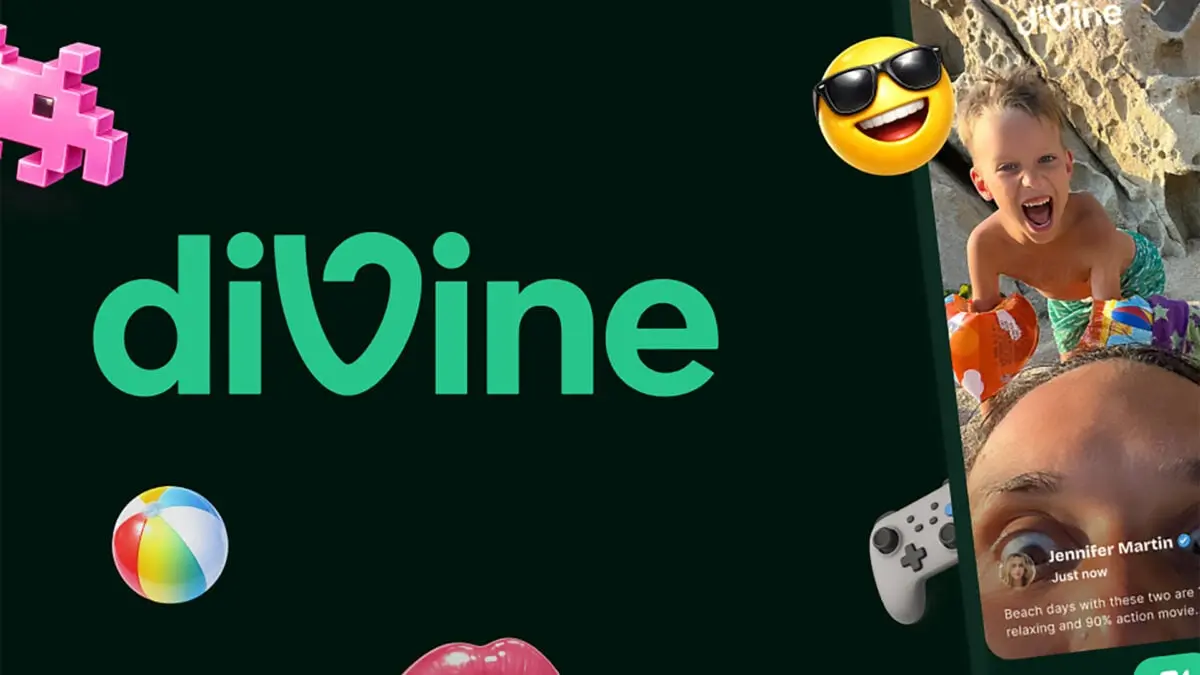
When Elon Musk announced that Grok Imagine was the new “AI Vine” last year, he also teased the possibility of bringing back Vine’s old video archive in some form. But a Jack Dorsey-funded app just beat him to it. Divine, a six-second looping video app that features an archive of 500,000 classic videos from the original Vine platform, has officially launched on the Apple App Store and Google Play. The app was announced in beta last year, but today it enters public availability on an invite-only basis, with the company promising a broader rollout in the coming months.
The Rise and Fall of Vine
Vine was originally released in 2013 under Twitter, when the company was led by Jack Dorsey. It quickly became a pioneer in short-form social video, helping pave the way for popular vertical video platforms like TikTok and Instagram Reels. The six-second looping format encouraged creativity and brevity, spawning a generation of internet personalities who would go on to dominate the digital landscape. Among the most famous Viners were Logan Paul, Lele Pons, Liza Koshy, Zach King, and King Bach, all of whom used the platform to launch careers in comedy, acting, and content creation. Vine’s influence extended beyond entertainment; it also served as a breeding ground for viral trends, catchphrases, and memes that permeated mainstream culture.
Despite its cultural impact, Twitter struggled to monetize Vine. In 2016, the company announced it would discontinue the mobile app, and by 2017, the platform was officially shut down. The shutdown left millions of videos inaccessible, though archival efforts by groups like ArchiveTeam and the Internet Archive preserved a significant portion of the library. For years, fans and former creators called for a revival, but Twitter’s ownership changes and strategic shifts prevented any official return.
Jack Dorsey’s Decentralized Vision
Now, Jack Dorsey’s online collective And Other Stuff, which funds experimental open-source projects, has helped bankroll Divine’s revival. The app was created by Evan Henshaw-Plath, a former Twitter employee and member of And Other Stuff. Henshaw-Plath, who goes by “Rabble,” said he was inspired to bring the platform back to life after listening to the podcast series Vine: Six Seconds That Changed the World. In interviews, he emphasized that Divine is not a corporate revival but a community-driven effort to restore what made Vine special while addressing its shortcomings.
Divine is built on open-source technology and the decentralized Nostr protocol. Nostr, short for Notes and Other Stuff Transmitted by Relays, is a protocol that allows for censorship-resistant social media by removing central servers. This means that content on Divine is not stored on a single company’s database but distributed across multiple relays, giving creators more ownership and control over their content. Unlike traditional social media platforms that monetize user data through advertising, Divine aims to let creators directly engage with their audiences and build their own revenue streams.
Jack Dorsey himself weighed in on the launch, stating in a press release: “By bringing back Vine on a decentralized network, they are finally correcting every mistake. It is no secret that we didn’t find a business model for Vine. A founding principle for Divine is that creators will always be in full control of their content and followers, enabling them to create and grow their own revenue streams.” This sentiment reflects Dorsey’s long-standing advocacy for decentralized internet infrastructure, which he has pursued through initiatives like Bluesky and his support for Bitcoin.
How Divine Differs From Modern Social Media
Divine is trying to stand apart from modern social media apps in several key ways. First and foremost, it is largely AI-free. The company employs what it describes in its FAQ page as a “multi-layered approach to detecting Gen-AI content.” While many platforms are rushing to integrate generative AI features, Divine is actively discouraging them, aiming to preserve the authenticity and human creativity that defined the original Vine. Users will reportedly have more control over the algorithms powering their feeds. Instead of relying on a single advertising-focused recommendation engine, Divine says users will be able to choose from multiple algorithms within a broader ecosystem of algorithms. This approach empowers users to curate their own experience, rather than being fed content designed to maximize engagement.
The app also addresses privacy and data ownership. Because Divine runs on decentralized infrastructure, there is no central authority collecting and monetizing user data. Creators can export their followers and content to other Nostr-compatible apps, ensuring that they are not locked into one platform. This interoperability is a hallmark of the fediverse, and Divine is positioning itself as a bridge between the nostalgic Vine experience and the future of open social media.
The Archive and Cultural Preservation
One of Divine’s biggest draws is its growing collection of 500,000 classic Vine videos. These videos are sourced from archives preserved by ArchiveTeam and the Internet Archive, which have worked tirelessly to save video from the original platform after its shutdown. For many users, this archive is a treasure trove of internet history, featuring iconic clips like the “This is a wendy’s” meme, “I got a jar of dirt,” and countless others that defined a decade of online humor. Divine also encourages users to submit videos they have saved locally, further expanding the library. The company emphasizes that the archive is not affiliated with X (formerly Twitter) or the original Vine brand; it is an independent effort to preserve and celebrate a cultural phenomenon.
The revival of Vine comes at a time when nostalgia for early internet platforms is at an all-time high. TikTok’s dominance has made short-form video ubiquitous, but many users long for the simplicity and creativity of Vine’s six-second limit. Musk’s Grok Imagine, which was announced as an “AI Vine,” has not yet materialized as a functional product, while Divine is already available for download. This timing gives Divine a first-mover advantage in the race to recapture the Vine magic.
Challenges and Future Prospects
Divine still faces significant challenges. The invite-only launch may frustrate eager users, but the company says this will allow them to scale infrastructure and moderate content carefully. As an open-platform app, Divine will rely on user reports and community moderation to enforce rules against harmful content, rather than employing large teams of content moderators. This approach has proven controversial on other decentralized platforms, where harassment and illegal content can spread more easily. However, Divine’s FAQ assures users that they are developing robust tools for reporting and blocking, and that the Nostr protocol allows for optional relay-level filtering.
Another challenge is monetization. While Dorsey’s statement hints at creator-driven revenue streams, it remains unclear how Divine will sustain itself financially. The app is free to use, and there are no advertisements currently planned. The company may experiment with optional tipping, subscriptions, or partnerships in the future, but for now, it is funded by grants and donations through And Other Stuff. Long-term viability will depend on whether enough users embrace the decentralized model and whether creators can generate sufficient income.
Despite these hurdles, the launch of Divine represents a significant moment in the history of social media. It is a testament to the enduring appeal of Vine and a bold experiment in decentralized content sharing. As the app rolls out to more users in the coming months, it will be fascinating to see whether Divine can recapture the creative energy of its progenitor while charting a new path forward for creator-owned platforms. The six-second loop may be short, but its cultural impact has proven to be long-lasting.
Source: Gizmodo News