

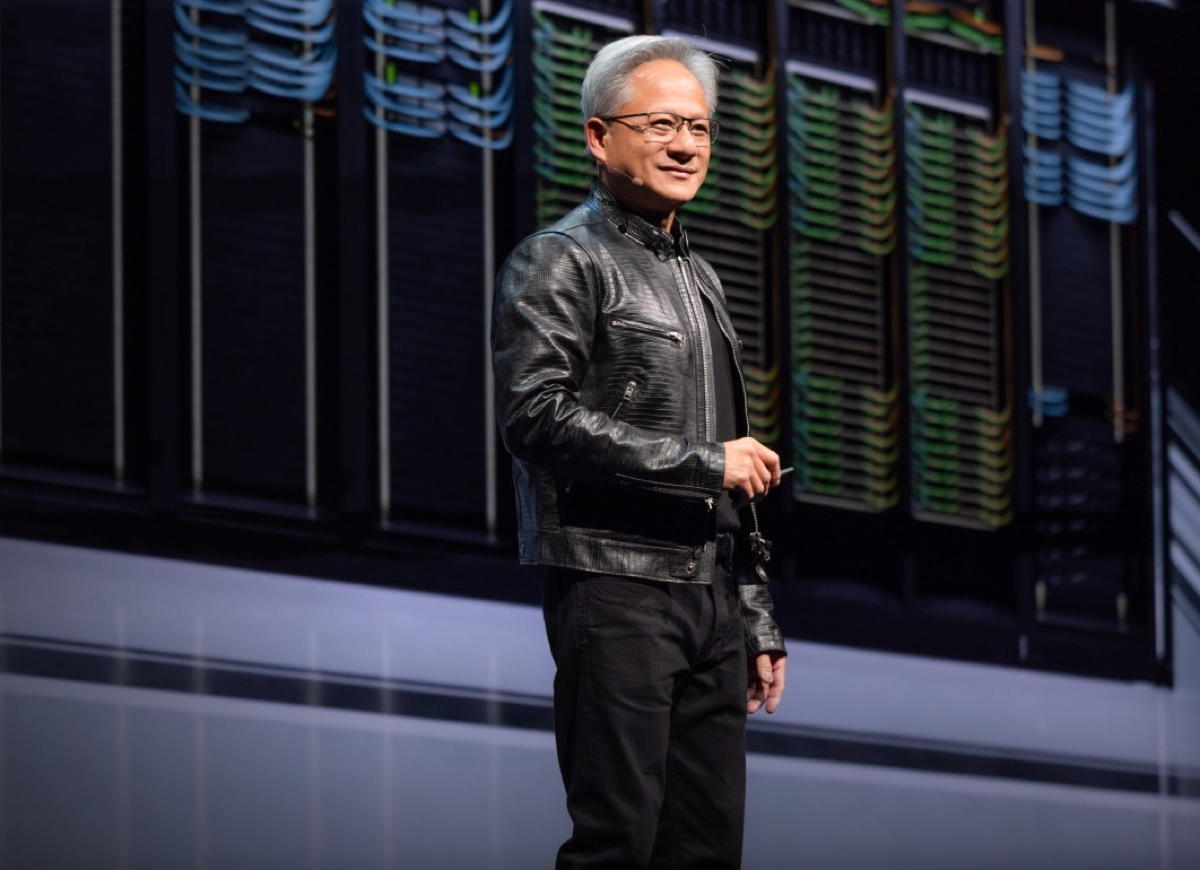
Nvidia chief executive Jensen Huang has poured cold water on speculation that his company would invest as much as $100 billion (£75 billion) in OpenAI, the artificial intelligence startup behind ChatGPT. Speaking at a Morgan Stanley conference, Huang said the sum is “probably not in the cards” for the simple reason that OpenAI is likely to go public later this year.
“I think the opportunity to invest $100 billion in OpenAI is probably not in the cards,” Huang said, adding that because of the expected IPO, “this might be the last time we’ll have the opportunity to invest in a consequential company like this.” The comments came just after Nvidia participated in a much smaller $30 billion funding round for OpenAI last week, which itself had been overshadowed by months of rumors about a much larger, long-term deal.
Background on the Nvidia-OpenAI Relationship
For years, Nvidia and OpenAI have been the two most powerful forces driving the generative AI revolution. Nvidia’s graphics processing units (GPUs) are the industry standard for training large language models, and OpenAI’s GPT series has defined the path for commercial AI products. Their relationship has been symbiotic: OpenAI needs Nvidia’s chips to scale its models, and Nvidia’s skyrocketing revenue is driven almost entirely by demand from AI labs like OpenAI.
In September 2024, Nvidia surprised the tech world by announcing that it would invest up to $100 billion into OpenAI over several years. The investment was to be tied to OpenAI’s deployment of Nvidia’s next-generation chips in massive data centers. At the time, both companies issued joint statements that were light on details but heavy on optimism, fueling a fresh rally in Nvidia’s stock—already one of the best-performing in the world.
Yet by January 2025, reports emerged that the $100 billion deal had stalled. Sources familiar with the matter pointed to disagreements over valuation, the structure of chip purchases, and OpenAI’s own internal discussions about whether to remain a nonprofit or fully convert to a for-profit entity. The startup’s complex governance, originally designed to prioritize safety over profits, made long-term financial commitments with Nvidia difficult to finalize.
The IPO Shifts Everything
OpenAI’s expected initial public offering, which market analysts predict could occur in the second half of 2025, changes the calculus entirely. Once a company goes public, the nature of major strategic investments becomes different. Public companies face regulatory scrutiny, dilution concerns, and fiduciary duties that can complicate exclusive supplier-based arrangements. Huang’s comment that “this might be the last time we’ll have the opportunity” suggests Nvidia sees the pre-IPO window as a final chance for a direct equity stake without those constraints.
The $30 billion investment, though small relative to the rumored $100 billion, still solidifies Nvidia’s position as a key backer. But it also signals a pivot: Nvidia appears to be shifting from a one-big-bet strategy to a portfolio approach. Huang also noted that Nvidia’s recent $10 billion investment in Anthropic, another leading AI lab, is probably “the last” opportunity to invest in that company before its own expected IPO.
Changing Economics of the AI Boom
The broader context is that the economic landscape of the AI industry has changed dramatically. Last year’s exuberance—where companies announced massive capital expenditure plans with little regard for costs—has given way to a more sober assessment of what it takes to build and run the infrastructure AI requires. Training a single frontier model can cost hundreds of millions of dollars, and deploying it at scale requires data centers that consume as much electricity as small cities.
These facilities draw enormous amounts of power, water, and other natural resources. In many regions, they are already straining local grids, driving up electricity prices for residents, and sparking backlash from environmental groups and community activists. Reports from places like Northern Virginia, Ireland, and Singapore have documented protests and regulatory pushback against new AI data centers. The situation is so acute that some tech leaders, including Sam Altman of OpenAI, have begun advocating for a massive increase in energy production, including through nuclear fusion, to support the industry’s needs.
Nvidia itself has not been immune to these pressures. While its revenue continues to grow, investors are increasingly asking about the sustainability of the AI boom. Huang’s comments at Morgan Stanley can be seen as a measured response: yes, the demand is real, but the economics must be manageable. By avoiding a $100 billion commitment to a single partner—especially one about to become a public company—Nvidia keeps its balance sheet flexible.
What This Means for the Industry
The fallout from Huang’s statement is likely to affect several stakeholders. For OpenAI, it removes some uncertainty but also raises questions about whether the startup can count on continued preferential access to Nvidia’s latest chips. Without that commitment, OpenAI may need to diversify its hardware supply, potentially turning to rivals like AMD or even designing its own chips—a move that several large tech companies have explored but few have succeeded at.
For Nvidia, the decision underscores a strategy of spreading risk. The company has been deepening ties with all major AI labs: besides OpenAI and Anthropic, it works closely with Google DeepMind, Meta, and many others. By not betting everything on OpenAI, Nvidia remains the essential supplier to everyone, a position far more advantageous than being captive to one customer.
For the market, the news is a reminder that even the most hyped relationships in tech are subject to practical realities. The days of unlimited investment fueled by FOMO are giving way to a more disciplined era where returns on capital matter. Data center buildout, while still growing, is becoming more scrutinized, and companies that cannot demonstrate clear paths to profitability are finding it harder to secure funding.
Jensen Huang’s Vision and Leadership
Jensen Huang, who co-founded Nvidia in 1993, has been one of the most visionary leaders in the tech industry. Under his guidance, Nvidia transformed from a gaming graphics card maker into the world’s most valuable chip company, with a market capitalization that briefly surpassed $3 trillion. His ability to bet on long-term trends—GPU computing, deep learning, and now generative AI—has made him a figurehead for the AI revolution.
Huang’s management style is known for being direct and often contrarian. He has repeatedly warned of the potential for an AI “crystal ball” if companies do not invest responsibly, and he has pushed for open standards in AI hardware interfaces. His remarks about OpenAI reflect that same pragmatic realism. He is not abandoning OpenAI, but he is refusing to write a blank check.
The broader implication is that the AI industry may be entering a phase of consolidation. Large investments will become rarer and more targeted. Startups will need to prove they can generate revenue and eventually go public before they can command the kind of capital Nvidia was rumored to offer. This could slow down the pace of model advancement, but it might also lead to more sustainable growth.
Environmental concerns will also continue to shape decisions. As data centers proliferate, the pressure on companies like Nvidia to design more efficient chips becomes acute. Huang has promised that Nvidia’s upcoming architecture will deliver order-of-magnitude improvements in performance per watt, but the timeline for these advances remains uncertain. In the meantime, the cost of building and operating AI infrastructure will remain a dominant theme in boardrooms across Silicon Valley and beyond.
The Nvidia-OpenAI saga is far from over, but with Huang’s latest comments, the stakes are clearer than ever. The story is no longer about infinite possibilities—it is about real constraints, careful investments, and the long game of building an AI economy that can actually deliver on its promise without consuming the planet’s resources or exhausting its investors.
Source: Silicon UK News