

Crypto stocks finish mostly higher as Wall Street rebounds from Fed-fueled selloff
Crypto-related stocks closed mostly higher Thursday as U.S. equities rebounded from a sharp selloff triggered by the Federal Reserve's latest policy meeting under new Chair Kevin Warsh. The S&P 500 rose 1.08%, while the Nasdaq gained 1.91%. The Dow Jones Industrial Average added 0.14%. Bitcoin (BTC) fell about 2% over the past 24 hours and is trading just above $63,000 at press time.
Markets came under pressure Wednesday after the Federal Reserve's first policy meeting led by Warsh. Investors focused on the Fed's updated dot plot, which showed that nine of 18 policymakers now anticipate higher interest rates in 2026. Warsh did not provide his own rate outlook and reinforced expectations that the Fed could maintain a restrictive stance.
Among crypto stocks, miners led gains, in line with AI-related stocks. Cipher Mining (CIFR) jumped 10.7%, HIVE Digital (HIVE) rose 7.3%. Hut 8 (HUT), TeraWulf (WULF), IREN (IREN) and Core Scientific (CORZ) also posted gains.
Crypto exchanges were mixed. Robinhood (HOOD) rose 2.8%, eToro (ETOR) gained 1.7% and Galaxy Digital (GLXY) advanced 3.5%, while Coinbase (COIN) fell 1% and Gemini (GEMI) slipped 1.5%. Stablecoin issuer Circle (CRCL) edged down 0.5%.
Saylor's STRC preferred stock rebounds after sharp intraday drop
Strategy's Variable Rate Series A Perpetual Stretch Preferred Stock (STRC) recovered most of its losses Thursday after a sharp midday selloff briefly pushed the share to its lowest level since launch. STRC fell to as low as $83.26 around noon ET before rebounding to $88.59 at the close. The recovery brought the stock back near its opening price of $89.40, putting it on track to finish the session nearly unchanged.
The preferred stock has drawn attention from investors because it serves as one of Strategy's key funding vehicles for bitcoin purchases. When STRC trades above its $100 par value, the company can issue new shares through an at-the-market program and use the proceeds to buy bitcoin. With the stock trading well below that level, Strategy has paused new issuance through the program.
STRC's volatility highlights the fragility of Strategy's capital structure. The perpetual preferred stock carries a variable dividend rate tied to SOFR plus a spread, currently yielding around 11.5%. As the stock price falls, the effective yield rises, but the discount to par also signals that investors are demanding a higher risk premium. The pause in issuance means Strategy cannot currently raise fresh equity through this vehicle to fund additional bitcoin purchases, which could slow the company's bitcoin accumulation strategy.
The broader context is that Strategy (formerly MicroStrategy) holds over 846,000 bitcoin on its balance sheet, making it the largest corporate holder of the cryptocurrency. The company has funded its purchases through a combination of equity offerings, convertible bonds, and preferred stock like STRC. The recent slide in STRC and common stock MSTR has raised concerns about the sustainability of its leverage, especially as bitcoin prices remain under pressure.
Strategy leans on balance sheet flexibility as preferred stock slides, TD Cowen said
Strategy (MSTR) is increasingly positioning itself as a bitcoin-focused capital markets platform rather than a leveraged bitcoin buyer, TD Cowen analyst Lance Vitanza wrote in a note on Thursday after meetings with CFO Andrew Kang. Kang told investors the company's primary goal remains growing bitcoin per share, but management is placing greater emphasis on liquidity, credit stability and capital structure management, according to the note. Rather than focusing solely on bitcoin purchases, Strategy is balancing the interests of common shareholders, preferred investors, convertible debt holders and credit markets.
The shift comes as Strategy's Variable Rate Series A Perpetual Stretch Preferred Stock (STRC) closed at a record low of $89 on Wednesday, prompting the company to pause at-the-market share sales tied to the preferred stock. Vitanza said Kang described recent bitcoin sales and debt retirements as demonstrations of financial flexibility rather than signs of funding stress. While Strategy may slow bitcoin accumulation during weaker market conditions, management continues to measure success through bitcoin-per-share growth and bitcoin yield.
This strategic pivot is significant because it signals that even the most aggressive bitcoin bull is adapting to a more cautious environment. Strategy's balance sheet has been a double-edged sword: it amplified gains during bull markets but now amplifies losses as bitcoin retreats. The company's ability to access capital markets through multiple instruments has been a key advantage, but the recent dysfunction in STRC suggests that investors are losing appetite for complex crypto-linked securities.
'Orange jumpsuit': Peter Schiff ups rhetoric against Michael Saylor
"The financial house of cards Michael Saylor built is collapsing," tweeted Peter Schiff on Thursday. "Strategy's per-share discount to its bitcoin holdings is soaring, STRC is tanking, and bitcoin itself is breaking down, taking the rest of crypto down with it. Soon, Saylor will trade in his orange tie for an orange jumpsuit." Schiff's tweet came as STRC was imploding earlier in the session, taking MSTR common stock and bitcoin along with it. STRC has bounced a bit since, but is still trading at $87, down 2.2% today and 13% below its par value. There's been no such bounce for MSTR and bitcoin, which both continue near session lows; MSTR is down 5.5% at $110 and BTC is lower by 4% at $65,500.
Schiff's comments reflect a long-standing skepticism toward Saylor's strategy of leveraging debt and equity to acquire bitcoin. The gold bug has repeatedly predicted that Saylor's approach will end in disaster. While Schiff has been wrong about bitcoin many times in the past, the current market conditions have given his bearish narrative more traction. The discount of MSTR to its bitcoin holdings (often referred to as the "NAV discount") has widened to levels not seen since the depths of the 2022 bear market, suggesting that investors are pricing in significant risks related to the company's leverage.
Stocks soar in face of imminent rate hikes while crypto implodes
The Kevin Warsh-led Fed shocked markets with its hawkish turn on Wednesday, but stocks are brushing it off. After a brief, shallow selloff on the news, equity investors have returned to buying low and selling high, lifting the Nasdaq higher by 1.6% in mid-afternoon action on Thursday. AI-related favorites like Nvidia, Broadcom and AMD are higher in the area of 4%, while Micron Technologies is up 9% and Intel is gaining 10.6%. The S&P 500 is up "just" 1%, but is being held back by defensive sectors like healthcare and consumer staples, while energy names head lower in the face of falling crude oil prices.
Crypto, however, continues a steep selloff, with bitcoin (BTC) lower by 4.3% to $62,500, and ether (ETH), XRP (XRP) and solana (SOL) posting even larger percentage declines. As for those rate hikes, there's now a 34% chance of one coming as soon as the Fed's next meeting in July. Those odds were just 8% ahead of yesterday's Fed meeting. The chances of one or more rate hikes by the September meeting have risen to 67%.
The divergence between stocks and crypto underscores a fundamental shift in market dynamics. AI and tech stocks are perceived as beneficiaries of a strong economy and productivity gains, even if rates remain high. Crypto, on the other hand, is being treated as a speculative asset that is highly sensitive to liquidity conditions and monetary policy expectations. The Fed's hawkish pivot has effectively removed the "Fed put" for digital assets, at least for now.
AI rally accelerates as bitcoin slips below $63,000
The divergence between AI and bitcoin continues to widen. Bitcoin (BTC) has slipped below $63,000 and is now trading around $62,900, while AI-related stocks continue to extend their gains. Among AI-linked miners, Cipher Digital (CIFR) is up 10% and has reached new all-time highs. TerraWulf (WULF) has added another 4%, Galaxy Digital is up 4%, WhiteFiber (WYFI) has surged 15%, and IREN (IREN) is higher by 3%. The strength is also evident across semiconductors and memory stocks, which continue to push to fresh highs. The DRAM ETF has gained 10%, while the VanEck Semiconductor ETF (SMH) is up 5%. Among individual names, Micron Technology (MU) has risen 7%, and Sandisk has jumped 11%, highlighting the continued investor appetite for AI infrastructure exposure.
This rotation from crypto to AI has been a dominant theme in 2026. Many of the same miners that formerly relied on bitcoin mining profits have pivoted to AI data center operations, benefiting from the massive demand for computing power to train and run large language models. Cipher Mining, for example, has repurposed a significant portion of its hash rate for AI workloads, and its stock has surged as a result. The market is rewarding companies that can bridge the gap between crypto and AI, while punishing pure-play bitcoin miners that lack diversification.
Saylor's STRC plunges to record low as Strive's SATA joins preferred stock selloff
Strategy's high-yielding preferred stock STRC continues to sell off, falling to a new record low of $85.32 Thursday morning. It's bounced a hair in recent minutes to $86.20, still down 3.15% for the day. One prevailing narrative was that investors were rotating out of STRC and into Strive's similar security, SATA, due to SATA's daily dividend feature and higher yield. That narrative is falling by the wayside today as SATA is also down 3.15% and trading well below par at $96.85. Bitcoin (BTC) is at a session low of $63,500, down 2.5% over the past 24 hours. U.S. stocks, meanwhile, are surging, the Nasdaq higher by 1.4%.
The simultaneous decline in both STRC and SATA suggests that the selloff is not rotation-specific but rather a broad-based rejection of crypto-linked credit instruments. Investors are demanding higher yields across the board as the risk-free rate rises and as the outlook for bitcoin deteriorates. Both securities now trade below par, meaning that new issuance is effectively frozen, which could constrain the ability of these companies to raise capital for bitcoin purchases.
FT's Strategy (STRC) obituary might be a good sign for bulls
The details aren't really that important. The struggles of bitcoin, Strategy, and its high-yielding preferred stock STRC have been well-known and well-covered for months. The timing, however, is. With bitcoin back near multi-year lows, Strategy common stock (MSTR) near a 52-week low, and STRC plunging to 11% below par value, the FT and its Alphaville editors — persistently negative on all things crypto for as long as the sector has existed — minutes ago published yet another of their obituaries. "Stretch is beginning to operate like a tapeworm inside the Strategy belly," wrote Craig Coben. "The longer it remains there, the more nutrients it consumes. It may be better to expel it sooner rather than later." "Stretch was marketed as an 'iPhone moment' for digital credit, but it has turned into something far more sinister for shareholders," Coben concluded. Close watchers will recall the last time the FT was so giddy about bitcoin's demise — the weekend after BTC's early February crash to $60,000. Three months later, the price had rallied nearly 40%.
While past performance is no guarantee, the contrarian indicator has some history. When mainstream financial media declares a particular asset or strategy dead, it often marks a bottom. However, the fundamental backdrop this time is different: the Fed is actively tightening policy, and the macro tailwinds that drove the 2025-2026 bitcoin rally have reversed. The FT piece may be a sentiment extreme, but it could take more than sentiment to turn the market around.
Saylor shows no hesitation as MSTR and STRC get slammed, BTC heads lower
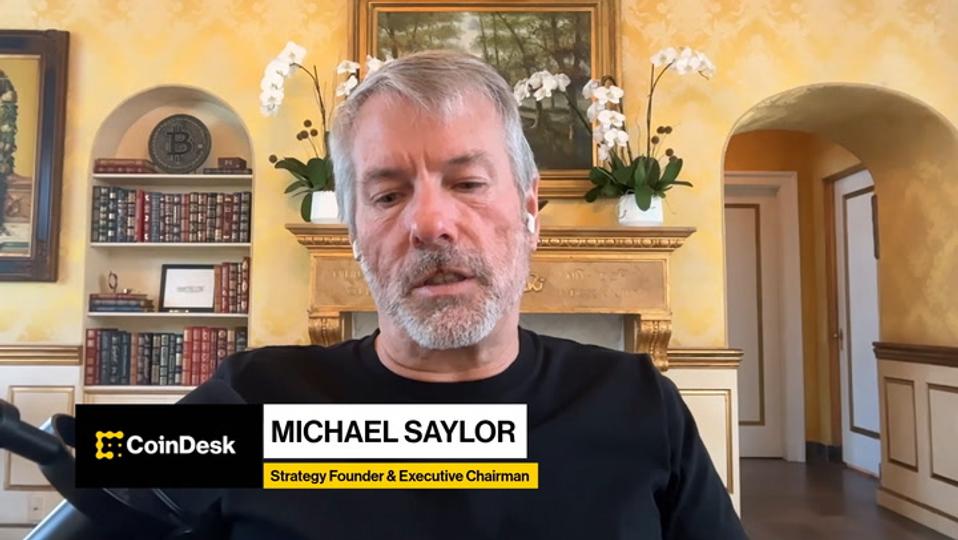
"Building on 846,842," tweeted Strategy Executive Chairman Michael Saylor minutes ago, referring to the amount of bitcoin held on his company's balance sheet. The post comes as bitcoin slid back towards multi-year lows on the Fed's hawkish pivot on Wednesday. Strategy's common stock MSTR fell 5.1%, nearing a 52-week low. Its high-yielding preferred stock, STRC, tumbled back to $89, a full 11% below par, suggesting investors are demanding a dividend well in excess of the current 11.5%. "Bitcoin is stuck in limbo until the market gets rid of Saylor or a price-insensitive nation state starts bidding to infinity," tweeted persistent (and currently right) doomer Wazz. "The former is more likely than the latter IMO. Every single day the bitcoin price action is hostage to Strategy Ponzi, the bitcoin narrative takes a hit."
Saylor's relentless optimism in the face of brutal market conditions is characteristic of his leadership style. He has consistently used social media to project confidence, often posting bitcoin-related content during selloffs. However, the market is increasingly questioning whether his strategy of perpetual leverage can withstand a prolonged bear market. The discount of MSTR to its bitcoin holdings has expanded to levels that suggest the market is assigning a significant probability to some form of distress, whether that be forced sales, margin calls, or a restructuring of the company's capital structure.
Intel jumps 9% on reported Apple chipmaking partnership in the US
Intel shares jumped more than 9% in pre-market trading on Thursday after President Donald Trump announced on Truth Social that the chipmaker will partner with Apple (APPL) to design and manufacture semiconductors in the United States. In a post on Truth Social, Trump said, "Apple has agreed to work with Intel to design and build its chips in America," while also highlighting domestic chipmaking initiatives from Nvidia (NVDA) and Elon Musk's Terafab. Intel stock has soared over 220% year to date, pushing the company's market capitalization above $610 billion. The U.S. government currently owns roughly a 10% stake in Intel, a position it acquired in August 2025.
This news underscores the ongoing reshoring of semiconductor manufacturing, a key policy priority for the Trump administration. Intel has been a major beneficiary of government subsidies and strategic partnerships, positioning itself as a leading foundry for advanced chips. The Apple partnership, if confirmed, would be a significant win for Intel's foundry business, which has been competing with TSMC and Samsung. The stock's rally also reflects broader enthusiasm for AI and semiconductor stocks, which have been the primary beneficiaries of the current market rotation away from crypto and towards productivity-enhancing technologies.
From a crypto perspective, the Intel news is largely a sideshow, but it illustrates the broader market dynamics: capital is flowing into AI infrastructure and away from speculative digital assets. This divergence is likely to persist as long as the Fed remains hawkish and as long as AI continues to demonstrate real-world adoption and revenue growth.
The dollar index hits one year high as hawkish Fed boosts greenback
The U.S. Dollar Index (DXY) has climbed to 100.7, its highest level since May 2025 and a one year high. A stronger dollar is typically bearish for risk assets as it tightens global financial conditions, reduces liquidity, and increases the attractiveness of dollar denominated investments. The DXY had traded in a relatively narrow 96 to 100 range over the past year before breaking higher. The move followed a hawkish debut FOMC meeting from new Federal Reserve Chair Kevin Warsh on Wednesday. Despite the dollar's strength, bitcoin and gold continue to hold above $64,000 and $4,200, respectively.
The dollar's breakout is a significant headwind for bitcoin, as the two assets have historically had a strong inverse correlation. A stronger dollar makes dollar-denominated assets like bonds more attractive relative to non-yielding assets like bitcoin. It also reduces the purchasing power of foreign investors, who may be the marginal buyers of bitcoin during bull markets. The fact that bitcoin has held above $62,000 despite the dollar's strength is somewhat encouraging, but the trend is clearly in the dollar's favor.
A hawkish Fed is a headwind for crypto, but maybe a sign of strength
The Fed's hold this week mattered less for crypto than what it signaled, according to Matthew Pinnock, chief operating officer at Altura DeFi. Chairman Kevin Warsh's first meeting offered little clarity, avoiding firm commitments on the path ahead, while the updated projections turned hawkish. Policymakers now see the federal funds rate ending 2026 at 3.8%, up from 3.4% in March, implying possible hikes rather than the cuts markets had penciled in. Rising Treasury yields reflect a market repricing for a longer stretch of restrictive policy, a near-term headwind for risk assets, Pinnock said in a message. He sees a more constructive read underneath, however. The hawkish stance also signals the Fed's confidence in the economy. If AI-driven productivity supports growth and inflation stays contained, Pinnock noted, investors may come to view the posture as a sign of resilience rather than a threat to the risk-on backdrop that has supported bitcoin's advance.
This nuanced view highlights the complexity of the current macro environment. On one hand, higher rates for longer are typically bad for speculative assets. On the other hand, if the Fed is confident enough to raise rates, it means the economy is strong, which could eventually support risk-taking. The key variable is whether AI-driven productivity gains will translate into sustainable economic growth that can absorb higher rates without triggering a recession. If they do, bitcoin could eventually recover as part of a broader risk-on move. If they don't, the current selloff could deepen.
Markets rebound as investors digest hawkish Fed pause
Markets are rising before the opening of U.S. equity trading after a late selloff on Wednesday following Federal Reserve Chair Kevin Warsh's first FOMC meeting. As expected, the Fed left interest rates unchanged, but the accompanying statement and press conference struck a more hawkish tone, weighing on risk assets into the close. The U.S. Dollar Index (DXY) has remained above 100, while the Invesco QQQ ETF is up 1.5% in pre-market trading. Precious metals are modestly higher, with gold trading below $4,300 per ounce and silver below $69 per ounce. Bitcoin is hovering above $64,000, while crude oil continues to weaken to below $74 per barrel. Meanwhile, U.S. Treasury yields edged lower, with the 10-year Treasury yield declining to 4.5%.
The rebound in equities suggests that the initial shock from the Fed's hawkish stance is fading, at least for stocks. However, the continued weakness in crypto indicates that the asset class is still processing the implications of a higher-for-longer rate environment. The fact that bitcoin is holding above $62,000 is being interpreted by some as a sign of resilience, but the overall trend is clearly bearish in the short term.
BTC derivatives alert: Massive put buying at $62,000 signals weekend caution
Bitcoin's options market on Deribit shows a significant surge in short-term bearish positioning. Data tracked by Laevitas shows whale-sized buying of bitcoin put options at the $62,000 strike expiring on June 21, that is, three days from now. A total of 1,750 contracts hit the tape, with buyers paying over $600,000 in premium for the hedge. Laevitas described it as "near-term downside protection in the weekend expiry." A put option gives the buyer the right, but not the obligation, to sell the underlying asset at a predetermined price on or before expiration. The $62,000 strike put expiring June 21 is essentially a bet that bitcoin's spot price will be below that level at expiry.
This massive put buying is a clear signal that sophisticated investors are expecting further downside in the near term. The concentration at the $62,000 strike suggests that this level is seen as a key support that could break. If bitcoin closes below $62,000 on Friday, the put buyers will profit handsomely. This activity comes amid heightened uncertainty following the Fed meeting and the continued selloff in STRC and other crypto-linked securities.
Bitcoin whales are buying the dip as ETFs sell
Bitcoin's largest wallets are buying the dip. Addresses holding 1,000 or more BTC now control about 7.17 million coins, their highest since March 14, according to Santiment. The accumulation comes as the recovery rally stalls near $64,000, per data, and it cuts against Wednesday's flows. Spot bitcoin and ether ETFs both posted broad outflows after the Federal Reserve turned hawkish and took rate cuts off the table. Whales are adding while the ETF bid fades. The move fits a run of accumulation signals this month. Exchange reserves have fallen roughly 80,000 BTC since February as coins move into storage, long-term-holder balances sit near records, and wallets with a history of holding absorbed about 125,000 BTC in the first half of June. The caveat is that these are accumulation readings, not a guarantee of direction. As a share of total supply, the whale stake near 35.8% still sits below its December peak.
This divergence between whale accumulation and ETF outflows is noteworthy. It suggests that long-term holders and large investors see the current price as a buying opportunity, while institutional flow through ETFs is shifting risk-off. Whales have historically been a contrarian indicator, accumulating during dips and distributing during rallies. If this pattern holds, the current whale buying could be a precursor to a price recovery. However, the broader macro headwinds from the Fed may overwhelm this accumulation in the short term.
In summary, the market on June 18 was characterized by a sharp divergence between AI-driven equities and crypto assets. The Fed's hawkish pivot under new Chair Kevin Warsh triggered a risk-off move in digital currencies, with bitcoin falling below $63,000 and Strategy's preferred stock STRC plunging to record lows. While AI and semiconductor stocks rallied on continued enthusiasm for productivity gains, crypto faced headwinds from a stronger dollar, rising rate hike expectations, and a loss of confidence in leveraged bitcoin plays like Strategy. The coming days will be critical in determining whether the current selloff is a temporary correction or the beginning of a deeper bear phase.
Source: Coindesk News