

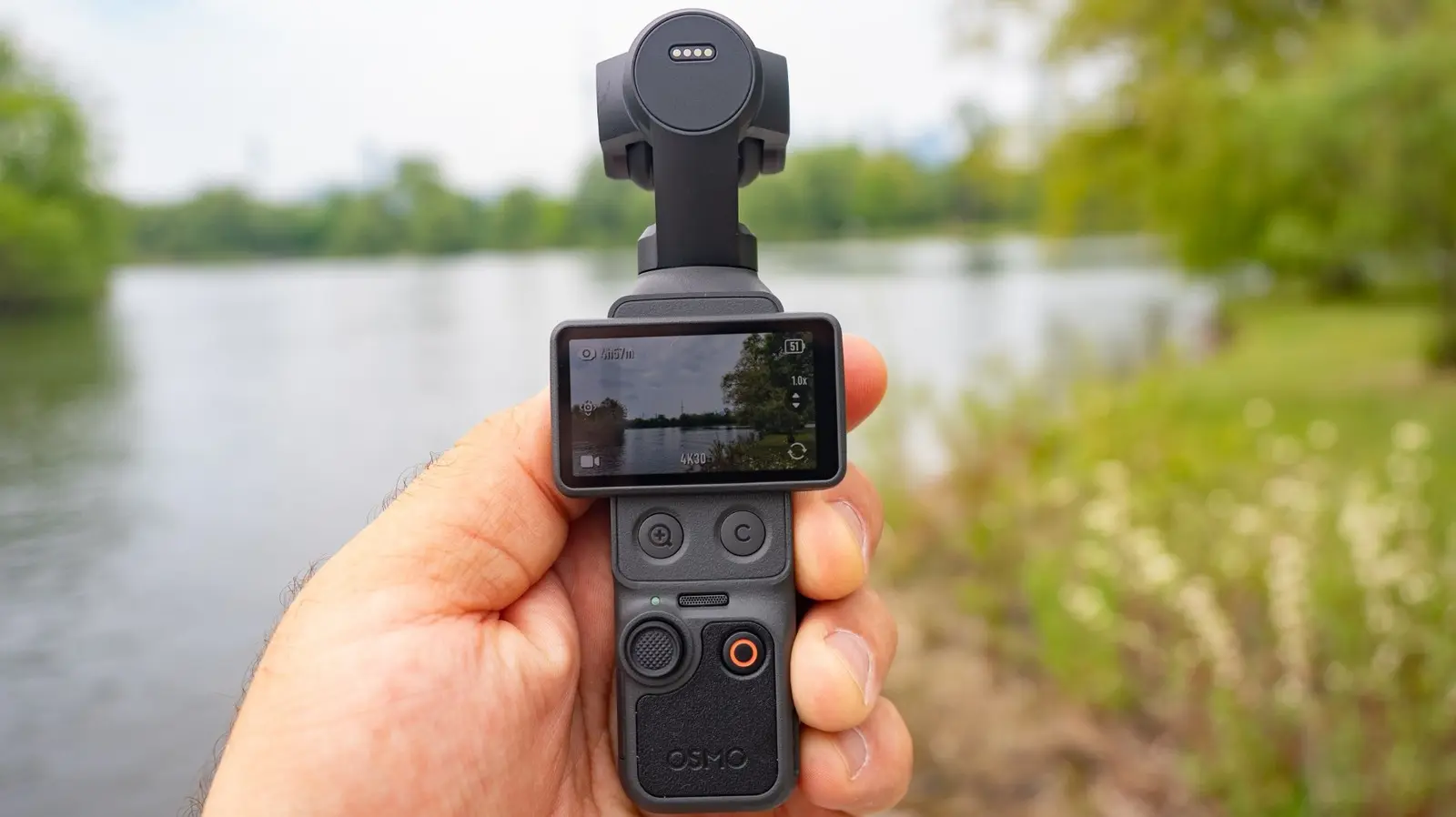
The DJI Osmo Pocket 4 represents a notable step forward in compact camera technology, but its external appearance reveals little of the upgrades hidden within. At first glance, the device looks nearly identical to its predecessor, the Pocket 3, and even experienced users may struggle to spot the differences. This is a classic case of under-the-hood improvements that significantly enhance performance without altering the familiar user experience.
The most significant change is the new 1-inch sensor, which has become the gold standard for compact cameras because it delivers the image quality of larger sensors without requiring massive lenses. This upgrade allows the Pocket 4 to capture 37-megapixel stills and record video at up to 4K resolution with 240 frames per second for slow-motion footage—a substantial leap from the 120fps limit of the Pocket 3. The camera also supports 10-bit D-Log recording, providing greater color depth for professional post-production work. The improved low-light performance is especially notable, making the Pocket 4 a versatile tool for evening shoots and indoor vlogging.
Despite these internal changes, the design remains largely unchanged. The physical layout is almost identical, with only minor adjustments to button placement. The camera still requires activation before first use, a practice that continues to frustrate some users. It lacks waterproofing and ruggedization, but the build quality feels robust enough for travel and daily use. However, one downgrade is the replacement of the protective case from the Pocket 3 with a simpler clip that only stabilizes the gimbal during transport—a less protective and less convenient solution.
The autofocus system remains one of the strongest features of the Pocket series, offering fast and reliable performance. The flip screen mechanism is retained, allowing users to power the camera on by rotating the screen into horizontal orientation. The software, including the Mimo app, is well-designed and offers features like motionlapse for programmable time-lapses. The Pocket 4 now includes 107GB of internal storage alongside microSD support, ensuring you always have backup space. A new adapter on the gimbal allows attachment of an LED video light, useful for vlogging in dim conditions.
Pricing and availability present a major hurdle. The base model retails for $477, with more expensive bundles available. However, due to political disputes, the U.S. government has not authorized import of the Pocket 4, making it extremely difficult to find in American markets. Some third-party sellers on platforms like Newegg and AliExpress offer the camera at inflated prices, but such purchases carry risks. For comparison, the Insta360 Luna Ultra, available in the U.S. for around $300 more, offers a dual-lens system and detachable remote control, though its autofocus is inferior to that of the Pocket 4.
The DJI Osmo Pocket 4 builds upon the strengths of its predecessor with meaningful upgrades to its sensor and video capabilities. For current Pocket 3 owners, the improvements may not warrant an immediate upgrade, but for those entering the market for a compact cinema-quality camera, the Pocket 4 is an excellent choice—if you can find one. The regulatory situation in the U.S. remains unresolved, but internationally the camera is available directly from DJI. Despite the hardware deja-vu, the Pocket 4 stands out as the creator camera to beat in its class.
Source: SlashGear News