

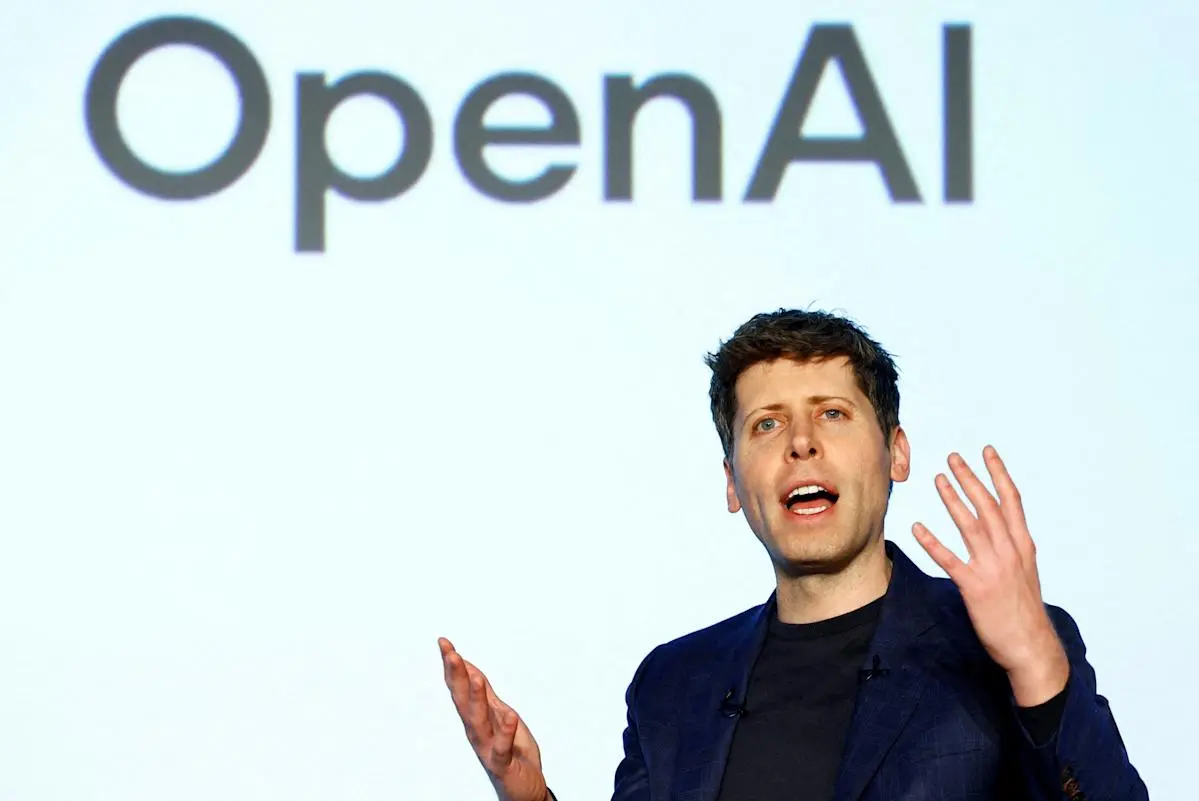
Sam Altman's Changing Perspective on AI and Employment
For years, the specter of artificial intelligence replacing human workers has haunted the global workforce. Perhaps no single figure has personified this anxiety more than Sam Altman, the CEO of OpenAI, the company behind groundbreaking AI models like GPT-4 and DALL-E. Altman had been one of the most prominent voices warning that AI would soon eliminate a significant portion of white-collar jobs. In a 2025 interview, he predicted that AI would likely replace “30 to 40%” of all work tasks “in the not very distant future.” Yet, in a striking turn of events, Altman now says those fears were overblown.
Speaking virtually at a Commonwealth Bank of Australia conference in Sydney on May 26, 2026, Altman admitted that the rapid rise of AI has not triggered the global “jobs apocalypse” many anticipated. “I’m delighted to be wrong about this,” Altman said. “I thought there would have been more impact on entry-level, white-collar jobs being eliminated by now than has actually happened.” His remarks, reported by Reuters and conference hosts, mark a significant shift from his earlier dire warnings and have reignited debates about the true impact of AI on the labor market.
The Broader Context: Automation Fears Through History
Altman's revised outlook comes amidst a long history of automation anxiety. From the Luddites smashing looms in the 19th century to the rise of robotics in manufacturing, each wave of technological innovation has sparked fears of mass unemployment. However, economists often note that while technology displaces some jobs, it also creates new ones. The Industrial Revolution gave rise to factory jobs, the digital age spawned roles in IT and software development, and the AI era is already generating positions in prompt engineering, AI ethics, and model training.
Yet, the speed and scope of generative AI have felt unprecedented. Tools like ChatGPT and GitHub Copilot can write code, compose emails, analyze data, and even generate art. This has led to predictions that white-collar professionals—from paralegals to radiologists—could be rendered obsolete. Altman's earlier estimates were in line with those of other tech leaders. Dario Amodei, CEO of Anthropic, told Axios in 2025 that AI could eliminate half of all entry-level positions within a few years. Jerome Powell, then-chair of the Federal Reserve, noted in October 2025 that “a significant number of companies either announcing that they are not going to be doing much hiring, or actually doing layoffs, and much of the time, they’re talking about AI.”
Early Evidence: AI-Driven Layoffs and Hiring Freezes
Indeed, several major companies have openly replaced workers with AI or frozen hiring in favor of automation. In 2024, a financial services firm laid off hundreds of customer service representatives after deploying an AI chatbot. A multinational marketing agency reduced its copywriting team by 30% after implementing generative AI for content creation. Even in healthcare, AI systems began reading medical scans with accuracy rivaling radiologists, prompting concerns about job security in that field.
However, a growing body of evidence suggests that the anticipated mass displacement has not occurred. A 2025 study by the World Economic Forum found that while AI had affected job tasks, it had not yet led to a net reduction in employment. Instead, many organizations have used AI to augment human work, improving efficiency without eliminating roles. For example, a law firm using AI to analyze contracts reported that its paralegals now spend more time on high-value client interactions, while AI handles the routine document review. This “augmentation” model has been cited by Altman as a more realistic outcome.
What Changed Altman's Mind?
Altman explained that his change of heart came from observing real-world outcomes and his own behavior. He noted that even as the CEO of a leading AI company, he has returned to writing emails himself rather than delegating them to AI. “We really do care about our interactions with people,” he said. This sentiment echoes research in organizational psychology: human connection, empathy, and nuanced communication are qualities that AI struggles to replicate. Many clients, customers, and colleagues prefer dealing with a human, especially for complex or sensitive matters.
Furthermore, Altman pointed out that many jobs require a blend of skills and contextual awareness that current AI models lack. While AI can draft a report or summarize data, it cannot easily navigate office politics, build trust over time, or innovate in unstructured environments. These “human” elements act as a buffer against full automation. Even in tasks like customer service, studies show that while chatbots handle simple queries, escalation to human agents often results in higher satisfaction for complex issues.
The Counterargument: Is the Calm Before the Storm?
Not everyone is convinced that Altman's optimism is justified. Critics argue that the AI revolution is still in its early stages. The full impact on employment may take years to materialize, as companies gradually integrate AI into their workflows and as the technology improves. For instance, if AI reaches human-level reasoning in the next decade, many current protections could vanish. Additionally, the fact that job losses have been limited so far may reflect corporate caution around public relations, regulatory uncertainty, and the need to retrain workers, rather than a fundamental limitation of AI.
Economic historian Carlota Perez has argued that technological revolutions follow a pattern of “installation” and “deployment.” In the installation phase, new technologies are introduced, but their full labor-market effects come later, during the deployment phase, when business models and institutions adapt. By this logic, we may be in the installation phase of AI, and the real disruption could be yet to come.
Moreover, Altman's own company continues to push the boundaries of AI capabilities. OpenAI's recent release of GPT-5 demonstrated near-human performance in a wide range of professional tasks, including drafting legal briefs, writing code, and composing business emails. If such systems continue to advance at the current pace, the gap between human and machine performance may shrink further, potentially making the current lull in job displacement temporary.
Industries Most and Least Exposed
Analysts have attempted to quantify AI's exposure across industries. A 2026 McKinsey report estimated that about 15% of global work tasks could be automated by 2030, up from 10% in 2023. Industries like finance, insurance, and information technology have high exposure, while occupations requiring physical presence or interpersonal care—such as nursing, construction, and hospitality—remain relatively safe. Yet even within high-exposure sectors, the actual rate of job loss varies. For example, while AI can perform financial analysis, many banks have chosen to retrain their analysts to focus on strategic decisions, rather than firing them.
Altman's comments also align with a broader shift in the public conversation. In recent months, several tech leaders have moderated their predictions. Satya Nadella of Microsoft has emphasized “co-pilot” assistance over replacement. Even Dario Amodei recently acknowledged that AI's impact on jobs may be more gradual than he initially thought. This suggests that the initial panic may have been fueled by hype and uncertainty, rather than concrete data.
Nevertheless, the uncertainty remains. Workers are understandably anxious: a 2026 Gallup poll found that 55% of white-collar employees are concerned that AI could make their jobs obsolete within five years. Altman's revised stance may provide some reassurance, but it does not eliminate the need for proactive policies, such as retraining programs, educational reform, and social safety nets, to help workers adapt.
Looking Ahead: A Balanced Future
Altman's most recent comments do not represent a complete reversal. He still acknowledges that AI will change many jobs, and that some tasks will be automated. However, he now believes the transition will be slower and less disruptive than he once feared. “The human element is more resilient than I gave it credit for,” he said in the interview. As AI evolves, it may become a tool that enhances human capabilities rather than replacing them entirely—a future where doctors are supported by AI diagnostics, lawyers by AI research, and teachers by AI tutors, but where human judgment, empathy, and creativity remain central.
The next few years will be critical. Companies that invest in AI to augment their workforce, rather than replace it, may emerge stronger. Workers who learn to collaborate with AI may find new opportunities. And the social and policy response—from education to unemployment insurance—will shape how these changes play out. For now, Altman's revised prediction offers a note of cautious optimism. But as he himself would likely warn, the story is far from over.
Source: Yahoo Finance News