

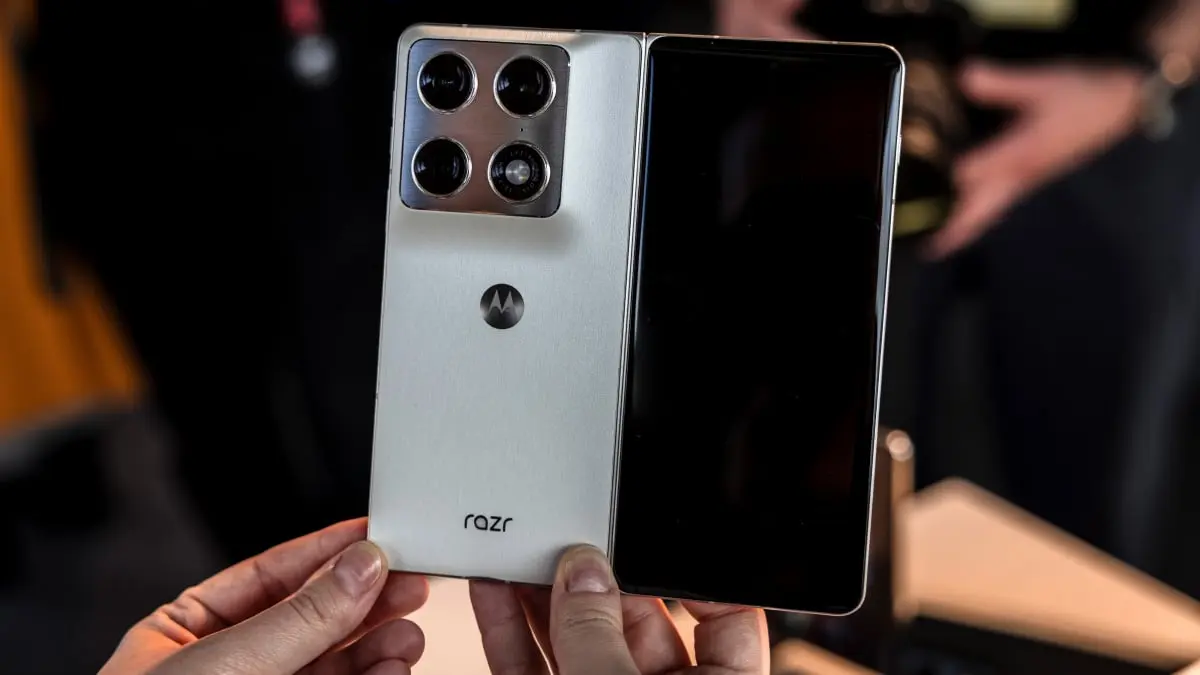
In a revelation that echoes the controversial Honey affiliate hijacking scandal, security researchers and users have found that certain Motorola smartphones are redirecting users through unauthorized affiliate links when they attempt to open the Amazon shopping app. The issue, first reported on Reddit and later confirmed by tech outlets, involves the Smart Feed feature on select Motorola devices running firmware version v2.03.0070.
The problem was flagged by Reddit user u/Trypocopris, who noticed that their Motorola Razr Ultra would launch a browser with a suspicious URL before landing on Amazon. The URL contained a reference to "devicenative.com," a service that claims to offer on-device ad serving without sharing user data. Upon analysis, it became clear that the redirect was injecting an affiliate code, likely intended to generate commissions for an unknown party.
Further investigation by 9to5Google revealed that the behavior was reproducible on the Razr Fold with the latest Smart Feed version, but not on older versions. The redirect only occurred when launching Amazon from the app drawer, not from the home screen. During the redirect, users were briefly taken to a URL containing the name "kira-abboud," which appears to be an alias referencing a fashion influencer. However, the affiliate code did not match any publicly known codes from that influencer, suggesting either a hijacking by a third party or an internal attempt to monetize referrals without authorization.
Motorola responded quickly after being contacted, stating that the issue was caused by a misconfigured routing configuration in the joint development with Device Native for app search and suggestion features. The company emphasized that the behavior was unintended and acknowledged it resulted in an inconsistent user experience. A software update was released to correct the routing configuration, and Motorola assured users that all installed apps now launch directly as intended. The company reiterated its commitment to user experience, privacy, and platform integrity.
This incident raises important questions about the security of pre-installed system apps and the potential for affiliate fraud on mobile devices. The Honey scandal of a few years ago, where the browser extension replaced creators' affiliate codes with its own, led to lawsuits and changes in Chrome extension policies. Similarly, this Motorola case demonstrates that affiliate code injection can occur at the operating system level, bypassing user awareness. While Motorola’s fix addresses the immediate problem, it highlights the need for transparent app behavior and rigorous testing of system features that interact with third-party services.
Users affected by the issue can still disable the Smart Feed feature manually by navigating to Settings > Apps > Smart Feed and selecting Disable. This immediately stops any redirects, as confirmed by 9to5Google. For those concerned about privacy, it is advisable to avoid launching apps from system search features until the update is installed.
The broader implication is that mobile devices are increasingly becoming vectors for hidden monetization schemes. With on-device personalization services like devicenative.com, there is a fine line between legitimate ad serving and unauthorized insertion of tracking codes. Users should remain vigilant about how their devices handle app launches and consider using privacy-focused launchers or disabling system features that could be exploited.
In terms of technical details, the affiliate hijacking only affected the Amazon app when opened from the app drawer—specifically, when using the Smart Feed search to launch the app. The redirect pointed to a URL on devicenative.com, which then redirected to Amazon with an added affiliate token. This token would credit a third party if the user made a purchase during the session. The exact identity of the affiliate is unclear, but the inclusion of "kira-abboud" suggests a possible attempt to impersonate a known influencer or to route commissions to an individual within the device supply chain.
Historical context: Affiliate marketing is a multi-billion-dollar industry where content creators earn commissions by promoting products. Hijacking these codes is considered unethical and often illegal. The Honey case led to a class-action lawsuit against PayPal, the owner of Honey, which resulted in undisclosed settlements and changes to browser extension policies Google imposed requiring extensions to disclose affiliate behavior. In the Motorola case, the injection occurs at the firmware level, making it even more insidious as users have no control over the redirect.
Motorola has not disclosed how long the issue existed before being discovered. Given that the bug was present in Smart Feed version v2.03.0070, which was likely distributed over-the-air, a significant number of users may have been exposed. The company did not confirm whether any commissions were collected during the period of vulnerability, nor whether any user data was compromised. The statement focused solely on the routing configuration error and the corrected experience.
For security researchers, this incident serves as a reminder to examine system-level features for hidden behaviors. The discovery by a Reddit user and subsequent verification by a tech outlet underscores the value of community vigilance. Moving forward, smartphone manufacturers should implement stricter controls over how system apps handle URL redirects and affiliate links, perhaps by requiring explicit user consent before launching third-party apps through tracking links.
From a user perspective, the best defense is to keep devices updated and to periodically review app permissions and system settings. Disabling unnecessary features like Smart Feed can reduce the attack surface. Additionally, using a VPN or a network-level ad blocker might help detect and block unexpected redirects, though these tools are not foolproof against on-device injection.
The resolution by Motorola came swiftly, but the episode leaves lingering concerns about the partnership between device makers and ad-tech companies. Device Native’s promise of "personalized, on-device mobile ad serving without sharing user data" sounds appealing from a privacy standpoint, but if the implementation can be manipulated to insert affiliate codes, the security model is fundamentally flawed. Users deserve transparency about how their device’s search and launch features handle data and redirects.
In summary, the Motorola affiliate code injection case is a stark example of how even established smartphone brands can inadvertently facilitate affiliate fraud. The quick fix is reassuring, but the underlying issues of system-level tracking and monetization remain. Users should remain cautious and proactively manage their device settings to protect against similar exploits in the future.
Source: Mashable News