

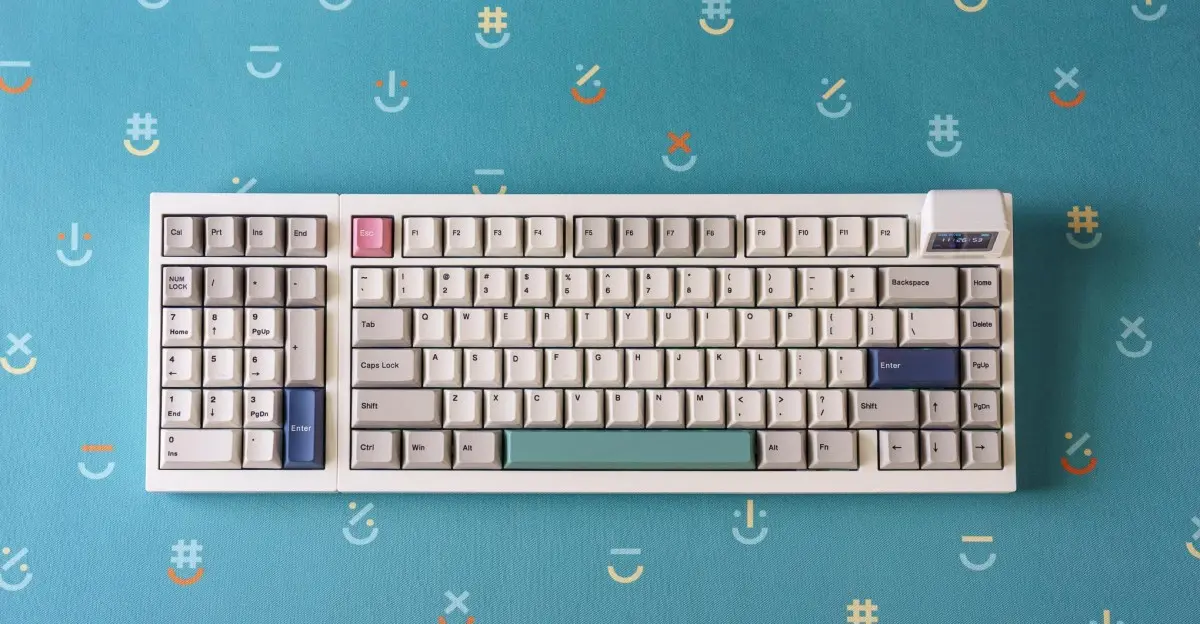
An ambidextrous numpad keyboard that breaks the mold
Mechanical keyboard enthusiasts often have strong opinions about the number pad—some refuse to work without it, others consider it a relic. The Epomaker RT98 is a keyboard that aims to please both camps by offering a detachable numpad that can be installed on either side of the main board. It also brings a vintage aesthetic, a playful little screen, and a choice of switches that produce either quiet or rich sounds. This keyboard costs $119 and is available in prebuilt configurations, but it can be fully customized thanks to VIA compatibility.
Design and core features
The RT98 is a 98-key layout that includes a number pad, arrow keys, and a full function row. It uses a plastic chassis with a retro cream-and-beige color scheme, evoking classic computer keyboards from the 1980s. The keycaps are made of PBT plastic with dye-sub legends, which feel durable but the printing appears fuzzy and not as crisp as more expensive sets. The board is gasket-mounted with layers of sound-dampening foam, giving it a pleasant acoustic profile.
The standout feature is the modular number pad. It connects via a ribbon cable inside the case, and the position can be flipped from right to left. The process requires removing screws, prying open the plastic, and carefully rerouting cables—it takes about 30 minutes. While not something most people will do often, it adds a level of customization rarely seen at this price point. A hex wrench and spare switches are included in the box.
Typing experience and switch options
Two switch options are available: Epomaker's Sea Salt Silent V2 (linear, quiet) and Creamy Jade (linear, with a richer marble-like sound). Both are full-sized five-pin switches, and the board supports hot-swapping so you can change them later. The Sea Salt Silent V2 provide a smooth, nearly noiseless typing experience, ideal for shared workspaces. However, the plate-mounted stabilizers on larger keys like the space bar and shift are louder than the switches, which diminishes the silent effect somewhat. The Creamy Jade switches, on the other hand, produce a deep, creamy sound with a pleasant tactile feedback—reminiscent of rain falling on glass, but with a darker tonality. The keyboard's internal construction (gasket mount, polycarbonate plate, foam layers) enhances the sound without making it overly flexy. Neither option feels hollow or pingy, which is impressive for a plastic board.
Screen and extras
On the top right corner sits a small detachable screen that magnetically attaches to the case. It can display the time, date, connection status, or custom GIFs. Using Epomaker's web-based driver, you can upload three animated images (e.g., cats, retro anime clips). The screen is a fun gimmick but not essential. The magnetic attachment could potentially be used for future add-ons, but the company hasn't announced any. The RT98 connects via USB-C, and supports both wired and wireless modes—though the wireless implementation uses its own proprietary dongle, not Bluetooth, which may limit convenience for some users.
Build quality and market context
At $119, the RT98 sits at the lower end of the enthusiast market but above budget boards. The plastic case feels sturdy enough, but there is some flex when applying pressure to the middle of the keyboard. The switches and stabilizers are factory-lubed, providing a smooth out-of-the-box experience. However, at this price you are nearing the territory of keyboards with aluminum cases and better stock keycaps, like the Wobkey Rainy75 or the Keychron Q series. The RT98 justifies its cost with the unique modular numpad, which is simply not offered by most competitors. For users who frequently switch between left- and right-handed numpad use, or who want a board that can adapt, the RT98 is a standout choice.
Who is this keyboard for?
This keyboard is ideal for number pad enthusiasts who have been forced to compromise on layout. Left-handed numpad users (southpaws) will appreciate the ability to place the numpad on the left without sacrificing full-size keys. The retro design appeals to those who miss the look of classic computers, while the customizable screen adds a touch of modernity. The typing feel is solid for both work and gaming, though the 1,000 Hz polling rate covers most use cases. Battery life is not a concern as the keyboard draws power from USB, but if using the wireless dongle, internal batteries would be drained over many hours of use—though the board can be used while charging. The lack of Bluetooth might be a dealbreaker for users who want to switch between multiple devices effortlessly.
Comparison with similar keyboards
Compared to other modular keyboards, the RT98 is much more affordable than the Asus ROG Claymore or Mountain Everest Max, which often cost twice as much and are heavily gaming-oriented. The Keychron Q5 and Q6 offer aluminum builds and many layout options, but their numpad is not movable; instead, they exist as separate left-handed or right-handed versions. The Epomaker board is the only option that allows you to physically reposition the numpad on the same unit. Other Keychron models like the V5 (96%) also use plastic but lack the modular feature. The RT98's closest competitor might be the Ajazz AK820 Pro or the Aula F75, but those do not include a numpad at all.
Sound test notes
The keyboard produces noticeably different sounds depending on the switch choice. With the Sea Salt Silent V2, typing is virtually silent except for the stabilizers, making it a good choice for offices or quiet rooms. The Creamy Jade switches produce a deeper, more satisfying clack that many enthusiasts prefer. Both sound clips are available online for reference. The keycaps have a uniform thickness that contributes to a consistent tone across all rows. Overall, the RT98 delivers above-average acoustics for its price bracket, especially for a plastic chassis.
Final remarks on the Epomaker RT98
If you have been waiting for a keyboard that lets you choose between left- and right-hand numpad placement without buying two separate boards, the Epomaker RT98 is the answer. It combines a playful aesthetic with functional flexibility, and while the build quality isn't top-tier, the typing experience and sound quality are commendable. The screen adds personality, and the VIA compatibility ensures long-term software support. For $119, you are getting a versatile tool that can adapt to your changing workspace preferences—something that few keyboards can claim.
Source: The Verge News