

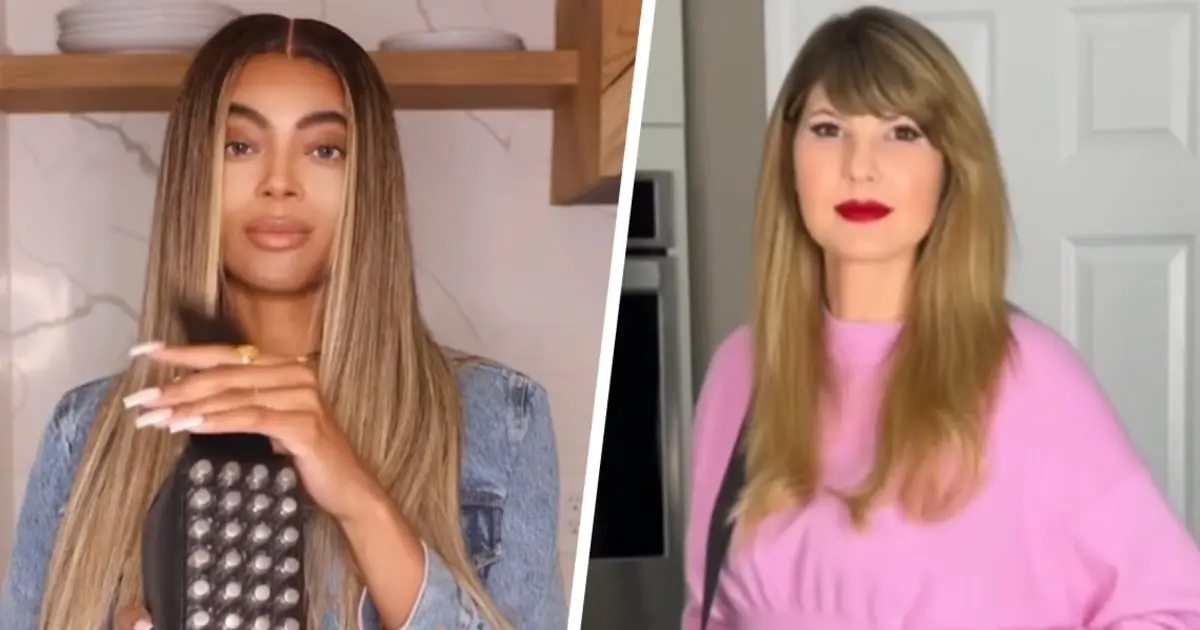
Fashion designer Alexander Wang has ignited a fresh wave of controversy with a social media campaign that uses look-alikes of some of the world's most famous women to promote a handbag. The ad, posted on the brand's official Instagram and TikTok accounts, shows four women unboxing a black studded purse called the Ricco. At first glance, the models appear to be Ariana Grande, Taylor Swift, Beyoncé, and Kylie Jenner. But a closer look reveals that they are celebrity impersonators who have built careers on their striking resemblance to the stars.
The campaign, captioned “100% certified authentic,” is a clear play on the brand’s Ricco bag, which itself is an updated version of Wang’s popular Rocco purse from around 2010. By using look-alikes rather than the actual celebrities, Wang seems to be commenting on the concept of authenticity and repackaging. However, the move quickly drew criticism from fans who accused the brand of using the stars’ likenesses without consent. Alexander Wang has not responded to requests for comment.
The two most prominent impersonators featured are Paige Niemann, who resembles Ariana Grande, and Ashley Leechin, who looks like Taylor Swift. Both have amassed millions of followers on TikTok by posting content that echoes the mannerisms, style, and even pets of the celebrities they resemble. Niemann has over 10 million followers and has been creating such content for nearly eight years. Leechin has close to 2 million followers and gained attention after Swift herself commented on one of her videos, noting the resemblance. However, the impersonators have also faced backlash from fans who accuse them of crossing the line from tribute to exploitation.
The controversy underscores a growing debate about the use of celebrity look-alikes in advertising, especially in the age of social media and artificial intelligence. Just weeks before Wang’s ad, actress Scarlett Johansson publicly clashed with OpenAI over an AI voice that sounded “eerily similar” to hers. OpenAI removed the voice but denied it was modeled on Johansson. In 2023, multiple deepfake ads featuring female celebrities in sexualized scenarios were circulated on platforms like Instagram and Facebook, prompting calls for stricter regulations.
Robert Freund, a Los Angeles-based lawyer specializing in consumer protection, told NBC News that the Alexander Wang campaign immediately struck him as a potential publicity rights issue. “These are pretty clearly individuals appearing in this piece of content that are supposed to look like famous celebrities,” he said. “This is yet another potential celebrity lookalike issue, and we see a lot more of these in disputes and in the discourse around AI and deepfakes. Can we mimic someone’s voice? Can we hire someone who looks exactly like someone else? Where’s the line?”
The brand’s official account also liked several comments that acknowledged the resemblance, including “These look alikes are hilarious,” “I can’t with the dupe Ariana! lol,” and “Chat gpt Ariana kylie Bey and Taylor lmfaooo.” Freund noted that such actions could be used as evidence in a legal dispute. “If you have a laundry list of evidence of people saying ‘Oh, this looks like Ariana Grande,’ it’s not a good idea to like those comments because it just adds ammunition in the event that somebody wanted to make a legal matter out of it,” he said.
This is not the first time such issues have arisen. In 2019, Ariana Grande sued the retailer Forever 21 for using a model that looked “strikingly similar” to her in a campaign that appeared to borrow from her “7 Rings” music video. The case was settled out of court. The precedent highlights the legal risks brands face when they invoke a celebrity’s persona without permission. Grande herself has publicly addressed impersonators, calling their content “definitely bizarre” and, later, “degrading.” Swift also acknowledged Leechin but has not commented on the Wang ad.
Alexander Wang’s brand has a complicated history. The designer rose to fame in the mid-2000s with his edgy, street-style-inspired clothing, often worn by celebrities. He became a fixture on the party scene. However, in 2020, multiple allegations of sexual assault surfaced against him. Wang initially denied them but later issued a statement saying he regretted some of his actions. Attorney Lisa Bloom, who represented some of the accusers, said they would be moving on. Wang made a public comeback in late 2022, and notably, Kylie Jenner became one of his biggest endorsers, appearing in his 2023 previews. Beyoncé, Swift, and Grande had worn Wang designs before the allegations but have since kept their distance.
The use of look-alikes raises broader questions about the commercialization of identity. In the United States, the right of publicity varies by state. Some states like California and New York have strong protections that prevent the unauthorized use of a person’s name, image, or likeness for commercial purposes. Other states offer less protection. The line becomes even blurrier when the impersonators are not claiming to be the celebrities themselves but are clearly evoking them. Social media has enabled look-alikes to build audiences by mimicking stars, and brands see an opportunity to tap into that attention without paying the high fees that real celebrities command.
Ethically, the campaign puts the impersonators in a difficult position. They are simultaneously benefiting from and being criticized for their resemblance. Leechin has described being mobbed by fans after a “social experiment” where she pretended to be Swift in public, calling the experience “horrific.” Niemann has faced ongoing harassment from Grande’s fanbase. By partnering with Alexander Wang, both women have highlighted their roles as “Alexander Wang partners” in hashtags, but they have not commented publicly on the controversy.
The broader context includes the rapid advancement of AI-generated content, which makes it easier to create convincing deepfakes. While Wang’s ad used human look-alikes rather than digital recreations, the effect is similar: it trades on the fame and recognition of others without their consent. As technology evolves, the legal system is racing to catch up. Some lawmakers have proposed federal right of publicity legislation, but no comprehensive law exists yet. The Federal Trade Commission has also warned companies about deceptive uses of AI-generated endorsements.
Crucially, the controversy is not just about legality but about public perception. Even if no lawsuits are filed, brands risk backlash from fans who feel their favorite stars are being exploited. Social media campaigns can backfire if audiences view them as cheap or disrespectful. In Wang’s case, the ad may be a calculated risk to generate buzz and reclaim the brand’s rebellious image. But it also risks alienating the very fanbases that the impersonators themselves rely on.
Looking at the history of celebrity impersonation in advertising, it’s not new. Brands have used look-alikes for decades, from television commercials to print ads. However, the internet amplifies both the reach and the scrutiny. What might have passed unnoticed in a magazine now becomes a viral topic of debate. The use of multiple look-alikes simultaneously, as Wang did, is a more aggressive approach that invites comparisons and criticism. Each of the four stars—Grande, Swift, Beyoncé, and Jenner—has a massive fan base that is quick to defend them. The convergence of these fanbases creates a potent mix of outrage and discussion.
Moreover, the advertisement reopens conversations about Wang’s personal conduct. Some critics have questioned why Jenner continues to associate with the designer after the allegations, while others point out that the other three stars have not worn his clothes since. The look-alike campaign may be an attempt to tap into the star power of all four without having to engage with them directly. But for many, it feels like an exploitation of their images without accountability.
Ultimately, the Alexander Wang Ricco bag ad is a case study in the complexities of modern branding. It sits at the intersection of fashion, celebrity culture, legal boundaries, and social media ethics. As AI continues to blur the lines between real and simulated, such controversies will likely become more common. The question remains: where should the line be drawn between homage and infringement? For now, the brand has made its statement, and the court of public opinion—and possibly legal courts—will decide the consequences.
Source: NBC News News