

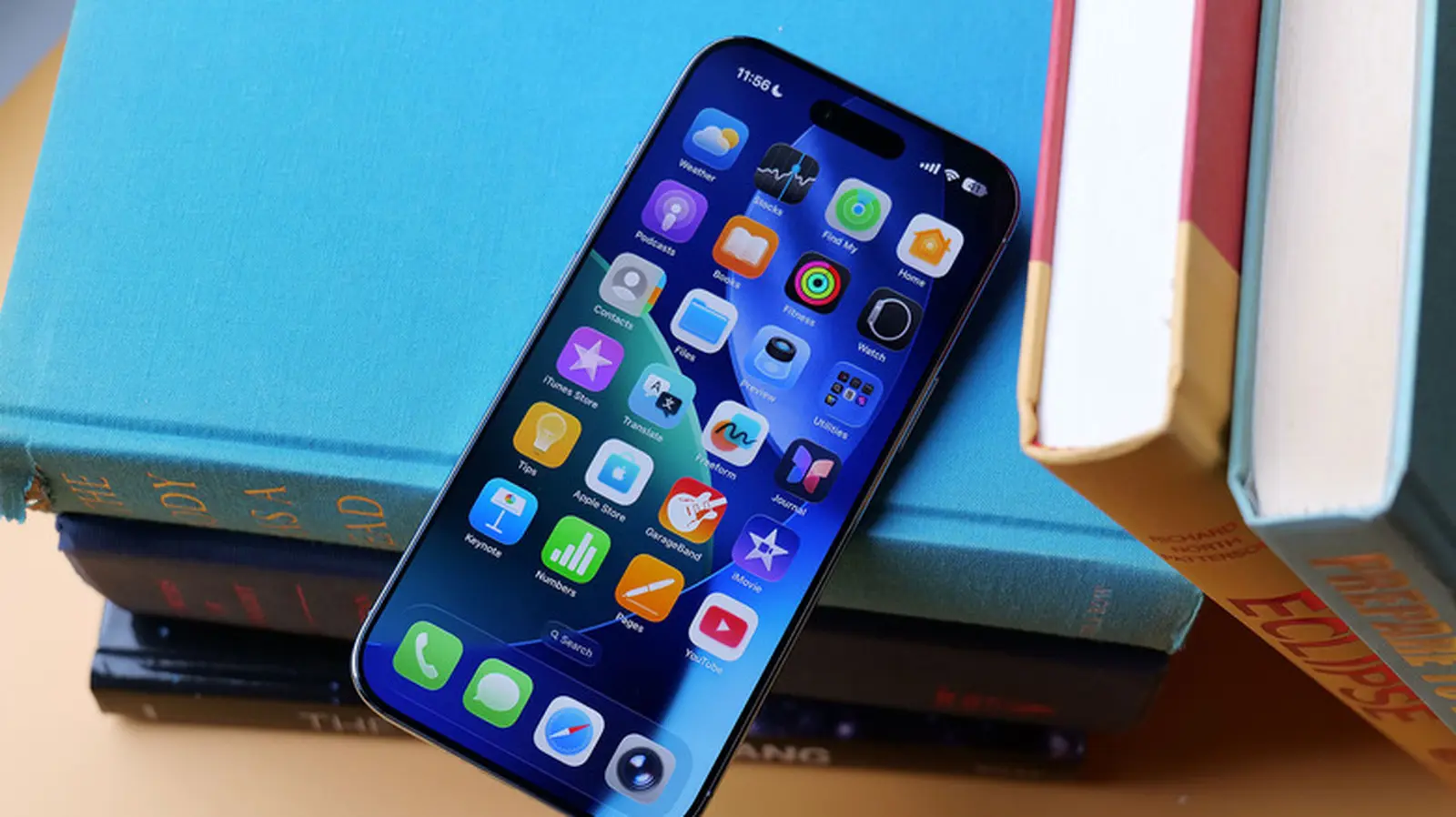
WWDC 2026, the latest version of Apple's yearly developer conference, runs from June 8-12, and by all appearances the company has some important updates to outline. In comparison to Liquid Glass, the design material Apple introduced last year and now uses across all its operating systems, the new features the company is rumored to announce might not be aesthetic, but they could make just as big of a splash. Namely because Apple might finally be ready to show off its second stab at an overhauled version of Siri.
If you're curious to see the company's new plans for yourself, you can watch Apple's WWDC 2026 keynote live on its website, YouTube channel or the Apple Developer Bilibili channel in China. Apple will also host its Platforms State of the Union stream and individual developer workshops on its developer website if you want to learn even more details about the software updates the company will release later this year. Luckily, we do have some sense of what Apple has in store, and it looks like stability improvements and AI are the company's big focuses for the updates coming to iOS, iPadOS, macOS, watchOS, visionOS and tvOS this fall.
A Snow Leopard-esque approach to stability and performance
Apple released Mac OS X Snow Leopard in 2009, primarily as a way to clean up the performance and refine the new features the company released with Mac OS X Leopard two years prior. The decision to essentially "take a year off" to focus on making everything about the company's desktop operating system feel better was well-received, and Apple is apparently planning to have iOS 27 serve a similar role.
Bloomberg reports that Apple's upcoming update will be "focused on improving the software's quality and underlying performance" and that the company's "engineering teams are now combing through Apple's operating systems, hunting for bloat to cut, bugs to eliminate and any opportunity to meaningfully boost performance and overall quality." Those fixes will presumably extend to the company's other operating systems, too.
Some of this effort may also be focused on cleaning up the visual changes introduced in Apple's big switch to Liquid Glass. The design overhaul has been controversial among the company's diehard fans, and Apple has already introduced tweaks in updates that arrived after the release of iOS 26 to make Liquid Glass interfaces more legible. Bloomberg reports the company could go a step further in its next updates and add a system-wide slider that will allow users to adjust the intensity of Liquid Glass (visual effects like translucency and reflectivity) they want in the interface.
The focus on performance and stability is a departure from the feature-heavy updates of recent years. For context, iOS 25 introduced significant multitasking improvements for iPad, while macOS 26 brought a redesigned System Settings app. But feedback from users and developers has persistently highlighted the need for a smoother, more reliable experience. By adopting a Snow Leopard philosophy, Apple aims to address long-standing gripes about battery drain, app crashes, and sluggish animations. This could also lay a more solid foundation for the AI-driven features the company is planning to roll out in subsequent updates.
The chatbot-ification of Siri
While stability and performance improvements will be a major focus of this year's updates, Apple is also rumored to be making some major changes to Siri. When the company first introduced Apple Intelligence at WWDC 2024, it promised to launch an updated version of the voice assistant that could use your personal context (like the information securely stored on your iPhone) to act across apps. Apple delayed those features in March 2025 and then announced a partnership with Google in January 2026 to use Gemini models to presumably make them possible.
Those features might finally arrive in this year's updates, but Apple is reportedly also changing how users interact with Siri by making the assistant more like a chatbot, according to Bloomberg. This would make the assistant more interactive and natural to speak to, and could open up other possibilities, like letting users direct Siri to perform two actions at the same time. Developers will reportedly also be able to integrate their own AI assistants with Siri, much like OpenAI has with ChatGPT.
The shift toward a chatbot-like Siri represents a fundamental rethinking of how Apple approaches voice assistants. Since its debut in 2011, Siri has often been criticized for lagging behind competitors like Amazon's Alexa and Google Assistant in terms of conversational ability and context awareness. The integration with Gemini is expected to dramatically improve Siri's ability to understand complex queries, follow-up questions, and even carry on multi-turn conversations without requiring the user to repeat themselves. Additionally, the ability to perform two actions simultaneously—such as sending a message while setting a timer—could make Siri significantly more useful for productivity tasks.
New places to talk to AI
The chatbot version of Siri will be accessible in the usual ways, but also reportedly through a standalone Siri app. The new app will let users prompt the assistant to take care of tasks on their device, search the web and even access news, not unlike current Gemini and ChatGPT apps. Bloomberg writes that the app will also be a way to review past conversations with Siri and receive suggestions of prompts to try with the new chatbot version of the assistant.
Users will also be able to interact with Siri inside Apple's other apps via a new feature called "Ask Siri." This may appear as an option in app menus, and allow you to ask the AI assistant questions about content in the app. It's not clear if this will be as in-depth or capable as Google's Ask Maps or Ask Photos features, but it at least seems like Apple's thinking along the same lines as its partner.
The standalone Siri app is a significant move because it signals that Apple sees Siri not just as a system-level feature but as a platform in its own right. The app could potentially become a central hub for all AI interactions on Apple devices, much like the ChatGPT or Gemini apps on competing platforms. Users might be able to use the app to manage their device settings, create complex automations, or even compose documents via voice. The ability to review past conversations could also help users fine-tune Siri's behavior over time, making the assistant more personalized and effective.
Moreover, the integration of third-party AI assistants into Siri opens up ecosystem possibilities. Developers of popular chatbot services, such as those specializing in customer support, healthcare, or creative writing, could offer their expertise directly through Siri's interface. This could transform Siri from a generalist assistant into a versatile gateway for specialized AI services, all while maintaining Apple's strong stance on privacy and on-device processing.
Expanding AI across the ecosystem
Beyond Siri, Apple is expected to infuse AI capabilities more deeply into its core applications. For example, Photos could gain more advanced editing suggestions powered by machine learning, similar to the object removal tools already seen in the Pixel lineup. Notes might receive automatic summarization and smart categorization. Messages could see intelligent reply suggestions that adapt to your conversation style over time. All of these features would likely leverage the same on-device AI models that power the new Siri, ensuring that user data remains private and secure.
On the professional side, apps like Final Cut Pro and Logic Pro could benefit from AI-assisted workflows. Auto-captioning, scene detection, and even AI-generated music tracks are possibilities that Apple has been exploring. With the rumored partnership with Google's Gemini, Apple could also bring cloud-based AI capabilities to pro apps for tasks that require more computational power, all while maintaining its privacy guarantees through end-to-end encryption and ephemeral processing.
Developers get new tools
WWDC is primarily a developer conference, and Apple is expected to announce a suite of new APIs and frameworks to help developers integrate AI into their own apps. The ability to hook third-party AI assistants into Siri will likely be accompanied by a new "SiriKit for AI" that provides standardized interfaces for voice interaction, context sharing, and action execution. Additionally, improvements to Xcode's code completion and debugging features, powered by machine learning, could streamline the development experience.
Apple may also introduce new extensions for SwiftUI that allow developers to easily incorporate chatbot-like conversational interfaces directly into their apps. These extensions could automatically handle state management, voice-to-text conversion, and response generation, dramatically reducing the complexity of building AI-powered features. Combined with the system-wide stability improvements, developers might find that their apps run more smoothly and require less boilerplate code for common tasks.
visionOS and the future of spatial computing
With the Vision Pro now entering its second generation, visionOS is expected to receive updates that leverage AI in spatial computing contexts. Siri could become a hands-free navigator for the spatial interface, allowing users to arrange windows, launch apps, and search for content using voice commands alone. The standalone Siri app might also make an appearance on visionOS, providing a dedicated space for managing spatial AI interactions. Additionally, improved object recognition and scene understanding could enable new augmented reality experiences, such as virtual furniture placement that adapts to your room's lighting in real time.
Behind the scenes: hardware drivers
These software updates are likely underpinned by new hardware. The upcoming iPhone 27 and MacBook Pro M5 series are rumored to feature neural engines with significantly higher performance, enabling more complex on-device AI processing. Apple's continued investment in custom silicon, including the M5 Ultra and A19 chips, ensures that the AI features announced at WWDC will have the necessary compute headroom when they ship to users in the fall. The new chips are also expected to improve battery efficiency, offsetting the energy demands of always-on AI assistants.
In summary, WWDC 2026 shapes up to be a pivotal moment for Apple. By prioritizing stability with a Snow Leopard-like update and simultaneously transforming Siri into a competitive chatbot platform, the company is addressing two of its biggest challenges: software quality and AI relevance. Whether these moves will be enough to catch up to the rapid pace of innovation set by Google and OpenAI remains to be seen, but Apple is clearly laying the groundwork for a more intelligent, reliable ecosystem. Developers and users alike will be watching closely when the keynote kicks off on June 8.
Source: Engadget News